A Saint in Every Dream

And they all pretend they’re orphans and their memory’s like a train
You can see it getting smaller as it pulls away
And the things you can’t remember tell the things you can’t forget
That history puts a saint in every dream
(“Time”, Tom Waits)

A great phrase in a great lyric comes to mind as readily as a lovely image you remember from a distant place of important events in your life. In this case: “history puts a saint in every dream”. I’ve wondered for years what exactly that means.

It’s not the kind of line you sing while hanging upside down, wet, on a trapeze dripping over those awestruck young women who all seemed, in their faces, to be screaming “I want to be her!” It’s something you overhear in a bar, over the smell of urine and stale beer, and the rumble of streetcars or trains, and the dismal cuckold of useless tears.

I think it means that what we don’t remember–that we are not conscious of– constantly intrudes on our interpretation of past events, especially when our memory of those events is suspect.

History is written by the victors, of course, including the emotional victors, and we typically interpret events in light of the prejudices adopted afterwards. Most of us probably remember that the Americans entered the war against Germany to stop them from killing Jews. They did not– they entered because Japan bombed Pearl Harbor and Germany happened to be allied with Japan. Most of us probably remember a kind thing or two about someone who later treated us shabbily.

Only a few years before Pearl Harbor, Great Britain had negotiated a great peace with Hitler and Nazi rallies were held in Madison Square Gardens. A few years later, Stalin became our best friend, our comrade, until he too had to be reanimated. America supported Bin Laden when he took on the Soviets– we know how that ended.

But “history puts a saint in every dream”.

Mr. Pendergast

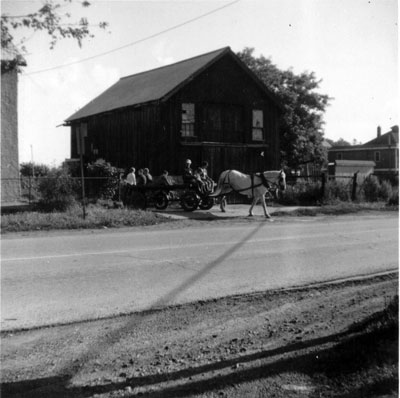
Across the street from us, in St. David’s, Ontario, lived an old farmer whose name, if I recall correctly was Ed Pendergast. He lived in a small cabin on the property of his son or son-in-law Fletcher. I don’t know if Fletcher was a first name or last. Mr. Pendergast must have been in his late 60’s or even 70’s when I was a kid, but he continued to farm, year after year, with his horse and wagon, his overalls, his harness for holding baskets, his soiled cap.

It is odd sometimes to think back, as an older adult, upon something you knew only as a child and never really gave much thought to since. This was the 1960’s. Most farmers, of course, had tractors by then, but old Mr. Pendergast continued to use an old white mare named “Nellie” to work his orchard, which was about a mile down the road from his shack.

Nellie was an old, sour-looking horse, and she farted constantly as she cantered down the road pulling Pendergast’s old wagon. As kids, if we saw him going by, we’d rush out to hop on for a ride. He would sometimes stop the wagon for us, but as we got older, he didn’t need to– we’d just run along side and then hop up. It was probably a little dangerous, now that I think about it.

He was neither friendly nor mean, that I can remember. He put up with us riding on his wagon for whatever reason. When he came back at the end of the day, he would back the wagon into one barn, and then lead Nellie into her stall in the other barn. We could ride her if we wanted to, and if we arrived at the right time, for this last little leg of the journey. My brother fell off once and broke his shoulder, and Mr. Pendergast was convinced that my parents were going to sue him. My parents would have no more sued him for that than they would have sued a teacher for failing one of us.

The farts were hilarious, of course. Mr. Pendergast would curse at Nellie as if they were her fault. He just generally cursed her all the time. When he picked his fruit, he would move from tree to tree calling Nellie to move along with him. Sometimes she would and sometimes she wouldn’t. But at least once, she decided she’d had enough of standing in the sun waiting and set off for home without Mr. Pendergast. I saw the wagon coming down the road and heard Mr. Pendergast running, trying to catch up to the wagon, yelling and cursing at the top of his voice. When Nellie reached the driveway, she just turned and gallomped right up the incline, which caused baskets of fruit to go careening off the wagon and onto the road. I remember thinking that the horse was smart enough to find her own way home but didn’t understand how you had to take a wide, outside swing so that the wheels would hit the slope of the curb at the same time and keep the wagon level.

I estimate the photo to be from about 1962 or 1963. You can see the way the driveway slopes down to the road. The kids on the wagon are my brothers and sisters except maybe for the kid in the white shirt climbing on from the left. I think that might have been someone named Kasper. I’m at the front beside my sister Coby, I believe. Mr. Pendergast has probably caught sight of my mother with her Brownie camera– he’s looking right at her. It’s a sunny day.

Shriek!

I recently heard that for every 17.5 million flights there is one terrorist incident. It may have been on the CBC or Associated Press or New York Times– I can’t remember. It’s an interesting piece of information. It tells you that a relatively small number of incidents have occurred that might or might not require a dramatic intervention, policy changes, new measures– money.

It’s a big world. At any given moment, people are getting into their cars and driving to work, hopping onto buses, walking. At any given moment, panhandlers reach out their cups for change, children starve to death, people suffer heart attacks, bridges collapse. At any given moment, people fall in love, fall out of love, decide to cheat on their spouses, leave their homes, return to their homes, gamble away their money, commit suicide, order another drink.

Out all of the things happening right now, the world– it seems–is aghast because one man tried to set off a bomb in an airplane in Detroit. The media take up shrieking: our airline security systems have failed. They are imperfect. They must be fixed. Spend money! Delay everyone. Surrender our civil liberties! Only stop another bomber from getting onto another plane.

Of course, if we were perfect and stopped every other potential bomber from getting onto every other possible plane and setting off every possible other bomb, we would still have the car accidents, the suicides, the murders, the accidents, the fires, the wars, the famines, the radiation leaks, the cancers, the psychos who don’t bother with a religion, the drunks who still want to drive, the politicians who vote against health care, the nurses who take too long on their coffee breaks, the Generals who believe more of the same will be different, the generals who believe more of the different will be the same, the adulterers, the preachers, the cult leaders, the activists and the passivists– and life would go on– and the bombers would start on the trains or the boats or the stadiums or the malls or the markets or the churches or the mosques of those who are similar but not quite like us must be prevented from being like us but not quite similar.

Olympic Fakes

From steroids to music to politics, the Olympics are all about phoniness and this recent story merely confirms the truth. Nobody at any level of organization really cares about sport or competition or human achievements or international goodwill or anything like that. What they care about is selling the advertiser’s products and getting great seats for themselves and their relatives and their friends in high office for the gold medal hockey game.

What were they thinking? They were thinking, wouldn’t it be great if we could run the sound of the orchestra through a digital link to the PA system instead of through those darn microphones and mixers that just don’t seem to ever make it sound…. you know… just kind of nice. And what if an orchestra member makes a mistake? And hell, Obama did it. And — better yet– we can use a more photo-genic orchestra, which could simply mime the performance. Fabulous!

It’s despicable. But what’s really despicable is the way they act after they are caught: well, what’s wrong with it?

Well, if there isn’t anything wrong with it, why not tell everyone that you are broadcasting a recording instead of a performance? That the performers you see on the screen didn’t even perform on the recording. Why don’t you just can the orchestra all together?

Why ban steroids? If audiences get a bigger thrill from seeing records broken than from seeing a mere race, why not cheat?

Don’t forget — you and I are paying for these people to conduct these obscene rituals of mass manipulation and self aggrandizement. We are paying for it.

And hurray for Bramwell Tovey, the conductor of Vancouver Symphony Orchestra, for refusing to give in on the issue.

Ian and Sylvia

I was reading about the folk scene in New York City in the early 1960’s once and came across what I thought was an extraordinary comment. This was time of incredible intellectual and cultural ferment, and Greenwich Village was rich with young talents like Bob Dylan, Simon & Garfunkel, Phil Ochs, Tim Hardin, Peter, Paul, & Mary, Tom Rush, Tom Paxton, the Roches, and so on.

The comment was something like this: many aspiring folk singers envied the talents of any number of song-writers and performers, but if you asked anyone who they would most like to be– if they could be someone else– the answer was usually Ian Tyson or Sylvia Fricker.

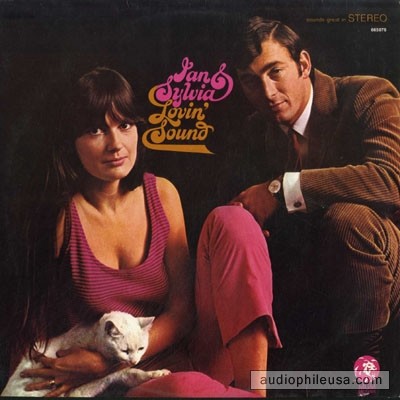
Ian & Sylvia were not among the most successful of those performers– though, for a time, they were quite successful– nor among the most prolific or talented. But they were very talented, moderately successful, and, perhaps more than anything else, beautiful. They were beautiful in that magical, transcendent mode that radiates class and intelligence and sophistication. Even this album cover conveyed this: they are not posing. They exist in a sort of conscious state of distinguished self-contemplation, with neither ego nor false humility. They have momentarily paused for the image, not caring if we are impressed or not, because they know what they look like and they know what they are.

One of my brothers owned the album “Lovin’ Sound”, pictured above, which was released in 1967. As an adolescent, the cover picture of Sylvia with the low-cut top– that elegant cleavage– stirred me for obvious reasons. I wasn’t yet a huge fan of their music — now I realize it was probably too authentic and complex for my tastes at the time. When I listen to the song “Lovin’ Sound” today, I am far more impressed with it. Restraint and taste are the last things an adolescent learns to appreciate. But the album cover stayed in my mind for decades. A few years ago, I started searching the internet for it and, surprisingly, had great difficulty locating a copy. Just recently, I finally succeeded.

Listen to “The Lovin’ Sound”. It’s trendy– songs about universal love and peace were hot for a while there in the late 1960’s — but a little richer than something like, say, “Come on people now/smile on your brother/ everybody get together/ start to love one another right now”.

Your world is crying now my friend
But give it Love
And it will mend
And, teach you All
The music to the Lovin Sound
Oh, the Lovin Sound

Well, okay. So maybe it isn’t that much more sophisticated. But it’s a fine song, a bit marred by a somewhat jarring attempt to meld folk and rock styles that reminds me of “The Sound of Silence”.

They had a tv show. They struggled through a few more albums that never seemed to go anywhere.

Then they split. Ian went out west to become a cowboy and sing cowboy songs and run his ranch in Alberta, and Sylvia worked for the CBC. Maybe he cheated on her. Maybe she cheated on him. We don’t know– that’s part of what gave them class: no public drama. Peter Gzowski of the CBC, in narration over some documentary on ’60’s folk groups, says they had “artistic and personal differences”.

But they remain iconic to me, the definition of grace and class, the essence of intelligent, cultured expression, and I can’t think of a single other ensemble that comes close to them in their prime in that regard.

The Nobel War Prize

There are already lots of prizes for people who believe in war. In the U.S., there is, seemingly, universal acclamation. There and elsewhere there are medals, parades, monuments, and obscene financial considerations. People who are good at killing are more than adequately rewarded. At least until they get sick. That’s when the Republicans suddenly, bizarrely, always seem to want to pull the plug. Check it out: it’s the Democrats who almost always want to take better care of our veterans.

There are not so many awards for people who say “let’s not go out and kill people today. Let’s try to find a way to avoid war, to avoid destruction.” First of all, most Bible-thumpers– oddly– will excoriate you. I missed that part in Sunday School, where Jesus says, “kill your enemies”. Or the part where he says, “people who feel aggrieved by your stupid decisions in the past are your enemies and deserve to be killed.”

Anyway, even if I was a real militarist, I would shed a tear or two for the debasing of the Nobel Peace Prize. Whatever verbal pyrotechnics you must perform to prove that Obama’s decisions on Iraq and Afghanistan and rendition and the pictures of prisoner abuse in Iraq that he suppressed– constitute anything even remotely like “the promotion of peace”, they pale beside the plain and simple facts: Obama has embraced the wars and he has bought the Generals’ fervent belief that, given enough time, and resources, and foolish politicians, they might be able to “win” in Afghanistan yet. (Because, after all, we “won” in Iraq didn’t we?). We can “win” the war on terror, much like, after 30 years of the same failed policy, we have “won” the war on drugs.

We live in a world in which politician after politician, after concluding that a particular strategy isn’t working, invariably propose more and bigger of the same. Why? Not because the policies worked– they haven’t– but it isn’t politically viable to try an alternative. What if the Democrats proposed a illegal drug policy that wasn’t based on savage deterrence and ridiculously lengthy periods of incarceration? The shrieking would send Johnny Rotten to the madhouse.

Even if you think he’s right, why give him a “peace” prize for it? Give him a war prize. Give him a monument. Give him a favorable column in The Washington Post because he consulted with general after general after general and they all agreed: war is the solution and he bought it. If a little bit of war fails– try more of it. If that fails: try some more. If that fails: try some more. If that fails: consult with the generals again. Again, they will recommend war.

Could they not have postponed the ceremony at least? Coming as it did the day after Obama committed 30,000 more troops to Afghanistan, seems a bit unseemly at best. It was truly embarrassing and sad. His speech to West Point– would Gandhi have done that?

Henry Kissinger’s picture is on the wall of honor at Oslo City Hall. It is almost impossible to imagine, today, what they were thinking when they gave it to him. What did they know? Did they have the slightest clue about what his role actually was in the Viet Nam War, and in the Nixon Administration? Were they nuts?

As a liberal, of course, I like Obama a lot more than Kissinger, but I still don’t think he should have been given the peace prize and I don’t think he should have accepted it. It think it was foolish, premature gesture.

The only good reason for giving it to him was to deliberately piss off curs like Charles Krauthammer and George Will. And the more they fume about it, the more I think, well, maybe he should accept it. They’re just jealous that George Bush Jr. didn’t get a peace prize.


Obama: “And it will require us to think in new ways about the notions of just war and the imperatives of a just peace.”

Yes, that’s what a lot of people thought they were voting for. I still suspect that seven years from now, it might be recorded that armed conflict was avoided somewhere because Obama made some wise decisions… I suspect he is too smart to stumble into something like Iraq. But then, I also thought he was too smart to get bogged down in Afghanistan the way Johnson got bogged down in Viet Nam. But he has and is and in spite of his insistences to the contrary, the resemblance to Viet Nam is uncanny.


Irving Kristol, in today’s Washington Post, quotes Obama’s Nobel acceptance speech and compares it favorably with a speech by Bush. Okay– so does Irving Kristol now support Obama? Will he say, he has made good decisions about war and peace and Afghanistan? Not on your life– so while claiming that Obama is no different from Bush with one breath, he immediately proves that he is by attacking him at every other moment. But then, conservatives, lately, seem to ridicule the very idea that their platform should have any kind of coherence or consistency to it– these are incoherent times for them. Conservative policies created the biggest financial crisis in history and Sarah Palin and her cronies demand more of the same policies. The deregulated markets performed spectacularly badly– let’s have more deregulation. Viet Nam was a failure — let’s try it again in Afghanistan. We know something the Soviets didn’t know when they were there for a heartbreaking seven years. Honest, we do.

Anatomy of Cultural Irrelevance

Why do Christians keep doing it? Shooting themselves in the foot by posting reviews like this of the 1959 movie “Anatomy of a Murder” starring Jimmy Stewart?

It doesn’t matter that this is one of the best courtroom dramas ever filmed, or that it is extremely unusual in it’s honesty about the our system of justice, the compromises, the cheating that goes on, or that it is well-acted and superbly written, or that George C. Scott and Lee Remick give startlingly good performances. It doesn’t matter that this is one of the most thoughtful courtroom dramas ever made, and that it was based on a real case, and that it offers a wealth of psychological insights into the minds of a killer, a neglected wife, an ambitious attorney, a not-so-ambitious attorney. Oh no. That all doesn’t matter.

What matters is that the word “pantie” was used. In public! And that Jimmy Stewart’s dad was so mortified by the movie that he took out an ad in the newspaper urging people not to see it.

Jimmy Stewart, by the way, turned down the role of “Atticus Finch” because he thought the film was too liberal.

It doesn’t matter. The American Film Institute rates this as the 7th best Courtroom Drama of all time.

As good a film as it is, apparently it does not do justice to a pivotal scene in the book wherein the defense attorney absolutely shreds the testimony of a psychiatrist who didn’t even interview the subject of his “expert” opinion.

It is so unusual to find a film that tries to give viewers a realistic grasp of court proceedings that I kept wondering about the director. What possessed Otto Preminger to do it? He couldn’t have been hoping to broaden his audience.

It tells you a lot about the state of Hollywood that the last explanation I could think of was that he wanted to make a great film.


A Christian posts a Review of the pernicious “Anatomy of a Murder”.

There are other Christian websites that not nearly as Pollyannaish as the one above.


Some Great Courtroom Dramas

12 Angry Men
To Kill a Mockingbird
The Verdict
Witness for the Prosecution
Anatomy of a Murder


A fascinating paragraph on manipulation of testimony, from Wikipedia.

In protracted litigation, confabulated memory – filling in the blanks and recreating memories – is common, and research has documented the tendency. Repetitive and suggestive questioning tends to plant the seeds of memory.[12] This book and the movie are among the most cogent examples of the lawyers’ dance. “Horse shedding” of witnesses is well known, if controversial and potentially unethical; it is not just an occasion to directly orchestrate perjury. More problematic, it is probable to reach a point where “if you believe it, then it isn’t a lie.” Thus, even letter-perfect bona fide certainty of belief is not equivalent to a certification of accuracy or even truthfulness. This process is called “horse shedding,” “sandpapering” or “wood shedding” – the first and last names relating to the place of the “collaboration.”[13]

“Horse shedding” comes from a practice in the 19th century in New York in which lawyers would hide witnesses in a literal horse shed to “prepare” them for testimony in the court house next door.

Taser the 10-year-old!

The Police Taser a 10-Year-Old

The Police Taser Another 10-Year-Old

No wonder the police often think they are underpaid. It’s those scary 10-year-olds out there that are terrifying them. You may think a big, burly police officer might be little reckless in the presence of a 10-year-old, but in today’s society, with the decline in morality and lack of respect for the law, you can’t be too careful. Taser the 10-year-old!

The police need to hire a pr firm. The pr firm would tell them, if you want to stop getting bad publicity about your bad behavior– improve your behavior first. It’s easier to spin.

So if a particular cop is incapable of reasoning that a 10-year-old child, or a homeless person with emotional problems, or a foreign-speaking traveler, might be safely managed with patience, calm, and intelligence, convince him that it is better public relations to do it anyway.

At Seventeen

Janis Ian wrote “At Seventeen” in 1973, at the age of 22. She was already somewhat well-known for an earlier protest song, “Society’s Child”. “At Seventeen” — it seems astonishing to me now– became a huge hit, on the pops singles charts, eventually reaching #1.

Here’s a bit of interesting trivia: Janis Ian appeared on the very first episode of “Saturday Night Live” and performed this song.

I don’t know of any other song like it. How many singer-songwriters would write and perform these lines:

And murmur vague obscenities
To ugly girls like me, at seventeen.

About the same number as those who would write a song like “Donald and Lydia”.

The song, if you’re not familiar with it, is about the judgments teenagers make about each other, about “those of us with ravaged faces/lacking in the social graces”, about excluding those who fall short– those who are too short or clumsy for basketball, who never receive valentines, and never get to hear those “vague obscenities”– the most rich and allusive line in the song. It is suggested that the beauty queens will get their comeuppance:

So remember those who win the game
Lose the love they sought to gain
In debentures of quality
and dubious integrity

The small town eyes will gape at you
In dull surprise when pain in due
Exceeds accounts received
At seventeen.

I’m not sure what that means. That the love you get for being beautiful is of “dubious integrity”? Temporary? Transient? I thought the song would have worked better if the “small town eyes” were “gaping” at the wrecks of the lives of those who were excluded because of their “ravaged faces” and who found solace in other places, like drugs, self-abasement, whatever. And I’m not sure that just because you’re beautiful you can’t have true love.

Either way– “exceeds accounts received”– is a clever line. Either way, your punishment, your suffering will never be the amount you deserve. Oh how badly we want to cling to the idea that you do deserve what you get. In almost all the movies about people with disabilities who overcome monumental obstacles to “succeed”, the person with the disability is glamorized. They are disabled, but beautiful, or charming, or peaceful and quietly stoic, like Michael Oher in “Blind Side”. They make you feel good because you tell yourself that you would have behaved decently to this poor, unfortunate soul.

Would we behave as decently to unfortunate souls who don’t have anything lovable about them? Who don’t agree to be the “canvas” upon which we paint our own virtue?


John Prine, an indispensable artist, wrote the song “Donald and Lydia” in 1971, and it appeared on his brilliant first album “John Prine” (which also included “Sam Stone”, “Flag Decal”, and “Hello in There”–three other great songs).

Here’s a taste:

Lydia hid her thoughts like a cat
Behind her small eyes sunk deep in her fat
She read romance magazines up in her room
And felt just like Sunday on Saturday afternoon.

Lydia and Donald are both ill-equipped to have any kind of success in society. They are unattractive, socially inept, and they know it. They’re like Janis Ian’s seventeen-year-old girl– desperate for a shot at love.

They are as real as your right hand, but they are very, very rarely the subject of music or song or film, in our society. We’re too busy selling phony stories that worship women like Leigh-Ann Touhy (Blind Side) while short-changing the very people she wants to help by reducing them, as they say, to “canvases upon which we paint the image of our own virtue”.

Lydia is just plain fat. Donald is just one of “too many”, a private first class in the army.

There were spaces between Donald
And whatever he said
Strangers had taught him to live in his head
He envisioned the details of romantic scenes
After midnight in the stillness of the barracks latrine

Donald and Lydia find each other– in their dreams. In a flight of fancy, Prine imagines them reaching out from their homely little enclaves of self-doubt, across the ether and flotsam of human insensitivity, to find each other and connect in some mystical, orgasmic union of lost souls.

They made love in the mountains
they made love in the streams
they made love in the valleys
they made love in their dreams
and when it was over
there was nothing to say
’cause mostly they made love from 10 miles away.


There are very, very few movies that deal honestly with the harsh facts of life for people like Donald and Lydia and girls with “ravaged faces”. Since most of North America believes that the function of entertainment is to allow you to escape from your dreary little life into fantasies…

Perhaps the best, still, is Paddy Chayefsky’s “Marty” (1955), about a likeable Italian American butcher with no illusions about himself or his prospects.

Great Dialogue (from “Roger Dodger” 2002)

Roger: You can’t sell a product without first making people feel bad.
Nick: Why not?
Roger: Because it’s a substitution game. You have to remind them that they’re missing something from their lives. Everyone’s missing something, right?
Nick: I guess.
Roger: Trust me. And when they’re feeling sufficiently incomplete, you convince them your product is the only thing that can fill the void. So instead of taking steps to deal with their lives, instead of working to root out the real reason for their misery, they go out and buy a stupid looking pair of cargo pants.

Irreducible Complexity

It’s a red herring.

The main problem with the argument of irreducible complexity, as advanced by Michael Behe, for example, is far simpler than I think most respondents have described.

What Behe and others do is look at a complex organism the way you could look at an arrangement of thousands of marbles on a gym floor. You look at this arrangement, marvel at it, admire the different colours and patterns that are displayed, and then ask yourself, what kind of force could have placed all these marbles in exactly these locations?

It’s unimaginable: the effort, planning, and skill required to have every marble end up in exactly the place it ended up in! How could anyone believe that it was the result of a random process?

Behe implicitly assumes that the marbles were somehow destined to be in exactly the locations they ended up in. The goal of history was to put each marble in exactly that one place and no other. That is because he implicitly assumes there was a “creator” who intended all of the marbles to be exactly where they were. And he assumes that we humans, exactly as we are, are exactly what the end result of creation or evolution was intended to be all along.

But evolution doesn’t hold the view that the process of natural selection was designed or destined to produce a human being with all the characteristics we now have. The marbles ended up where they were through the process of being spilled onto the floor, hitting each other, bouncing a certain height, rolling and colliding with each other. Evolution holds that innumerable factors under extremely diverse conditions with almost infinite combinations of effects influenced the development of species in ways that may not have been consciously “designed” in a human sense.

Or might have been. Evolution does not claim to know why the marbles rolled onto the floor. They might have been rolled there by God, after all. Evolution doesn’t and couldn’t claim to know that. That is the purview of religion.

I said “human sense” because I don’t believe there is the slightest obstacle, in evolution, to a belief in God, who may well have created the world in exactly the way science suggests it was created: with a big bang millions of years ago, with simple life forms adapting and growing more complex and splattering into diversity as conditions changed, and “evolving” into what we now call human, with the miracle of consciousness, and the inexplicable: a sense of humour, memories, music, and a capacity for tears. Where’s the problem, for the believer? There is none, except, ironically, for the limitations of human knowledge, demonstrated most vividly in the Intelligent Design movement which tries to solve a problem that does not exist.

How constricted is the Intelligent Design hypothesis? What is more amazing, and reflects more vividly the glory of God: the stunning diversity of life forms and geological shapes of the earth? Or those prudish zealots with their black markers and their wagging fingers who don’t know that they don’t know what the act of creation looks like.


I have a solution to the whole problem of religion vs. science on the issue of evolution.

The Bible says that God “created” the world. I hope that even devout, conservative, Bush-loving Christians might agree that the meaning of the word “create” is, at heart, a bit of a mystery. When we say someone “created” a house, we don’t mean he invented wood and glass. We mean he obtained or created a design, gathered all the necessary material components, assembled a crew, and put everything together into a “house”. It beggars, for example, the question of who created glass.

When we say God “created” the world, however, we mean he created the design and assembled the parts, but he also created the parts– from nothing.

We have as much reason to believe that he did it in one literal instant in a human sense as we have for the belief that he did it over billions of years, from a single point in space, outwards, and in a single point of time, outwards. Space did not even exist in a meaningful sense, nor did time, until God filled it.

How dare Michael Behe insist that he knows that “create” means “in the exact space and time in which we now live”?

Obviously, God willed creation into existence. What is the obstacle, then, to believing that science is merely the systematic study of the evidence of that act of creation? Science is the study of how God “created” the world. I would say that we know now that God probably did not make everything appear everywhere (where it is today) in one instant. He appears to have started the act of creation in one specific location, and the event spread outwards from there– and still spreads outwards today.

I need a name for this. How about: “Scientific Creationism”? “Ontological Intelligence”? Then I need to create a private Foundation and a text book and find some fat donors and give some speeches at gatherings of Republican Christians where I rail against homosexuality and gun control and those arrogant educated elites who think they’re smarter than us and the sins our age that are all the result of scientific atheism.

I will soon be rich.

Thank you.


Wiki on Irreducible Complexity