Billy Graham’s Heart

The Billy Graham Organization just won a Minnesota Appeals court decision which allows it to fire a 30-year employee who was spied kissing a woman in the parking lot.

Sara Thorson started working for the Billy Graham Associates in 1971. She was the bulk-mail services coordinator.

In February 2002, two employees spotted her kissing another woman in the parking lot. Her supervisors were alerted. She was confronted and admitted that she was gay. They suspended her immediately and asked her to renounce her sinful lifestyle, repent, and come back to work.

They were prepared to forgive her for the sins she had committed, but she had to demonstrate a sincere desire to repent. I guess that’s a way to put it.

Sara Thorson decided that since her work had nothing to do with the direct ministry of the organization– only with the technical task of sending out bulk mail– she should be allowed to keep her job and her lover. A Minnesota appeals court denied her request.

It was reasonably clear, I think, from comments made by the original sponsors of Minnesota’s ban on discrimination based on sexual orientation, that their intent was to give religious organizations an exemption.

We presume that no other employee of this particular office was engaged in any apparent sinful activity at the time, or she or he would also have been fired, of course. But there’s no sin like sexual sin, so it’s conceivable that eagle-eyed employees were not on the lookout for hard-heartedness, for example, or materialism. Imagine, for example, if they had reported spying an employee climbing into a Hummer, or wearing a Rolex, or buying a gun, or eating too much too often.

Suppose Thorson’s supervisors had decided to be compassionate. They were not– no mistake about it. You have to be fairly brutal, in my opinion, to fire someone who has worked for you for more than 30 years because she kissed someone in a parking lot. You have to possess a remarkable mindset to be able to point at someone else and say, “you are the sinner.” You must be purged from our midst. You are not worthy of our company. You are going to hell and we’re not.

I’ll bet the two employees that spotted her were happy. I’ll bet it was the happiest day of their lives. Well, maybe not. Maybe they were a little sad. Maybe they even said, “we’re really sad about this. It’s heart-breaking to have to fire someone who has worked faithfully and diligently for you for 30 years.”

Okay, so let’s say they were sad. But I’ll bet they at least felt important.

Spinning Mother Theresa

Can you count the number of times you have heard the name of Mother Theresa given in conversation as a veritable paragon of virtue and holiness and kindness? Stuff it.

I was fooled. I remember the first articles I read about this devout, holy, self-sacrificing woman living in the worst slums of the poorest city (Calcutta) in the world offering only kindness and care and love to the lowliest outcasts, the vulnerable, the helpless. Malcolm Muggeridge, Christendom’s most pompous twit before he passed on, groveled before her with all the enthusiasm those who think their groveling will be taken for virtue can muster.

I even remember a SCTV skit in which a loud, bombastic “Lola Heatherton” (Catherine O’Hara) interviewed Mother Theresa and sang her Broadway Tunes. SCTV confined the parody to Heatherton– Mother Theresa was depicted (by Andrea Martin) with reverence. The point was that Mother Theresa was so holy that not even SCTV dared impugn her sanctified honor.

And then I stumbled into a crazy article somewhere– I can’t remember what magazine it was — that described how Mother Theresa inspected a home that had been donated to her order, for her novitiates, and I remember how she sternly ordered the hot water tank removed, and the mattresses and beds (they can sleep on the floor), and anything else that might make it a pleasant place to live.

I think the article was generally favorable to her and meant to celebrate her purity and austerity. I remember thinking a lot about it. What’s wrong with making a sacrifice, if it helps the poor? But getting rid of the hot water and the mattresses didn’t help the poor. It simply spread the suffering around. It was as if the point was not to alleviate suffering, but to increase it, out of some twisted sense of masochistic self-sanctification. A few years later, she was quoted as saying that the suffering the poor was “beautiful”. Not beautiful enough for herself, however. When she became ill, she checked into a nice, western hospital and received the best care available.

That bears repeating. While raising millions of dollars to preach to people who are dying and while making no effort to provide them with any kind of medical care, because, she says, their suffering is “beautiful”– she herself has accepted some of the finest medical care available from clinics in California.

Later on, I read more about Mother Theresa, and grew more and more disturbed by what I read. While she was receiving tens of millions of dollars in donations from thousands of benefactors around the world– and the Nobel Peace Prize– she was also appearing in public with Haitian dictator Papa Doc Duvalier, to defend his regime against charges of corruption, and with Albanian dictator Enver Hoxha. And of course, as an unrepentant traditionalist, Mother Theresa fought fanatically against the very idea of any form of birth control.

Ironically, she was embraced by some in the Christian right in America, including Ralph Reed, as representative of “family values”– as if she had never taken a vow of chastity. And as if Ralph Reed, and Pat Robertson, and Jerry Falwell, had anything but contempt for Catholicism. She was politically useful to them.

According to Hitchens, after intervening in the referendum in Ireland to allow divorce, (she was opposed), she told the Ladies Home Journal that she was glad her friend, Princess Diana, was getting a divorce because she will be happier. Clearly, there is one set of rules for the poor….

What kicked it for me, though, was when I realized that what she was actually doing in the slums of Calcutta was not “helping”. She provided some comfort, yes, to the dying, but she did almost nothing to alleviate suffering or to make people’s lives better when she clearly could have. In fact, she actively opposed efforts to provide the poor with medical care and food, because, she said, it did not further the advancement of Catholicism. It merely distracted people from the real issue, which was, saving souls.

That’s not the gospel.

Boing! Your Taxes at Play

Darleen A. Druyun was a top official in the Air Force who played a large role in negotiations with Boeing for big fat air force contracts. She was your representative. She was in charge of seeing that American tax-payers got honest value for their dollar.

She was so good at her job, that a lawyer for Boeing bought her house. Yes, indeed. And her daughter got a job with Boeing– no sense wasting that family of expertise.

Ms. Druyun was not heartless by any means. When Boeing was under severe pressure by a competitor, Airbus, for a major tanking contract, Ms. Druyun was kind enough to pass along some specs about the Airbus contract to Boeing.

By golly, she was so ruthless about getting maximum value for the taxpayer’s dollar that Boeing went out and hired her in 2002. Now, she works for Boeing.

Now?

It appears, she was always working for Boeing.

Yeah. Well, you might be wondering by now just how tough this lady was. But you would be reassured to know that the Air Force and the FBI are going to thoroughly investigate the matter. When they are done, I bet all those Boeing shareholders who have been collecting big fat dividends are all going to have to pay big fat fines!

Oink! Oink!

Don’t forget: when the government gives money to people who haven’t worked to earn it, that is called a “dependency” and it is bad, bad, bad.

When the government gives money to corporations who lie and cheat: that’s called capitalism, and that’s what makes our country great.


Where is Mr. Greene’s Nobel Prize for Literature?

I used to think the Nobel Prize was the greatest honor this corrupt little world had to bestow upon a person. That was a while ago. Some time before Henry Kissinger won the Nobel Peace Prize for threatening to bomb North Viet Nam into the stone ages if they wouldn’t hold their fire long enough for America to get the hell out and pretend they settled for peace with “honor” in Viet Nam.

greene01.jpg (8190 bytes)

  • End of the Affair
  • The Third Man
  • Heart of the Matter
  • Power and the Glory
  • The Quiet American

So I’m being fey. I don’t have illusions about the Nobel Prize for literature.

And you shouldn’t either. You should know that the writers listed below have received the Nobel Prize for Literature. Not a bad bunch, I suppose. Some of them, like Sartre and Solzhenitsyn seem rather dubious in light of historical developments. was Sartre really all that important? And Solzhenitsyn turned out to be Hester Prynne’s bad uncle and nobody wants to invite him to parties anymore. William Golding? For what? Saul Bellow?

Sure I’m being irreverent. In my opinion, Solzhenitsyn was a good writer who stood up to the authorities and thus became regarded as a great writer. Now that the Berlin Wall is down, we can go back to thinking of him as a good writer. A fine writer. A decent writer. He was also a Russian Nationalist and an anti-Semite.

But then, is the Nobel deserving of grandeur?

John Galsworthy? For “The Forsythe Saga”? You’ve got to be kidding.  “The Forsythe Saga” is grandfather of the modern soap opera.  Sure, he has his rustic charms, but it’s still soap.

Eugene O’Neill? Even Solzhenitsyn is never as boring as “Long Day’s Journey Into Night” (although “The Iceman Cometh” was entertaining, at least, when Lee Marvin played Hickey.).

Steinbeck is the American writer that most resembles Solzhenitsyn, though even he is more interesting. He was important, at least, as the dramatist of the depression. Hemingway is deserving, for his innovations in style as well as for the acutely modern sensibility he brought to his work, so clearly missing from Galsworthy and Steinbeck. T.S. Eliot? I never liked him much, but even I have to admit that the line “I have measured out my life in coffee spoons” deserves some kind of special recognition, if not Eliot’s fondness for fascism and idiotic obscurantism and anti-Semitism.

Toni Morrison is the weakest entry on the list. In ten years, everyone will finally get over the novelty of race and come to know just how uninteresting her work really is. I rarely give up on a book once I’ve started reading it, but I had to slog through “Tar Baby”, and I can’t remember anything about “Song of Solomon”. Is she really better than Richard Wright or James Baldwin, neither of whom made the list?

Isaac Singer is a brilliant choice– one of the most distinctive voices of the 20th century. V.S. Naipaul? I honestly don’t know. I’ve always liked his writing, especially his travel pieces, and he is unfailingly thoughtful and perceptive, and provocative.

William Golding? “Lord of the Flies” is undoubtedly a brilliant book, but I’ve never liked it. I always wondered where the girls were. I was never able to make sense of his other books. I always felt that if he hadn’t been famous for “Lord of the Flies”, nobody would have cared about “Pincher Martin”.

Besides, there are some historical examples of boys being trapped in an isolated environment: distressingly (to every high school teacher), they tend to end up cooperating and building little peaceful communities together.

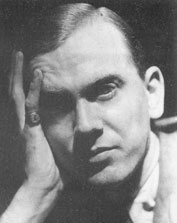
You may have noticed an astonishing omission from the list. An omission so monumental that it is stunning in it’s audaciousness: Graham Greene.

I have read somewhere that Graham Greene would have won the Nobel Prize but for the objections of the Americans, who hated him for criticizing their actions in Central America, and elsewhere. I’m puzzled by the story. I don’t know where it comes from, or if it is true. I am flabbergasted by the idea that the Americans can block the selection of the Nobel Selection Committee. How do they do it? Who do they phone?

I have also heard that Arthur Lundquist, a member of the Academy, had it in for Greene. “Over my dead body” was the phrase someone used, to describe Lundquist’s feelings about Greene getting a Nobel prize.

But one thing is obvious: on merit alone, Greene should have been selected miles ahead of Morrison, Gordimer, Golding, O’Neill, Faulkner, Galsworthy, or half a dozen others.

It is probably appropriate that Greene never won. One of the most remarkable traits of his work is its utter lack of sentimentality, and prizes–even big ones– especially big ones– are all about sentimentality. There is a way of being correctly incorrect, and there is Greene’s way, which is to dissect why we need to believe that we are somehow appreciative of “incorrect” writers, like Naipaul and Solzhenitsyn. There is a subplot in “The Power and the Glory” about a book a pious mother reads to her children, about a great Catholic martyr, and his heroic life and death. It’s all phony, of course, and Greene contrasts this phony iconography with the “real” adventures of the whiskey priest, who believes himself worthy of damnation. He also contrasts the whiskey priest to “Padre Jose”, who obeys the edict of the revolutionary government and marries and sells out the faith in order to save his own life, and present the people with a living, breathing illustration of the corruptibility of the church.

Is there any other way to imagine a speech at the Nobel banquet, than as the imprimatur of acceptance, respectability, and public honor? Is there anything that would make a writer safer for all of us?

While Solzhenitsyn was a virtual prisoner within the Soviet Union, he was honored with a prize, because he stood up to the godless, inhuman communist government, with courage and conviction. After he moved to Connecticut, he stood up to the inhuman, godless materialism of the West… and promptly disappeared from view.


Novelists Who Have Won the Nobel Prize for Literature

V.S. Naipul
Gunter Grass
Seamus Heaney
Toni Morrison
Derek Walcott
Nadine Gordimer
Joseph Brodsky
William Golding
Isaac Singer
Saul Bellow
Heinrich Boll
Jean-Paul Sartre
John Steinbeck
Aleksandr Isaevich Solzhenitsyn
William Faulkner
T.S. Eliot
Andre Gide
Earnest Hemingway
Herman Hesse
Eugene O’Neill
John Galsworthy
George Bernard Shaw

Quagmire

The eerie thing about the Bush press conference on April 13 is how much he sounded like Lyndon Johnson. All the same arguments he made about staying in Viet Nam— no matter how grim it looked– are now presented by George W. Bush– in that same drawl– to justify staying in Iraq. He even has the beginnings of what some people used to call Johnson’s “shame-faced” expression.

You felt bad for Johnson (I did– a little) because it wasn’t through malice or greed that he got into Viet Nam. It was just plain stupidity.

That doesn’t mean Iraq is inevitably going to be like Viet Nam. I think it is fairly likely, but I’m not willing to give up entirely just yet.

But it does bring to mind a few interesting issues related to game theory.   What is game theory?  Suppose that you entered an auction in which you are required to pay even if you lose the bidding? At a certain point, you will realize that you are bidding more than the item is worth. But if you stop bidding, you get nothing. So you can’t stop.

In other words, suppose your soldiers are killed even if you don’t win the war? That’s what happened in Viet Nam. As the war progressed, the cost to the U.S. (in soldier’s lives) became higher and higher compared to the value of winning the war and stopping the spread of communism dead in it’s tracks. Therefore, the cost of losing the war also became higher and higher. Whereas the U.S. could have withdrawn relatively painlessly in 1963 (as John Kennedy seems to have intended), by 1965 the cost of withdrawing had become immense, and was growing larger by the moment. So Johnson felt he had no choice but to continue “bidding” it up. It took another eight years before Richard Nixon finally ended the bidding, and the U.S. lost the item (Viet Nam) and 55,000 lives.

So, if, in 1963, the U.S. public knew that it would cost 55,000 lives, they would probably have never tried to “purchase” the victory.

It would be hard to believe that the Bush White House is too stupid to realize that they are in precisely this kind of auction in Iraq. The more expensive the overthrow of Saddam becomes, the more unacceptable it will appear to be to withdraw. The more unacceptable it is to withdraw, the higher the U.S. must “bid”.

That doesn’t mean the U.S. should withdraw. Not necessarily. Not yet.

The U.S. could win this war. It could turn over political power to an Iraqi government at the end of June and establish a democracy in the heart of the middle east. All that oil will keep flowing for America’s SUV’s. Iraqi’s will start establishing new businesses and industries and enjoy the fruits of capitalism: new cars, wide-screen tv’s, personal computers, iPods… The country won’t be wracked by continuous civil war between the Shiites and the Sunnis and the Kurds. There won’t be terrorists who perceive the democratic government to be a sell-out to the decadent west. Iran will mind it’s own business. Syria will block the border. Israel will be safe.

Or does that all seem rather unlikely to you now?

It is up to the American public, with an election coming up in November, to assess George Bush’s grip on events. Does the U.S. have a realistic chance of obtaining it’s objectives in Iraq? Or will it devolve into an endless cycle of violence, repression, retribution, and chaos?

I don’t think John Kerry has a viable alternative plan. That’s the nature of a quagmire. But Kerry will be hamstrung by circumstance. If he withdraws American troops, he leaves Iraq in the hands of violent, intolerant extremists, or, perhaps, civil war. If he stays, he may have to deal with increasing numbers of casualties and the inevitable comparisons with Viet Nam. I don’t see how Kerry can be a white knight on this issue. All the voters can do right now is punish the man who got them into this mess with an electoral defeat.

Nixon took over for Johnson in 1968. It took him 5 years before he could withdraw from Viet Nam, in 1973, with “peace with honor”. Shortly afterwards, South Viet Nam collapsed. Thirty years later, it’s easy to look back and see what should have been readily apparent at the time: all of the death and destruction of the Viet Nam War was for nothing.

The problem is that real U.S. objectives in Iraq are not the same as the objectives that appear to be at stake in public statements about the U.S. position. The U.S. claims that democracy and the freedom of the Iraqi people are at stake. I think that George Bush really believes it, but even George Bush’s friends admit he doesn’t think deeply about anything.

The problem is that the U.S. doesn’t really care about democracy or freedom in any other Arab dictatorship. The U.S. seems to smile fondly on the governments of Egypt and Kuwait and Saudi Arabia and obviously has no interest in the victims of oppression in Sudan. So why does it care about it in Iraq? It doesn’t. The real objective, all along, was to depose Saddam, to punish him for having fought George Bush Sr. and for his arrogant refusal to allow the U.S. unfettered access to it’s alleged weapons laboratories, and, of course, to ensure a ready supply of cheap oil for the massive engine of the U.S. economy.

If these are the real stakes, the real thing that the U.S. is “bidding” on, it becomes clear that Iraq will not be free to choose, even in a supposedly free election, a government that is inimical to the interests of the United States. Any political party that declares itself to be opposed to U.S. interests in Iraq, will be declared to be an enemy of democracy, and will not be permitted to contest an election, even if a majority of Iraqi citizens appear to support it.

What the U.S. is doing right now, with it’s interim ruling council, is trying to ensure that the outcome of any future election will be to it’s liking, while appearing to represent the will of the majority of Iraqi citizens.

That may all be beside the point. The real question is, can the U.S. impose a democracy upon a nation that is unwilling to stand up for itself against the violent tactics of a minority of Islamic extremists? The general population of Iraq might prefer a democracy to an Islamic republic, but they don’t appear to be willing to fight for it. There are no demonstrations or rallies in support of the U.S., or the interim ruling council. The Iraqi policemen and soldiers the U.S. is training flee at the first sign of a mujahidin. There is no political party or leader with popular support to speak in favor of continued U.S. occupation. The members of the interim council that are friendly to the U.S. will be perceived to be stooges of the West, almost by definition.

It is fundamentally irrational for the U.S. to attempt to impose a democracy upon a nation that doesn’t want it badly enough to pay even a portion of it’s cost. If people are unwilling to fight for it now, why would they be willing to fight for it after the U.S. leaves and the Islamic fundamentalists have even more room to maneuver?

If the U.S. couldn’t plant democracy in Kuwait after liberating it from the first Iraqi invasion, why does it think it can plant democracy in Iraq? If our “friends”, the Saudis, have no inclination to hold democratic elections, why should Iraq?

If Libya now meets our standard of good world citizen….

It’s not going to happen. The U.S. can never leave. It’s going to get uglier and uglier as the U.S. is forced to aggressively defend itself against determined fanatical enemies.

My guess is that the U.S. will eventually begin to devise some kind of window-dressing, a strategy that would allow it to pull most of it’s soldiers out of Iraq without appearing to be surrendering the country to the forces of darkness and chaos. It may take five more years before they begin this process, and then another five years before it really gets under way. Some kind of Iraqi strong-man congenial to the U.S. will have to emerge, with the backing of the new Iraqi army. Radical Islamic movements will have to be violently repressed. Iran will grow interested.

Quagmire.

Shawshank Redemption

According the esteemed patrons of the Internet Movie Database, “The Shawshank Redemption”, story by Stephen King, directed by Frank Darabont (screenwriter of various Blob, Fly, and Young Indiana Jones sequels or prequels, before this profound “masterpiece”), is the second greatest film of all time. It is better than “Rashomon”, better than “Citizen Kane”, better than “The Third Man”, and even better than “The Seventh Seal”. It is better than “Taxi Driver” and “Bonnie and Clyde” and “The Graduate”. It is better than “Ran” and “Kagemusha”. It is better than “Rules of the Game” and “Dr. Strangelove”, and “City Lights” and “The General”.

It has always puzzled me that so many people thought so highly of it. Clearly, it doesn’t belong in the top ten no matter how much you like it. There is simply no way that this film is even nearly in a class with “Citizen Kane”, for example. It’s bizarre to even think so. I really believe that it is possible for reasonable, rational people to eventually reach agreement on that issue.

But is it even any good? A lot of people think so. Clearly, it’s not a terrible movie. In fact, the acting is very good, and the cinematography and editing are all fine. Even the music isn’t bad.

But I find the film annoying. It has this tone of deep understanding and complexity and poetic sensibilities.

I want to understand why I dislike a film that almost everybody else likes. Where did I go wrong? What did I miss? I watched it again and took notes.

Watching it over again did nothing to alter my perception of the film. Except that it is striking to me how well-acted the film is, and generally well-directed.

Herewith, why I think “Shawshank Redemption” is not a good film.

1. The plot is preposterous, right from the moment Dufresne unbelievably admits he sat in front of his wife’s lover’s house with a .38 pistol, drunk, but didn’t murder his wife or her lover. The fact that he might have done that– sit there drunk with a gun on his lap– isn’t the unbelievable part. In fact, that part is strangely believable. He changed his mind. No problem.

The unbelievable part is that he seems to believe the police had no reason to make him a suspect. Really. Why on earth would they think I was up to anything…. But he was clearly thinking of it. He clearly went there with a gun.

It would have been more compelling and believable if, instead of behaving like the righteous victim of an injustice, he behaved more like what he was, unlucky and stupid. And perhaps guilty of wishing his wife and her lover were dead, even if he didn’t actually do it.

And we are supposed to sympathize with this “innocent” man sent to jail unjustly. A man who gets drunk and takes a gun to his wife’s lover’s house, is not completely “innocent”, regardless of whether or not he actually committed the crime. But our arms are twisted: Dufresne is so pure and so fabulously, morally good, we are forced to buy into the movies’ own illusions: it is an outrage that this nice man, who looks like actor Tim Robbins, and who only speaks in a whisper, should be forced to have anal sex with people he doesn’t even know!

Think of all the black men wrongfully imprisoned for crimes they didn’t even think about doing.  “Shawshank Redemption” is an insult to all those men, and insult to the idea of injustice.

It goes further: Dufresne is not merely morally superior to the other prisoners and the guards– he is luckier. That’s when we know we’re being sold a bill of goods.

2. The district attorney argues in court as if a reasonable person might believe Dufresne’s story– that he didn’t do it, that he preposterously tossed his gun into the river on the way home instead. He feels he really has to convince that jury that this man should be a suspect. In fact, in real life, I think most people would snicker and find Dufresne’s story ridiculously unbelievable without prompting from the prosecutor. He owned a gun of the same type that killed his two-timing wife and he got drunk and he parked in front of the house but he didn’t kill her, and then he happened to toss his gun into the river– all on the same night someone else –with that same type of gun– for incomprehensible reasons– decided to murder his wife? The prosecution is not sure that jury will find this preposterous?

This is stupid writing.  Stephen King should be embarrassed at the preposterousness of this plot sequence.

We need a dose of “Chicago” here to introduce some people to reality. This is a classic Hollywood movie conceit, though: you, the viewer, know what a kind, decent, honest man Dufresne is, because we so many close-ups of his innocent face. Part of the emotional impact is due to the fact that you know he’s innocent. But the director chooses not to let you see Dufresne as the jury might see him: a bland, boring nobody who exploded one night when he caught his wife cheating on him.

But that would make Dufresne less of a victim of injustice, and more a victim of bad fortune and stupidity, so we are asked to believe that the jury was unreasonable in finding him guilty regardless. Why? Why? Why? I thought about this a lot, because this passage of the story is so… obtuse. And then I realized why. Because the audience isn’t going to be allowed to share the jury’s feelings about Dufresne’s explanation. That it’s preposterous. Because then we couldn’t feel quite as good about feeling bad.

3. I find this growing trend of actors whispering their lines really, really annoying. This is an early example. Dufresne is in court, not an elevator. He’s in a prison yard, not a closet. He’s in a bank, not phone booth. But he always whispers. It’s the Marlon Brando school of mannerist seriousness, a cheap effect, and a substitute for intonation, rhythm, and inflection. It’s an actor trying to look like a method actor without understanding that what made method acting so compelling was not the whispering and mumbling: it was the internalization of the character’s feelings. It was the shift away from meaning conveyed by dialogue to meaning conveyed by character, by body language, by personality.

I know actors think that whispering their lines seem to give them more emotional weight, but it always strikes me as phony. It’s an imitation of good actors without any understanding of what made them good (it wasn’t the mumbling).

And it must be difficult for the sound man when Dufresne talks to Red: Morgan Freeman generally talks in a normal tone, but Tim Robbins whispers all of his lines. They couldn’t possibly be in the same aural environment. Did the director ask for this, even though, in real life, we’d generally like to slap Robbins on the side of the head and make him speak up like a normal person would in the same circumstance?

4. Red (Morgan Freeman) can get you anything– even a bottle of brandy to celebrate your kid’s high school graduation. That’s the kind of prisoners that live in Shawshank: they only wish they had some brandy to celebrate their kids’ graduations. It speaks volumes about author Stephen King’s actual prison experience (none) that he believes in this old cliché– the resourceful, cranky, colorful scrounger who can get almost anything– which he probably adopted from “Stalag 17”.

5. One of the prisoners looks at the busload of new prisoners (including Dufresne) and remarks on what a sorry-looking bunch of maggots they are. There is nothing in the physical appearance of these men that explain why he would say that– unless you realize that this is just part of the colourful local ambience of the prison. In fact, the new prisoners look quite solid and strong. But it’s exactly the sort of thing the the film-maker thinks the viewer expects some hardened veteran to say at a bus load of new inmates, so it’s there. That is the heart of the problem of the whole movie: it’s a series of scenes the director and writer imagined the audience would believe. The action doesn’t really flow out of circumstance and character: it’s just a bunch of set pieces. Lord knows it doesn’t flow out of any first-hand experience of prisons or prisoners.  So, instead of revealing something to the audience, it reveals the audience to the story.

6. Red, who provides a good deal of narration to this story, comes off more like a soldier or mountain climber than someone who has spent 30 years among hardened criminals. His wizened, almost gentle description of how someone always cries the first night makes you think that he has the social sensitivities of a camp counselor.

I sometimes rewrite movies in my head to make them more interesting. So instead of that putrid chestnut, I have Red saying, “I love it when they cry. The sound of their wailing makes me feel like there’s some soul to this place, a great blues harmonica.”  Yes, I wrote that.  Stephen King: you’re welcome.

But he has the movie’s funniest line:

Andy: “Why do they call you Red?”
Red: “I don’t know. Must be because I’m Irish.”

It turns out that this line had been written on the assumption that a white, Irish actor would be playing the role of Red. When Morgan Freeman took over the role, they decided to keep it, and he delivers it straight up. So one of the very few examples of wit in the movie happened by accident.

7. At Dufresne’s first breakfast, other than the colorful allusions to sodomy, many of the prisoners come off as charmingly colorful and folksy. It’s a like a day at bible camp, and he’s hanging around with the bad kids who don’t sing along.

Now, it could be that Stephen King believes that we are the kind of society that locks up good people. In a post 9/11 world, yes, we certainly are. And in a culture that believes that 20 years in jail isn’t sufficient for possession of marijuana, yes, a lot of good people do get locked up. But part of the horror of that is the fact that we lock them up with the genuinely bad people. Did you happen to notice that there isn’t a single genuinely bad inmate in this movie? The only really bad person, in fact, is the warden. Now, I totally believe that it is possible that the warden might be a more evil bastard than any of the prisoners. I just have trouble with the idea that there’s not a single really bad person in the prison that might help you understand why the warden believes he has to be a prick.

8. Brooks, the librarian, threatens to kill a fellow inmate to avoid being released from prison. This is kind of absurd. No, not “kind of”– it is ridiculously absurd.

First of all, he wouldn’t just get to stay in prison: he would be charged and tried for the murder and, if convicted, could well end up in a different prison, which, given his sedentary disposition, would be as great a catastrophe as being freed. Brooks is not stupid– he’s gotta know this.

Secondly, it’s an insanely obtuse way to keep yourself in prison. All you have to do is hit a guard, or try to escape, or disobey orders, and you could get years added on to your sentence. But most significantly, it’s just plain dumb for a character like Brooks– another one of those lovable decent inmates– to want to murder someone just so he could stay in prison. The someone he tries to murder is Haywood, who is one of the “good” inmates. Might have had a subplot here if he had decided that he might as well murder one of the bad cons (here I go rewriting again) and do some good while he was achieving his goal of staying in prison. It’s also absurd to believe that if Brooks was serious about murdering the guy– and he must be, or there is no dramatic tension in the scene– that he would grab him, hold a knife to his throat, and then wait for Dufresne to come in from the yard to talk him out of it. Why on earth wouldn’t he just do it, if he was going to do it? Again, that would have been far more interesting. It would have been even more interesting to make it a more subtle mystery as why he did it. Let the wonder for a while. Let him reveal his motivations much later in the movie.

Reminds me of those movies in which the wild animal always rises up and growls before attacking. If any lions or bears actually did that in real life, they’d soon discover that most animals don’t wait around to be eaten.

Anyway, the real explanation for this scene is the same as the explanation for most of the other unbelievable moments in this film: it’s a set piece; it’s an idea that flows from the minds of the writer and director envisioning what the audience might like to see, and has no real basis in character or action.

9. When Red defends Brooks to the other cons, he tells them that in here, the prison, he is an important man. Out there, he’s nothing. But Brooks has been in prison for 50 years, and Red has been in prison for 20. You wonder how he can know anything about what will happen to Brooks on the outside. I’m not saying it’s not possible– just that it is presented stupidly. I wish Red had said something like, “you remember Pete? He was in prison 30 years. Got his parole. Two weeks later, he was back. I asked him why. He said it was too hard to live on the outside. Who do you think is waiting for you to help you start over after 50 years? He’s going to end up on the streets, in a soup kitchen, or worse…” Anything, but the simplistic pap we get in Shawshank.

10. Poor Brooks gets barely five minutes to go from prison librarian to parolee to roomer to grocery-bagger to suicide. That’s a lot of story compressed into a couple of dramatic images, but that’s how this movie works. You don’t need to actually deal with a compelling story line if you just take the shortcut right to suicide. We don’t learn nearly enough about why Brooks is that unhappy. He has a job and a place to stay and his freedom. It’s asking the audience to make a pretty big leap to believe that he is so disconsolate about this change in his circumstances that he would hang himself.

As I watched this sequence, I became frustrated. It was a potentially fascinating development. I wanted to see Brooks try to look up old friends or relatives– or children of relatives. He probably would have discovered they didn’t want much to do with an old man fresh out of a prison. I wanted to see how he got from the prison to the boarding house, how he interacted with people, how he found his way. The fact that he was able to get a job, bagging groceries, right away, is remarkable, and might be the most unrealistic part of the story. I’d like to see him discover that the social skills he learned in prison don’t work very well on the outside. Anything, please. Some development, some insight, some inspiration.

11. One of the phoniest scenes of all– all the inmates and guards stop everything to listen to the opera Dufresne puts out through the prison loud speakers. Every musical artist watching this film would think he had died and gone to heaven if such an event could have happened even at a concert of people who actually paid to come listen.

Now, this scene is very well directed. The over-head shots of the prison yard, the close-ups of the attentive faces, Dufresne with his feet up on a chair, the anxious warden trying to get back into the office. Beautiful. But it’s a fantasy, a dream. It’s phony.

I’m not saying the scene couldn’t have worked. It could have, if handled with even a modicum of respect for reality. The warden might have quickly realized that there is a fuse box somewhere, but maybe he had trouble identifying which fuse it is. More probably, the warden might have realized that the music is no real threat, especially if he played along with it. A more interesting possibility– if he made the inmates believe he was responsible for it and they turned their backs on it.

Instead, the warden starts yelling at Dufresne and pounding the door. Isn’t that exactly what you expected to see? That’s the problem with Shawshank. It gives you exactly what you expect, without any thought as to what it might or might not reveal about character. It is necessary, given the phoniness of the rest of the movie, for the warden to get upset, and angry, that the prisoners have somehow managed to raise their consciousness and improve their minds. That’s the kind of cliché “Shawshank” deals in. As the warden yells, “turn it off”, Dufresne turns it up. Not because that would be a believable thing for him to do (it isn’t- why wouldn’t he have turned it up at the start? He’s not hiding anything) but because it accentuates Dufresne’s defiant willfulness, his determination to be free, even in prison. It’s like one of these Greek masks that tell you if the character is happy or sad.

After serving two weeks in the hold, Andy returns to the lunch room. There is a spot waiting for him between Red and Haywood which is kind of funny because Haywood is surprised to see him. They always sit with one space between them, in case Andy is going to drop by? This kind of thoughtlessness permeates Shawshank.

In the shots of the yard as the prisoners listen to the music, notice how this was the only prison in the country in which blacks and whites seamlessly blended into social groups in the yard.

The inmates, especially Dufresne and Red, remain physically pretty even after years of brutal incarceration. Well, maybe it wasn’t as brutal as we thought.

12. Red listens to Andy discuss the warden’s investments and money-laundering schemes and warns him that all that money “leaves a paper trail”. It’s hard to believe that Red, in prison for 30 years and uneducated, would feel confident or wise making such a statement to an ex-banker. Better line: “My mistake was robbing people with a gun. I should have learned accounting instead.”

Given his background, isn’t it more likely that Red would believe that Andy is so smart, he will never be caught? But then, Red wouldn’t come off as quite so wise, would he?

13. You would think that people who’ve been in prison long enough would learn to stop saying, “he don’t look like a murderer.”

14. It’s tough for a writer. You want a character to be smart, so the reader admires him. But sometimes, you gotta make him damn stupid to advance the plot. So when a new inmate named Tommy hears about Dufresne’s crime and relates how a former room-mate at another prison named Blatch had claimed responsibility for it, Dufresne rushes to the warden to ask for his help in getting a new trial. He doesn’t contact his own lawyer– he goes to the warden. Dufresne–who is supposed to be pretty smart–apparently doesn’t know that the warden doesn’t have anything to do with criminal sentencing or verdicts. Dufresne doesn’t know that only a judge could release him? He doesn’t know how to contact his lawyer and arrange a visit? What on earth would make him think the Warden was the guy to go to with that information?

Then he has to be credulous enough to say he believes that Tommy’s testimony by itself would be enough to get him a new trial. What a quaint little world we are in here.

Then– it gets worse — he clumsily threatens to expose the Warden’s questionable financial activities. This is a man who apparently doesn’t know who has the keys, the guns, and the batons in this prison.

Remarkably, Red also takes the story at face value. You couldn’t find a more trusting group of people at a girl-scout convention. Here’s where we could have used some of Red’s alleged wisdom here: he should have told Dufresne he would have to do better than that to get a retrial. He should have told him the Warden won’t believe him or care.

Tommy passes his high school equivalency. At this point of the film, Dufresne is starting to accumulate messianic powers of healing and suffering.

The warden’s conversation with Tommy outside the prison wall is more than a little bizarre.

Then the warden threatens Dufresne with being taken out of his one-room “Hilton” and put into the regular prison population, the “sodomites”. But instead of doing that, he puts him into solitary for an additional month, then returns him to the same cell. Very convenient, since Andy is digging a tunnel in his cell.

15. Dufresne makes Red promise that, if he ever gets out, he will go to a hay field in Buxton with a long stone wall with an oak tree at the end of it. Sound specific enough for you? Especially when you haven’t been anywhere near that field in 20 years? And in this field, Red is supposed to look for a black volcanic rock. Piece of cake. In all this time, no farmer, or heavy rain, or kids, or animals, will have moved that rock or killed the oak tree.

Right after this conversation, the mother hen society of Shawshank holds a meeting because they are all concerned about Andy, because, Red says, he’s been talking funny. This really is the most amazing prison in the world It’s the kind of prison filled with kind, caring individuals, that you want to live in.

16. Why on earth waste your time trying to convince the viewer that Andy is thinking of hanging himself? It’s a cheap little trick that does nothing to advance anything in the movie. It’s not believable for a second.

17. The movie treats Andy’s escape after 20 years in Shawshank as a moral, physical, and spiritual victory. In real life, I would think 20 years in prison would still suck.

18. Andy uses a rock to crack into the sewer pipe, timing his blows to coincide with the thunder outside. But there is a crack of thunder when the lightening flashes, which isn’t right, of course, and then another crack when he whacks the pipe. What? So there are two thunder bolts– one with the flash, and one a few seconds later, because sound travels more slowly than light.

Andy crawled through 500 yards of sewage pipe to get out of the prison. Sewages produces gases that would probably have readily killed him. The sewage pipe ends up in a shallow creek. Shawshank prison dumped its raw, untreated sewage into an open creek? Okay– that’s probably quite possible. But the tunnel Andy carved through the wall of his cell looks like it’s about 12 feet deep. That is a strange wall. I imagine someone at this prison eventually got a brain and started to execute annual cell-checks, since it would take more than a few years to dig through a wall that thick without a jack-hammer.

19. When Andy comes out, it’s fairly obvious that Tim Robbins is splashing as much as possible for dramatic effect. It’s looks dramatic. And phony. Even phonier when he rips off his shirt and the light is so perfect and it looks so majestic and utterly preposterous and clichéish. He stretches out his arms– I’m free. This is a director that does not trust his audience for one split second. I just can’t help but think that a real person in that situation, free at last after twenty years, would look around very carefully to make sure nobody saw him.

20. It looks like the warden only realizes that he is being investigated for corruption when it appears in a headline of the local newspaper. You can even hear the sirens sound as he throws the paper down on his desk, so I guess the local District Attorney gets all his evidence from the newspapers as well, and this particular newspaper publishes potentially libelous stories without further investigation or giving the subject of the allegations the opportunity to comment.

21. The warden loads his pistol up with several bullets and then points it at the door as the police are trying to get in to arrest him. So, as a viewer, am I supposed to believe that warden had decided to shoot it out with the police? That’s plainly absurd, so the next event, the warden shooting himself, is more logical. But then, why did he put several bullets in? I guess you could argue that he maybe had some thoughts about fighting and then realized it was useless. Hmmm. Or was the director looking for another moment of cheap dramatic tension.

22. Red, after Dufresne’s escape, reminisces with his prison-mates about the stuff “Andy pulled”. They sound like a bunch of former college room-mates discussing some pranks.

23. It would have been endearing of the film-makers to acknowledge the role of exaggeration in these stories they now tell about Andy. But then, these are boy scouts. They never lie.

24. “Some birds aren’t meant to be caged. Their feathers are just too bright.” is unforgivable. Especially when he goes on to point out that the prison is now “..that much more drab and ugly when they’re gone.” The prison wasn’t drab and ugly when Andy was there? It was a fun place, filled with hi-jinks and good humor?

25. Red slams the parole board at his last hearing. He says “rehabilitation” is just a politician’s word, and he doesn’t know what it really means. He tells them to stop wasting his time. In the context of this movie, Red is absolutely right. Given that most of the inmates are portrayed as boy scouts, it’s hard to imagine any of them actually needing any rehabilitation. So Red can sit there and call it “bullshit” and the audience feels a deep surge of hostility for these bad people in suits who are keeping good people like distinguished actor Morgan Freeman in prison and forget about the fact that if he hadn’t asked for the meeting and applied for parole himself it would never have happened.

I think a lot about the fact that the same people who voted for politicians who passed laws that put people into real prisons for 20 or 30 years for relatively minor crimes, could watch this movie and feel really, really good about themselves.

The Bipartisan Ugly

The ugly side of the issue: Well the issue is plain ugly, like race and gender politics. Bush knows it, and Kerry knows it, but that won’t prevent either of them from playing politics with it.

Watch for the classic Rove-Bush strategy of allowing the president to take the high-road– proclaiming himself a reasonable moderate who respects diversity– while unleashing proxy spokespersons to really sling the mud. Rove knows that if Bush caters too much to the right, he risks losing moderate voters. At the same time, he needs to slyly clue the extreme right in: he doesn’t mean what he says to a national audience– it’s all code

Does the right continue to believe that Bush can actually do something about abortion? Yes. Well, he can. He can appoint sympathetic judges to appeals courts and to the Supreme Court. Will the Supreme Court, then, ever outlaw abortion? In your dreams. .

Kerry will also have to speak in code. Publicly, he will probably oppose same-sex marriage. Privately, he will want his hard-core supporters to know he will be much kinder to gays than Bush.

It’s like a bunch of big, tough school kids standing around. And they see a little thug picking on an even smaller, unpopular kid mercilessly. The Democrat says, they shouldn’t pick on him. The Republican says, “oh– you a friend of his?” The Democrat says, “Who? Me? Are you kidding?”

Both these guys know that America would be much better served by a frank discussion of taxes, military policies, security, and energy, and the environment. But that doesn’t score many votes for Bush, so watch for the gay bashing to enter a fever pitch as the election campaigns reach their strides.

Check here for more information about Bush science.

Janet Jackson at the Superbowl

Did you see it? You probably missed it. You were probably in the bathroom.

At the end of Janet Jackson’s rather sorry spectacle of a circus of a fireworks extravaganza of incredibly self-indulgent excessive spatter-fest of over-wrought writhing orgiastic dancers and musicians– her boob popped out. In fact, it appeared as though Justin Timberlake pulled off one of her leatherette little shields and there it was. CBS remarkably cut the camera within a second or two. Maybe there was a slight delay available to them– you know, whatever they call it, when they reserve to themselves a slight cushion of time just in case someone like Janet Jackson, on nationwide tv, does something inappropriate.

So you are mom. You’re watching the half-time show because, Lord knows, you can’t stand to watch football. Your kids are watching too. They are Janet Jackson fans. The dancers wear costumes inspired by S & M fantasies. They gyrate and move in motions meant to suggest intercourse. You smile and continue your knitting. They are singing something about being naked for you or whatever. Doesn’t matter. You nod and shake your head– modern music. Then it happens. You leap up and cover your children’s eyes. If you were fast enough, you may have spared them a life-time of deviance and sexual perversion. They might not have realized that they had seen Janet Jackson’s breast.

The opening act for this bizarre annual ritual– the Superbowl– was Aerosmith. Hoo hah. There are tail-gate parties, which they also have at state prisons on the nights they are going to execute people.

Steve Tyler himself. Most young football fans yearned for his daughter, Liv. Liv, ridiculously, played a psychiatrist in one of Jim Carrey’s most earnest and preposterous movies, “Reign Over Me”.

Then Beyonce sang the national anthem, with all the heartfelt authority and sincerity Hollywood can muster. Then 40 grown men pumped to preposterous proportions by steroids (professional football does not test anybody for anything except marijuana) chase each other over a 100 yard field trying to retrieve an oblong object made of pigskin. This crowd cheers wildly.

There are 100 commercials. They watch the commercials (that’s why they cost an average of $2.5 million– they do watch.) They think, I will be happy if I have some Pepsi. I will download legally. I will have an erection. Most of these people would say they are Christians. In God’s name, I have no clue what they think they are talking about.

There is approximately 10 seconds of action for 20 minutes of commercials, inane chatter, Janet Jackson’s breast, Steve Tyler’s tongue, and American flags.

The audience, apparently, has what they want– the ratings for Superbowl games are great. These people are American voters. Not only are they choosing the type of costume they want Janet Jackson to wear, but they are also choosing the next government of Iraq and the future of the Israel-Palestinian peace plan. Janet Jackson and Justin Timberlake apologized about the breast.

Both of their careers, however, have been enhanced. There is no such thing as bad publicity.

Skip Palenik: Microscoptist! Lies and Fake Evidence

In the May 2003 edition of mediocrity in verse, Reader’s Digest, tribute is paid to one Skip Palenik, “Micro Man”, a forensic microscoptist.

Listen carefully to that word: microscoptist. You are on a jury. True or False– a microscoptist is smarter than a lawyer?

True or false– “microscoptist” isn’t even a real word? My dictionary says no.

Judy Burgin was murdered in Alaska in April 1993. Her body was found in the woods, her head bashed in. She had a boyfriend named Carl Brown who allegedly dealt drugs. Police were stumped. Who could have murdered Judy Burgin? Who could have done it? Is there anybody out there we should investigate? Hmm. Anybody?

With the body, they found a strand of fibre.

That’s when Skip Palenik entered the picture. Skip analyzed the strand of fibre and then compared it to fragments of carpet found in Carl Brown’s house. He declared them a match. He told the jury: I am a microscoptist and with all the authority invested in that title, I proclaim that Brown is guilty. Brown was convicted.

His conviction was overturned on appeal because his lawyers had not been permitted to argue that other people had motivation and opportunity to murder Judy Burgin, who was, after all, a drug addict. In 1998, a second jury found him guilty after four days of deliberation.

There is almost no other information about this case on the Internet.

Now, I can’t swear to it, but I kind of doubt that there exists a sense of definitive standards and procedures that have been thoroughly researched and developed for the positive forensic identification of particular microfibres. That is, though we know there are all kinds of scientific procedures out there that can be applied to the analysis of microfibres and to the science of “comparison”, there probably is no text book that, for example, that lists almost every type of fibre, how they were manufactured, who made them, where they were sold, how many are in circulation, how they react to substances in the environment, how unique they are, etc., etc., etc.

I don’t believe such a body of knowledge exists.

Instead, we have Skip. Skip is given some material by the police and probably is aware of the fact that they need to match. The police don’t go to Skip and say, golly, we have no idea of who could possibly have committed this crime. Here are ten fibres and ten samples of carpets belonging to suspects. Can you match any of them?

We do know that that is not what happens. Skip will receive a couple of samples. Do they match, yes or no? I’ll bet that Skip knows which sample came from a suspect. I’ll bet Skip knows that the police think this is the guy who did it but need some evidence to show in court. It doesn’t matter.

And I’ll bet that there is no scientific definition of what a “match” is, in terms of synthetic fibres.

I don’t think Skip thinks he is giving the jury a distorted picture of the reliability of the evidence because the police seem sure that Mr. Brown did it. I don’t think the police feel that they are manipulating evidence because Skip doesn’t have to manipulate anything. He just has to present some “true” but relatively meaningless “scientific” evidence in a selective and suggestive manner. He never has to lie at any point, because the jury doesn’t understand science. They just understand the word “matches” and “same” and “microscoptist”.

I don’t know how compelling the other evidence was, but I fear that the carpet sample was the decisive evidence in this case. I don’t know if Brown killed Judy Burgin or not, but if the carpet was the most important piece of evidence at the trial and I had been on the jury, I know I wouldn’t have voted for ‘guilty’..

The Ongoing Comic Adventures of George W’s Inquisition Into Hostile Acts of Aggression and Subversion

How many times have you noticed an article in the newspaper or on TV about some terrorist suspects being apprehended? Caught them. Another attack prevented. Phew! We’re safe again.

But of course, some of those arrests include the Lackawana 5, and Iyman Faris. Add to the list the horribly frightening and terrifying Captain James J. Yee.

Captain Yee was a chaplain at the detention camp for foreign combatants of the war in Afghanistan in Guantanamo Bay, Cuba. Captain Yee joined the army years ago, left the army and became a Moslem, and then rejoined the army recently as a chaplain. The army liked to brag about Yee. He was emblem of their enlightened diversity, tolerance, and broad-mindedness. He was sent to Guantanamo Bay to minister to the Moslem prisoners of war being held there under obscure and nebulous of legal rationalizations.

Then Yee joined up with Osama Bin Laden and began laying nefarious plots for incendiary activities at Guantanamo. I’m not sure what he was planning exactly. An escape would be difficult– from Cuba. He and his evil Islamic radicals could take over the base, I suppose, and litter.

Anyway, Captain Yee was arrested and charged with committing terrorist acts and there was a trial and convincing evidence was presented and Captain Yee defended himself to no avail and was convicted and sent to prison.

Or maybe not.

You see, that kind of eventuality would require real evidence and testimony. It would require reasonable people to look at his evidence and say, well, by golly, this guy committed a crime.

Much, much more convenient to simply hold a press conference and announce that some more terrorists have been stopped dead in their tracks — meaning Mr. Yee among others– and then charge him with littering. Well, not exactly littering. Adultery.

Yes, adultery.

Yes, adultery. For which he was held in a brig in solitary confinement, usually in leg irons, for 76 days. Well, not really for the adultery. The adultery, you see, is what they found evidence for. They held him because some idiot thought he was plotting to overthrow the U.S. government.

Do you care about the adultery? Do you care about the miscarriage of justice? You probably don’t. I’m a cynic. I bet you won’t care until it happens to you or somebody close to you. In the meantime, George W. Bush and John Ashcroft and Tom Ridge are your heroes. Do we have John Ashcroft actions figures yet?

I do care, and that’s why I’m taking a few minutes here to write about him, even if I doubt it will make any difference to most people out there.

If you feel safer tonight knowing that George W. Bush and the boys are out there like hawks guarding your personal safety and security, repeat, to yourself, the word “adultery”.

Or, “improperly gathering military information”, as one of Mr. Yee’s supposed cohorts have been charged with. Read that line carefully if you think it sounds sinister. What it really means is, we couldn’t find any real evidence against this guy so we charged him with something we could charge anybody with so as to not look like total idiots…. oops. Too late.

Captain Yee was arrested September 10, 2003, at Jacksonville Naval Air Station. When it was discovered that Airman Al- Halabi had had dinner with Captain Yee, he too was arrested, and charged with Grand Malarkey, or whatever it is that means that he was plotting to commit terrorist or otherwise nasty and unpleasant things of a hostile nature. Airman Al- Halabi– don’t laugh– was charged with aiding the enemy, which carries a death penalty.

As near as anyone with any brains can figure out, Al-Halabi was polite to the prisoners, which is what initially raised suspicions. Then he had a private dinner with Captain Yee, whom they thought was…. never mind. Anyway, Al-Halabi is an Arab name, so most Americans won’t care what happens to him. Lock him up. Leg irons. What the hell, hang him.

If you can’t figure it out for yourself just yet, here is a sure indicator of when prosecutors have gone nuts: it’s when they inspect themselves and go “eureka”. Of course, they never, as in the case of Colonel Jack Farr, actually arrest and incarcerate themselves. That would be unseemly. But Colonel Jack Farr, one of the men investigating Captain Yee, was caught also “wrongfully transporting classified material without the proper security container.” I’m not sure who caught him– the New York Times didn’t say. But it did say that he wouldn’t be treated like Yee or Al-Halabi.

That’s because he’s holding the gun.