Ze Problem Vif ze Accent

With a plethora of films about Nazi Germany released in the past few months, a curious problem has once again presented itself. How do you present, to American audiences, the language of the characters in a story that is set in a foreign country? How should the conversation between two Germans or two Frenchman sound?

Historically, there have been three solutions:

  • they speak plain English to each other, as if it were their native tongue.
  • they speak the foreign language and the English translation is offered in subtitles along the bottom of the screen
  • they speak in English but with an accent
  • they speak English but with varying accents, dependent upon their social status or ethnicity within the larger language group.

Here are some salient points:

1. people do not talk with an “accent” when speaking to each other in their native tongue. They don’t sound to each other like immigrants. They don’t sound somewhat comical to each other.

2. …but people do have accents– peculiarities of pronunciation and rhythms native to a particular region– even when speaking their native tongues. So, in one sense, people do talk to each other with accents, but not in a language foreign to their ethnicity

3. in the 1960’s sitcom “Hogan’s Heroes”, Schultz and Klink talked to each other with thick, comical German accents– the same way they talked to the English speaking prisoners. The purpose of this was obviously to ridicule the Germans.

4. Many people don’t like subtitles and won’t see a movie that has them.

5. People like me despise “dubbing”– badly matched spoken English recorded over top of the native language spoken by the actors. It looks and sounds ridiculous because, for one thing, it is almost impossible to synchronize perfectly, and, for another, the characteristics of the studio audio are obviously different from the room in which the actors are filmed.

6.  Some films have actually been shot twice: once in French or German or whatever, and once in English.

The best solution by a large margin is  for actors to speak in the native tongue of the characters they are playing with subtitles.  The second best option is to speak plain, fluent English, as in “Downfall”:


How the Problem Has
Been Handled in the Past:

  • Night of the Generals: the characters speak normal, fluent English to each other
  • Night of the Long Knives: Can’t find this one anywhere.
  • Downfall: the characters all speak fluent German — subtitles in English.
  • Last 10 Days of Hitler (Alec Guinness) : Fluent English.
  • The Bunker (Anthony Hopkins): fluent English with a slight guttural edge.
  • Schindler’s List: the characters speak fluent English.
  • The Pianist: the main characters (Polish Jews) all speak fluent English– the Germans speak German (with subtitles). This works very well.
  • Is Paris Burning? I can’t figure it out. Some characters have a thick accent, but others speak fluent English, with a kind of heavy, guttural spin to it. You tell me. Maybe the director left it up to each actor to solve his own accent problem.

I Have Loved You Long and I Fooled You

The French movie “I’ve Loved You So Long” seems to be gathering respectable reviews in spite of a plot twist that would put Spielberg to shame if it weren’t so lucrative, in this business, to indulge in all manner of preposterous plot twists. But why have critics like Ebert and Beradinelli fallen over themselves to praise this hokum? Why does Berardinelli actually insist the movie is about how society treats someone who has committed a serious crime when the movie completely emasculates that point in the last scene?

Spoiler Alert

This movie is about how the viewer can congratulate him or herself for being compassionate and understanding towards a convicted child murderer because we find out, in the end, that she was not really a child murderer. She was merely a mother who loved too much.

Check out the movie “Little Children” for a movie that more boldly and genuinely challenges the viewer in terms of his or her ability to accept the presence in a community of a convicted criminal– who really is a convicted criminal.

Meryl Streep Can’t Sing

There have been shameful moments in Hollywood history this past decade– events and appearances and speeches that made a rational person cringe with revulsion and consider changing the channel to a preacher of faith healer or Fox News or anything… Hugh Grant. Halle Berry’s Oscar speech. Michael Moore chasing an elderly Charlton Heston down the walkway of his home. Chris Rock’s mockery of Jude Law…

And my nomination for the lowest of the low: Meryl Streep “singing” “Winner Takes it All” in Mama Mia. Performed in one take, according to the bedazzled talents behind the camera. And in interview after interview, the actors in the film admit that they never respected Abba back in the 70’s but now that they have been paid, they can see that they really were musical giants– and did you see Meryl nail it in one take? Suddenly, Bjorn Ulvaeus is the Swedish Bob Dylan.

This self-aggrandizing, cloying, critics-be-damned attitude is supposed to be lovable on some deeper level than I can ever imagine, like Sarah Palin’s leadership qualities or the expressions on the faces of Secret Service agents. But what if it is just as it appears to be: a massive, slobbering wet kiss of desperation: no, I don’t have any real talent, but because I am a celebrity, you may stand back astounded at my generosity of spirit, that I would be so silly on purpose. Because it’s just fun.

No it’s not. Real fun is the Beatles’ “Help”, “The Pink Panther”, and Abbie Hoffman threatening to surround the Pentagon with meditating hippies and levitate it (the generals announced that they would stop him). Abbie, not ABBA.

As Dr. Seuss once observed: this “fun” proclaimed by Meryl Streep is the wrong kind of fun. She has confused her own singing with the careful talent that Richard Lester applied to his films, and Peter Sellers to his, … when it is actually the kind of fun you do in your bedroom with your girlfriends during a sleepover.

The first lesson is the hardest: it’s not nearly as amusing for those watching as you think it is.


Abba Babble

Marty

I played “Marty” in high school, in a play “cutting” that we did for drama class. I seem to remember that we put it on somewhere, for other students, for parents… I can’t remember. I remember make-up and props. It must have been some kind of talent show. I think Jane Hunse played Marty’s mother. I cannot remember who played Clara. I wish I had a video.  If your child, today, played “Marty” in a school play, you would absolutely have a video forever to remember what it looked and sounded like.

Who was Clara?

The scene we did was that of Marty’s mother urging him to go out, to the Waverly Ballroom, because her son-in-law says it’s “loaded with tomatoes”. Marty ridicules the notion. “That’s rich.” His mother keeps after him until he finally explodes, telling her that he has come to accept that whatever it is that women want in a man, he doesn’t have it, and he’s sick of having his heart torn out by thoughtless girls who don’t even do him the courtesy of returning his calls. He doesn’t want to get his hopes up only to be let down again. He won’t go.

But he finally gives in, puts on his blue suit, and goes. Sure enough, more heartbreak and disappointment. But then… he meets a girl named Clara, a school teacher, who is– to put it kindly “average looking”. But Marty likes her. She’s nice to him and easy to talk to. She likes him too. They go out. They have a good time. Marty thinks it’s promising, but his buddies think she’s a dog, so he doesn’t ask her out again.

Even worse, his mother’s friend warns her that once Marty finds a girl, he won’t have time for her anymore. She suddenly realizes that she could be replaced. She reverses herself and discourages him from asking Clara out again.

Marty gives in and doesn’t call Clara back. But after one too many nights hanging out with his friends, who seem to have no idea of what to do with themselves, Marty comes to his senses and calls Clara back and asks her out again.

“Marty” won an Oscar for best picture, proving that good guys sometimes finish first. Ernest Borgnine says it made his career– a lucky stroke– the role was intended for Martin Ritt. Ritt couldn’t take the role: he had been blacklisted.

There are thousands of films that make you feel good about cops torturing and murdering criminals, and thousands of films that will trick you into thinking you are a good person because you feel warmly towards a minority or a disadvantaged person because, in the film, they are portrayed as brave and smart or  attractive and grateful and they look like Sidney Poitier or Will Smith. A lot of films will try to convince you that Sandra Bullock doesn’t really think she is attractive and that Morgan Freeman is black and that Bruce Willis sits around and drinks beer in his spare time.

But how many films do you know of require you to identify with a short, pudgy, ugly, unattractive butcher who is lonely? How many of you out there are short, ugly, working-class schmucks yourself? I thought so.


“Marty” is written by Paddy Chayefsky and directed by Delbert Mann.

Robots Can’t Love

I enjoyed “Wall-E”, because the graphics were nice, and the action was wittily contrived. Wall-E meets and falls in love with a more up-to-date computer that looks like an inflated iPod. The two coo for each other.

But why do people so readily want to believe that robots might some day be capable of having feelings?

This is an immutable and irrevocable fact about robots: robots are programs– there is not a single thing they will ever do that is not the result of a programming instruction placed there by a human technician. The “feelings” expressed by a robot will always and ever be as real to anyone as the cuckoo in a cuckoo clock, or those dolls that used to have a string in the back, and will probably be twice as annoying after the very, very brief phase of novelty wears off.

Well, there are movies about talking dogs and flying men and 12-year-olds who know Unix (Jurassic Park), so what’s the problem? The problem is, I get why we might have a compelling movie about a talking dog, or a smart 12-year-old, or a man with superpowers: all of them correspond to real beings who have real feelings, and there are explanations for the dog, the 12-year-old, and superman. There is no explanation than can possibly explain why a robot would have human feelings, just as there is no possible explanation of why a bullet might fly at 10 miles per hour, or there would be a parking spot available right in front of that downtown office building our hero needs to enter immediately.

The problem is, I just don’t find a story line about a robot with feelings compelling. It’s just not interesting. It’s impossible to care about the robot with feelings because I can’t escape the awareness of the fact that every action the robot takes in response to his “feelings” is, in fact, the result of a program created by his manufacturer.

Ironically, the most interesting idea about a robot with “feelings” is this: what if the humans in the story didn’t know it was a robot?


What about “Blade Runner”?

All right– this is an interesting movie. But the “replicants” are clearly not robots– they’re genetically engineered organisms. Or are they? The movie doesn’t explain. They bleed and they die and they have feelings. Does that answer the question? Yes it does– they are organisms, genetically engineered to function like humans, so they can work and live where humans would find conditions intolerable.

But… in one scene, Deckard encounters a maker of the eyes which are clearly manufactured, aren’t they? In fact, they could just as likely have been cultured in some way, grown from stem cells, or what have you.

The most beautiful moment in the movie comes when a replicant does something absolutely human– gets nostalgic:

I’ve seen things you people wouldn’t believe… attack ships on fire off the shoulder of Orion. I watched c-beams glitter in the dark near Tanhauser Gate.

…All those moments will be lost in time, like tears in rain. Time to die.


Other concepts that a Hollywood Producer found credible:

  • perky brain surgeons who look and talk like Meg Ryan
  • parking spaces in front of the building you suddenly need to enter very quickly in order to save someone’s life
  • soldiers as heroes who never seem to actually kill anybody
  • mothers who have all the time in the world to send their children off to school with hugs and kisses and expressions of consuming devotion– as if they knew something bad was going to happen
  • annoying mentally disturbed men who seem strangely attractive to young, beautiful women
  • rogue police who “break all the rules”
  • suspects who immediately tell the truth when threatened by the rogue cop who breaks all the rules.

Nick Cave’s Towering Tower of Song

Unfortunately, I can’t trace the origin of this story, but here it is: Nick Cave was asked to do a cut for the 1991 Cohen Tribute album “I’m Your Fan”. But he didn’t want to. But he loved Leonard Cohen, so he had to.

This is not the same as the more mainstream tribute 1995 album “Tower of Song”, which featured some regrettable and embarrassing choices (Don Henley singing “Everybody Knows”, Elton John butchering “I’m Your Man”, Billy Joel singing “Light as a Breeze”. Now that I mention it– how can any album with a Don Henley cut on it be a tribute to anything?)

Where was I? Oh yes– Nick Cave did not like tribute albums. He thought they were tacky and tasteless and, you know, Don Henleyesque. But he loved Leonard Cohen. So he showed up at the studio and then took his band to a bar across the street and got everybody totally smashed and then came back into the studio and worked up “Tower of Song”. Apparently, he did several versions and the engineers later patched them altogether.

I was not impressed, the first time I heard it. Or the second or third. It was there in the middle of an album that I enjoyed very much, otherwise. And then a funny thing happened. The first I remember of it was this: I began listening for the belch. Yes, about 2/3’s of the way through Nick Cave’s cover of “Tower Song”, he lets go one very loud, ornery, rude belch. Then I began to listen more carefully to this whacked out pastiche of bizarre interpretations– one minute he’s Elvis, the next he’s Hank Williams, then Heavy Metal, then Lou Reed…

It’s really quite charming. It’s simultaneously off-putting and embracing, passionate and excoriating. It’s a throw-back to Cohen himself, in his old “Dress Rehearsal Rag” days. It’s a paean to pure unbridled passion and spirit and despair, and a great party song.


“I’m Your Fan” also features the definitive cover of “Hallelujah”, for my money, but if you liked Rufus Wainwright’s or K.D. Lang’s versions, you might not like this one.

It’s a quiet, humble little performance by John Cale accompanying himself on the piano. Why oh why oh why do so many so-called artists approach this song with the attitude of, “well, let’s see how many people I can blow away with my soaring rendition of this esteemed song!”

It’s not that kind of song. It’s a song that is demeaned and embarrassed by a soaring, virtuoso performance. “It’s not a cry you can hear at night/ it’s not somebody who’s seen the light/ it’s a cold and it’s a broken Hallelujah”.

Please, have some respect for the integrity of the song and stuff your fucking ego into the toilet.


Nick Cave and his band “The Bad Seeds” appeared in “Wings of Desire”, an exquisitely beautiful German film by Wim Wenders.

Nick Cave also created and performed one of the most revved up and demented– and hilarious– criminal mind songs ever called “The Curse of Millhaven”, about a young girl that goes on a murder spree, which features these fabulous lines:

Now I got shrinks that will not rest
with their endless Rorschach tests
I keep telling them
I think they’re out to get me
They ask me if I feel remorse
and I answer, “Why of course!
There is so much more
I could have done
if they’d let me!”
So it’s Rorschach and Prozac
and everything is groovy

American Gangster

Most movies that claim to be based on a true story fudge at least a little. There is an understandable need to compress events, or create composite characters to represent numerous real life individuals. They need to placate the egos of surviving family members and estate owners by offering a more flattering picture than, perhaps, is justified. “I Walk the Line” and “Ray”, for example.

Some fudge a lot. They add events or details that don’t correspond to any real events or details. They leave out rather significant events in order to give a far more flattering portrait than is deserved: “Marie Antoinette” and “Evita” for example.

And then there are movies like “American Gangster” that exist in a fantasyland of Hollywood “true story”, in which gangsters look like supermodels, and one heroic cop is so honest he wouldn’t take a light from stranger, and gee, gosh, you’re so glad that Denzel Washington– I mean Frank Lucas– got out of prison after only five years even though the movie shows him committing several cold-blooded murders, because he was just such a darn gosh nice guy and, after all, he ended up helping the government by turning in corrupt police officers. Didn’t he?

I’ve had people look at me and say, do you think Hollywood could get away with lies that big? Are you crazy?

Perhaps the worst offense of this film is the selection of Denzel Washington to play Lucas. There isn’t an ounce of evil in this portrait, even when he shoots people. It’s not impossible to play a drug lord or mafia kingpin as a three-dimensional character who might even be admirable in some ways– see “Goodfellas” or “The Godfather” to see how it’s done. But I doubt I’ve ever seen a worse performance in such a role ever. Washington doesn’t even come off as hard or mean enough to manage a car wash, let alone a network of drug dealers, corrupt cops, and junkies.

By the way, in real life, when his house in New Jersey was searched, among other things (including $500,000 in cash) that were found were about 200 pairs of ugly, ostentatious shoes belonging to… Frank Lucas.

Even worse, the movie suggests– well, actually, it slathers it across the screen– that there was something heroic in the deals Lucas cut in order to reduce his sentence in which he helped turn in his competition, and the corrupt cops that were taking money out of his profits. Allegedly.

The film wants it both ways. It wants you to believe that he was really, really bad, and actually murdered people. And then it wants you to admire Lucas so that you cheer for the reductions in his sentence so that he is released after serving five years! The movie pays lip service to the fact that the product that made Lucas rich, heroin, destroyed hundreds if not thousands of lives but it does it in such a way that those events remain, in the viewers mind, disconnected from the hero, Denzel Washington, who spends a good part of the film watching over events reasonably, calmly, why, even humbly.

I wonder if there is a film to be made in the life story of a petty drug dealer who, at the behest of his charming and fabulously wealthy domo, killed someone, got caught, convicted, sentenced to life in prison, only to see the guy who hired him get out after five years. Only to see the guy that hired him fink on his fellow dealers. Only to the see the guy that hired him meet the mayor, write a book, and attend a Hollywood premiere.

I’m not saying there is anything wrong with the finking. In fact, maybe a rational, sensible person would conclude that finking, on drug dealers, was the right thing to do, even if you were the king of the drug dealers. But the film doesn’t show Lucas doing it when there is abundant documentary evidence that he did, and Lucas, in interviews, claims he never finked on his own dealers– only on corrupt cops.

That is a relief. For a minute, I thought he was a crook.

Then we have Lucas’ rival and competitor, Nicky Barnes.
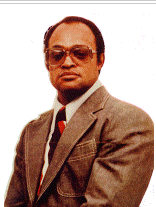
It would never do for a prosecutor to announce that he was recommending leniency for a drug dealer because, well, he’s just such a swell guy, and he’s good friends with Joe Louis and Frank Sinatra and throws fabulous parties (to which I have been invited, and at which I get to meet celebrities, and high-ranking cops, and other government officials), and when we talk about getting tough on crime, hell, we meant the dirty crime on the streets, the kind that gets its hair mussed, not this classy, refined, tasteful crime….

No, no. So instead you say, he cooperated. He helped the police. He gave them good information on other criminals. He became indispensable to our efforts to battle organized crime. I can’t show you an exact case in which he actually provided useful testimony in court, but I can assure you, blah, blah, blah….

I had to read this twice to believe it. It’s from Wikipedia:

Due to the efforts of Rudolph W. Giuliani and others he was released from prison in August, 1998 as a reward for his cooperation.

Then I realized– wait, wait– this is after all the real Rudy Giuliani, not the mythical Giuliani of his own imagination. In real life, Republican Giuliani is just helping out another corporate profiteer, a man much like himself, who benefits through the sufferings of others, the others who actually fight in Viet Nam, or work in a factory, or face criminals on the streets!

If you asked Nicky Barnes or Frank Lucas about Giuliani, they would tell you that he was a great guy, a straight talker, and an honest cop. Okay– you have two very, very serious criminals tell you that Giuliani is a great cop to them. Okay. Don’t raise any suspicions? But then you have Giuliani telling us that Barnes and Lucas are good guys now. Everything’s okay.


You may have seen interviews with Ritchie Roberts and Frank Lucas on the DVD in which they vouch for the accuracy of the film. In separate interviews later, Roberts lambasted the film for making Lucas out to be much nicer than he really was, and numerous other individuals from the film, including the wife of Bumpy Johnson, have also attacked the honesty of the film.

Why do they even waste our time with the bullshit “based on true story”?

Other Inaccuracies:

Ritchie Roberts did not have any children, so the court battle over custody obviously never happened. Frank Lucas, on the other hand, had “more than five” children, most of whom he completely neglected. He had one child with “Miss Puerto Rico”, who was not actually “Miss Puerto Rico” but homecoming queen. Those shots of Lucas presiding over those all-American Thanksgiving Dinners right out of Norman Rockwell? Frank Lucas used his family to run drugs for his personal material benefit. Why this scene suggesting paternalism, when the relationship was clearly one of exploitation.

Ike Atkinson, Lucas’ link to Southeast Asia, claims that he never put any heroin in military caskets– he only used furniture. Others have claimed that Lucas had the heroin stuffed into body bags with the bodies of dead soldiers– not as glamorous as the alternative shown in the movie. In any case, the stories about the caskets is weak, and not corroborated by anything other than Frank Lucas’ colourful imagination.

Ritchie Roberts actually played only a minor role in the takedown of Frank Lucas. The DEA did most of the work. The raid on Lucas’s house in New Jersey was the result of informants within the Mafia, not Roberts’s brilliant detective work.

Who did Frank Lucas turn in? According to the film, over 150 corrupt police officers. There doesn’t seem to be any public record of even a single police officer convicted of corruption based on testimony from Frank Lucas. However, according to articles in the New York Times, he turned in over 100 drug dealers– he was a snitch– and was placed in the witness protection program, along with his wife and daughter. And of course, had his sentence reduced!

Now, one more thing about that: the movie shows Lucas committing at least two cold-blooded murders, including one in which he has someone doused with gasoline and then sets him on fire. Amazingly, he is never charged with murder. Ritchie never brings it up. It is never discussed. It is never investigated, apparently. Lucas is released from prison after five years. (In real life, he went back in for seven years after that.)

Okay, so did he actually murder people? I have to conclude that Lucas makes these claims in his biography and while bragging aloud to people at parties, and then confides to the police that he is just bragging.

Need to sell books, you see.

Need to sell that Hollywood movie.


Another twisted hero: Joey Gallo, immortalized by Bob Dylan in the song “Joey” from the album Desire. Turns out Joey connected with Nicky Barnes in prison, because he wanted a conduit into Harlem for his heroin. He saw all those potential customers… people squandering their welfare checks on food and clothing and shelter… he just had to help them.

This gets better. When the New York Times decided to run a story on Barnes as “Mr. Untouchable”, they asked him to come in and pose for a picture. If he didn’t, they told him, they would run one of his ugly mug shots. Barnes showed up and the resulting picture conveyed a rather shocking level of arrogance for a criminal gang leader. It so offended President Jimmy Carter when he saw it that he ordered his attorney general to investigate.
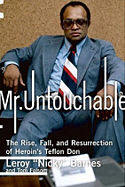
 

So the Democrat gets tough on crime and the Republican goes soft. That’s easy to understand, actually: the Republicans have more in common even with the criminal rich than they do with the working class.

Debunking Lucas

The gross inaccuracies of this film reflect a more recent trend in Hollywood to take stories “based on fact” and then absolutely shamelessly alter them beyond all recognition because nobody seems to give a damn for the truth anyway. If you watch an older “based on a true story” film like “Dog Day Afternoon” or “Serpico”, you realize just how flagrant the fudging has become. The earlier films were positively dogmatic in comparison. Even “The French Connection”, which insisted it was only “inspired” by the story of “Popeye” Doyle, had more respect for the facts than “American Gangster”.


William Wilberforce: Drug Addict

William Wilberforce, the hero of the abolitionist movement, and patron saint of all evangelicals who hate it when liberals paint them as regressive on social issues, did drugs.

Wilberforce was probably not quite as heroic as portrayed in the film “Amazing Grace”, nor, probably, as insufferably pious. (I kept thinking, as I watched the film, that if Wilberforce had been this maudlin and humourless in real life, I might myself have voted against abolition.) The role of Thomas Clarkson seems historically correct– but the heart of the director isn’t in it. We get clear displays of Wilberforce’s physical sufferings (he had some form of digestive ailment) as if he alone paid a personal price for the abolition of slavery. This is the process of conferring sainthood upon someone who, though eminently worthy of honour, had faults we will soon know nothing about. Unless we think in terms of, “that I cared too much”.

In actual fact, many historians feel that Wilberforce was too gullible and respectful of authority to lead the movement, and that slavery would have been abolished earlier (and without quite so many “exceptions”) had a more forceful leader taken up the cause. In fact, at least one historian observed that Wilberforce was finally moved to lead the movement when his friend, William Pitt (the Prime-minister), pointed out that another leader was preparing to take up that role and he– Wilberforce– wouldn’t get credit for it if that happened.

He was also– wait for it– God help him!– a drug addict.

Yes he was. Wilberforce used opium for most of his life, on a very regular basis. The movie “Amazing Grace” honorably makes a point of showing his regular use of laudanum. Dickens also used it. So did Edgar Allen Poe. Lincoln’s wife, Mary Todd, was prescribed laudanum for a sleeping disorder. She became addicted. She was later committed to an asylum.

Interestingly, laudanum is still available by prescription in the U.S. It can be used to treat diarrhea.

Anyway, the support cast of “Amazing Grace” is brilliant, and the sets are wonderful, but Ioan Gruffud is a complete disaster as Wilberforce and drags down the entire film.


From Wilberforce’s son’s biography:

His returning health was in a great measure the effect of a proper use of opium, a remedy to which even Dr. Pitcairne’s judgment could scarcely make him have recourse; yet it was to this medicine that he now owed his life, as well as the comparative vigor of his later years. So sparing was he always in its use, that as a stimulant he never knew its power, and as a remedy for his specific weakness he had not to increase its quantity during the last twenty years he lived. ‘If I take,’ he would often say, ‘but a single glass of wine, I can feel its effect, but I never know when I have taken my dose of opium by my feelings.’ Its intermission was too soon perceived by the recurrence of disorder.

All very nice, but unconvincing. Wilberforce’s son is quite careful to assert that his famous dad was “sparing” in the use of a known narcotic, yet he tried and failed several times to stop using it. It’s hard to understand why, if he had no consciousness of it’s effects, he would make the attempt.


What exactly is laudanum?

Added December 30, 2008:  Apparently George Washington took laudanum because of his teeth.

Natalie Portman

I know– we would all dearly like to believe that anyone as wondrously beautiful as Natalie Portman must also have, within her amazingly perfect form, a nearly perfect talent, or at least some magical quality that would justify building an entire work of art upon her personal qualities.

Natalie Portman was the star of “V for Vendetta”, “Goya’s Ghosts”, and the upcoming “The Other Boleyn Girl”. The fact is, the further she moves away from her youthful intuitiveness and closer to actual conscious technique, the worse she gets. She was wonderful in “Leon, the Professional” (1994) and intriguing in “Beautiful Girls” (1996) neither of which really demanded much of her other than putting herself in front of the camera and remembering her lines.

It is interesting to me that, for a large segment of the movie-going public, it doesn’t matter if she can act or not as long as whatever it is she is doing in front of the camera appears to be something like acting, and as long as she looks good. Better yet– if something daring is involved– as in “Closer” (2004)– she must really be acting because it must have been hard for her to do. “Star Wars”, of course, doesn’t count. “Star Wars” does not count for anything, ever.

I haven’t seen “The Other Boleyn Girl” yet but I fully expect it to be as bad as “Goya’s Ghosts”, which at least featured counter-balancing performances by Randy Quaid, Javier Bardem, Stellan Skarsgard, and direction by the estimable and sometimes magnificent Milos Forman (“Hair”, “Amadeus”). “Goya’s Ghosts” was almost fun to watch, especially when Natalie Portman was not on the screen. There was a wonderful scene in which an inquisitor is “put to the question”– tortured by the father of one of his victims– to prove to him that anyone will say anything under torture.

But Natalie Portman– look, I’m as disappointed as anyone– but when she has the screen and she is required to come up with a reading of her lines, an interpretation, an affectation, and an evocation of the person she is playing, not some sophomore with outsized ambitions– she falls completely flat. She simply can’t convey the feeling that there is anything behind the facial expression– that it’s not just hanging out there like one of those Greek masks.

Scarlett Johansson shows more raw talent, and Woody Allen was able to get something out of her in “Match Point”, and she may yet find a career as an actress instead of a celebrity, but we’re waiting for the breakout role.  (Actually, Scarlett Johansson was brilliant in her first major role, in “Ghost World”, where, like Portman in her early roles, she was more natural and intuitive.)

In the meantime, if you really want something more than eye candy, check out Amy Adams in anything she has done in the last few years. She is a funny-looking actress, and she may never get the same media attention as the other two, but she can out-act both of them in her sleep. She desperately needs a movie worthy of her talents.

Al Capp Auditions

In an interview, Goldie Hawn, recounted that Al Capp, the creator of “Li’l Abner”, the comic strip– yes, the one that did a rather savage parody of Joan Baez in the 1960’s (calling her “Phony Joany”)–once arranged an “audition” for her for a movie he claimed was going to be made from his comic strip. At the audition, he demanded sex with her. When she refused, he told her she would never work in “this town” because that’s just the way things are done.

Apparently, she was not the only actress to be auditioned by Al Capp.

I feel better having this reason to dislike Capp, since his tasteless parodies of Baez, of course, were political in nature.

He also flew up to Montreal and took on John Lennon and Yoko Ono, in person, at their “bed-in for peace”.  Lennon eventually found him tiresome and asked him to leave.

But then, all good satire– I mean, really good satire– is subtle and nuanced and suggestive, and his parodies of Joan Baez were none of these things.