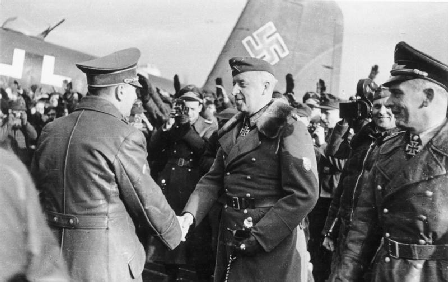
Teresa Lewis

Teresa Lewis apparently has an IQ of about 70, which, according to some definitions, is borderline developmentally delayed. She met a couple of men in a line at Wal-Mart and, in exchange for sex and money, persuaded them to come to her trailer and kill her husband with two shotguns she purchased for the purpose. She also persuaded her daughter to have sex with one of the men.

The NYTimes Account

Within hours of the deed, she had confessed all to the police and was subsequently sentenced to die.

Some people who support the death penalty object to the execution of a woman. Why? If you like to have people killed– don’t fool yourself: that’s what it is– then why should you object to a woman being executed just because she is a woman?

The fact that the authorities want to execute a woman of borderline intelligence is obscene and repulsive.

The fact that the two men who actually pulled the triggers got off with life sentences is unjust.

Her defense lawyers argue, as a mitigating factor, that Lewis is afflicted with “dependent personality disorder”. Hallelujah, thank the Lord, we have a label!

Do the readers of the story in the New York Times and elsewhere automatically believe that this is a real mental illness and that she could be treated and possibly cured of it given time and effort? Why? Just because some two-bit lawyer with the connivance of some amateur psychologist decided that there must be such a thing as “dependent personality disorder”? And that this is not the same thing that we more commonly know as “needy”? Oh no– needy won’t cut it.

“Ladies and gentleman of the jury, we ask you to find her not guilty because, even though it is proven that she hired someone to kill her husband and son, she was, after all, very needy at the time.” No no. It’s, “my client was confused. She had lost control of her life. She could no longer make rational decisions, because she suffered from Dependent Personality Disorder.”

Teresa Lewis should be spared execution because capital punishment is an act of savagery and revenge, not because she is woman.

Brian David Mitchell: the Defenseless Insanity Plea

Added November 9: once again we have prosecutors in the U.S. seeking psychiatric treatment for a suspect so that he can be held responsible for crimes committed while he required psychiatric treatment….

It would seem to me that a judge receiving this motion should immediately rule that the prosecution has implicitly acknowledged that the defendant is not responsible for his actions, therefore not guilty.

Brian David Mitchell is clearly delusional. He should be locked up… in a psychiatrist facility, to protect both himself and the public.

The fact that he may be insane doesn’t really matter in America nowadays. This “kind-hearted”, “compassionate”, “Christian” nation is so dead set on savage retribution that it will let nothing stand in it’s way anymore.

Russell Defreitas and Obama’s Depressing Flag Lapel Pin

It is absolutely necessary that you believe there are dire threats against the United States out there and that only the institutional powers of the United States law enforcement agencies, along with Dick Cheney, can keep you safe:

But as time went on, more was revealed about the plot and the unlikelihood of its success (the fuel pipeline, for example, had safety mechanisms that would have prevented cascading explosions), as well as the level of government involvement (the informant had played a somewhat enabling role in pushing forward the plot). Ny Times, August 1, 2010

Yes, yes. And it turns out that one defendant appears to be somewhat inept:

Mr. “Russell Defreitas can’t mastermind his way out of the on-off switch on a video camera,”

That’s his own lawyer speaking.

And once again we have the specter of government infiltrators actually running the conspiracy– isn’t this “entrapment”? Yes, it is. Absolutely it is.

Feel safer? Mr. Defreitas is going to spend a long, long time in prison, mainly because he is a fool. There is not a politician in the United States who would countenance anything but the most draconian sentence imaginable. Do you hear me, Americans? You live in a nation where not a single politician of note has the guts or courage to state the obvious. Not a single one of your leaders, Democrat or Republican is willing to consider for even one second the possibility of saying what he really thinks about all this.

You’re laughing? I hear you laughing. Who cares about a man like Defreitas who sounds foreign anyway. But these same leaders are the ones who manage your economy and the environment and wars and intelligence and safety. And there may come a day when we all pay the price for the same lack of courage and conviction.


Obama’s depressing flag pin:

Yes, he had to do it. If he didn’t put the flag pin in his lapel, someone on Fox News would have zoomed in on the lapel and stared into the camera, oozing insider confidence, and whispered to his audience: “is it asking too much for our president to be even a little patriotic?” And Obama would have had to say on TV “I am patriotic” leading the viewer to wonder why he thought anyone thought he wasn’t patriotic. And so it goes. And so you Americans, so proud of your fantastic culture, your Coors beer, your jack-ass videos, your right to train your children to use rifles… we in Canada salute you.


I just happened to be wandering around Kursk one day with 1 million men and a few tanks and…

At the end of World War II, German Field Marshal Erich Von Manstein surrendered to the British and was incarcerated at a camp in Bridgend (somewhere in England) for about 8 years. His health, apparently, was a concern, so he was released early from an 18-year sentence (after a mere 4 years). Then he lived for another 20 years, during which he apparently enjoyed the confidence of the new, democratic West German government.

Von Manstein had lots of friends, including Churchill and General Montgomery. They testified to his good character. Von Manstein, you see, was one of those “honorable” Prussian generals who only wanted to serve his country with courage, dignity, and good grooming.

How he suddenly found himself in Stalingrad with a million Germans with guns and tanks remains a mystery to this day.

Von Manstein wrote in his biography that if Hitler had only left the generals alone to manage the war in the East, Germany would have won the war. What a shame. Isn’t that what comes to mind when you read a statement like that? What a shame.  If only…

Aside from the fact that it probably wasn’t true– Russia was not France– you would think Von Manstein would have been glad– given his avowed personal reservations about Nazism— that someone prevented Hitler from taking over the world. Especially since it couldn’t be him, what with duty and honor and all that.

Like Rommel, Von Manstein claimed he never carried out many of Hitler’s criminal directives and that appears to be partly true. Other than the one to kill 5 million Russians and bomb Stalingrad to the ground, of course.

So conservatives love to point to a guy like Von Manstein because, from a certain, twisted perspective, he seems to represent the idea that war-making can be ethical, uplifting, spiffy, and delightful. What fun it would have been if that parvenu Hitler hadn’t spoiled the party!

Unfortunately, one has to accept the fact that, like Rommel, and Beck, Von Manstein didn’t really seem to have that big of a problem with Hitler as long as he was winning. The ethical issues only seemed to come up when the possibility of war crimes trials appeared on the horizon.

That’s the problem with the entire “conservative resistance” to Hitler– they almost all supported him regardless of his policies as long as he was winning. The problem with the Jews? Well, you had to obey orders or you would be shot. Except that the Italians weren’t very good at obeying those orders and they didn’t get shot.  They were elbowed aside by people like Von Manstein so the real Fascists could get he job done: round up those Jews.

When Hitler started to lose, like Kurt Waldheim, the good generals  suddenly seemed to realize that the concentration camps were a bad idea. “I knew it! I knew we would get in trouble for that…”


Would Nazi Germany have defeated Russia if Hitler had left it up to the Generals? Maybe. Suppose the Generals had decided that a two-front war was not viable– suppose they would have concentrated all of their fire power on Russia. And suppose they would have prepared better and started in April instead of June…. Suppose they had seized the oil fields in the Caucasus before attacking Stalingrad?

But even the generals did not anticipate the T-34 tank, in the huge numbers the Soviets were able to muster, or the millions of soldiers they could eventually hurl into the war.

More importantly, they had anticipated that Russia would surrender after massive defeats on the battlefield.  Russia was not going to surrender under any circumstance.  There was no “there” there, for the “victorious” generals to arrive at.  Just desolation, destruction, and eternal resistance.


Von Manstein vs Rudolph Hess

Hess: left Germany in May 1941, years before most of the worst Nazi atrocities were committed.

Von Manstein: fought to the end of the Reich.

Hess: betrayed Hitler who ordered that his plane be shot down.

Von Manstein: loyal to the fuehrer to the end.

Hess: wanted to negotiate a peace deal with Britain, possibly with the aim of turning the Reich’s full force upon the Soviet Union.

Von Manstein: I was just following orders, except when I didn’t. Critical of the officers who attempted to assassinate Hitler.

Hess: life in prison.

Von Manstein: released after serving 4 years of an 18-year sentence.

… because of his health. He died in 1973.

Property

Is the right to own property the “most basic right” of any democracy, as some Tea Party leaders insist? Could something like that be any more true than, say, that the right to be paid a just wage is “the most basic right” of any democracy?

Maybe. Maybe not. But the first question that comes to mind is, what is property?

Original sin? Marxism as an economic philosophy may be dead, but a lot of Marx’s observations about the nature of work and property still seem acute. In a nutshell, the real value of “property” comes primarily from the labour invested in it. So the thing of real value is not a thing, but the work of our hands.

So if someone has a lot of property and they want to protect their right to that property, the first question is, what right does the person have to that property in the first place.

Most likely — this sounds glib, but it’s probably true– it was stolen in the first place. From neighbors. From neighboring tribes. From the people living above the oil deposit. From the native peoples who hadn’t developed a culture of putting “no trespassing” signs and fences around their property. Property comes from the exploitation of natural resources, forests, fish, water– how does anyone obtain the sacred right to take exclusive possession of a tree?

Since property has no value in and of itself, when someone says they want to guard the right to private property, they are really talking about monopoly. It’s nobody’s “private” property– it’s always public. What I want to be sacred is my fence around it.

This is not to say I am against the general arrangement of things we have worked out in modern capitalism. Our system works pretty well as a way of distributing real wealth (the product of labour). It’s the perversion of this system — the tax breaks, monopolies, lax regulation– that make the system unfair.

All corporations claim to love competition but no corporation really wants it, and only the government has the power to ensure that there is competition, and the idiots who think the government should stay out of the marketplace actually seem to believe we would be treated better by McDonald’s, BP, Exxon, Monsanto, Archer-Daniels-Midland, and General Foods than we would be by Nancy Pelosi.


“What I don’t like from the president’s administration is this sort of, ‘I’ll put my boot heel on the throat of BP,’ ” Paul said. “I think that sounds really un-American in his criticism of business.”

Rand Paul, criticizing the Obama Administration for being “too tough” on BP, Washington Post.


Republicans at Work: “A ‘teacher’ told my child in class that dolphins were mammals and not fish!” a third complains. “And the same thing about whales! We need TRADITIONAL VALUES in all areas of education. If it swims in the water, it is a FISH. Period! End of Story.

National Republican Party Website voter feedback, quoted by the Washington Post.

Clarence Thomas, Wake Up

Thomas criticized the majority for imposing ”its own sense of morality and retributive justice” on state lawmakers and voters who chose to give state judges the option of life-without-parole sentences. ”I am unwilling to assume that we, as members of this court, are any more capable of making such moral judgments than our fellow citizens,” Thomas said. NYTimes, May 17, 2010

That is a stunning declaration.  What I do, says Thomas, as a Justice on the Supreme Court, is rubber-stamp any cockamamie decision you want.  But we know: as long as it is a conservative decision.

Wow! Even for a long-time follower of the diminutive career of Justice Clarence Thomas, this one is particularly mind-boggling. He appears to have forgotten what the Supreme Court is for. He calls it a “moral judgment” but what he is talking about is the job of the court to ensure that government legislation and policy does not infringe on the rights guaranteed by the Constitution of the United States. Thomas, having accepted the job of navigator on this airplane, suddenly exclaims, “why are we on an airplane? We should be on a boat instead” and jumps out the window.

What is a “moral judgment”? The majority (6-3) simply agreed that the Constitution of the United States prohibits “cruel and unusual punishment”. Is it a moral judgment to force voters and legislators to obey the constitution? Could it be that the framers of the constitution didn’t mean cruel and unusual? Maybe they meant to ban “reasonable and humane” punishments instead.

One has to ask the obvious question: does Clarence Thomas know he is on the Supreme Court? Does he understand what a Supreme Court does? If the Supreme Court is not capable of “making such moral judgments” about what was meant by “cruel and unusual”, then what exactly, one wonders with astonishment, is the function of the Supreme Court?

But then we know what Clarence Thomas’ answer would be: to prevent suspects from defending themselves against criminal charges. To prevent citizens from suing corporations. To prevent corporations from being unprofitable. To prevent minorities from oppressing the majorities with their extravagant demands for equal opportunity, fair wages and a safe workplace. To prevent women from stealing jobs from white men. To prevent black men from stealing jobs from white women. To prevent parents of minority school children from demanding trained teachers and science labs. To prevent reporters from demanding information. To prevent police from having to seek medical attention for injured prisoners. To prevent privatized prisons from having to provide adequate space and staff for prisoners. To prevent witches from witching and sorcerers from corrupting the minds of young children with their liberal theories and scientific text books and pagan culture. To prevent feminists from being feminine and masculine men from using mescaline. To prevent guns from falling into the hands of pacifists and pacifists from falling into the hands of lesbians. To prevent lesbians from being lesbians or living in sin or enticing gay-bashing preachers to have children they could adopt.

Let us all now and forever and again deliriously sing the praises of the unlawful, the unconstitutional, the transcendent Clarence Thomas. May he go down in history as the only Supreme Court Justice to ascend directly into heaven.


Thomas might answer that the Constitution is not a moral document. But that’s not the issue and he knows it, for he asserts that Congress and the voters have the right to make “such moral judgments”. I think Thomas would concede that what he is saying is that the “moral” content of the judgment that a life sentence is too harsh for a mere property crime is not subject to constitutional constraints.

If the public wants to torture and hang a witch– so be it. Who are we to say they shall not torture or hang a witch? Who are we to say there are no such things as witches?

My other ecstatic tribute to Justice Clarence Thomas.

Just Sentencing: 35 Years

Why is there no discussion about criminal sentencing in the U.S., other than the usual nut cases advocating even more and more of it?

Is there a single politician in the U.S. who doesn’t run on a platform of “getting touch on crime”. Those criminals! They commit crimes. Next thing you know, they’re out there just walking the streets and committing even more crimes, right after their 30 year sentence is up!

There is a logical absurdity at work here, of course. Ever since Nixon in 1972, every American politician, including Democrats Clinton and Carter, have pledged to get tough on crime, just like the Republicans do. But if every new generation of leaders gets tougher on crime than the previous generation, we must have long ago reached maximum toughness. In fact, I think we’re at a level of insanity that approaches the very high standards set by Salem, Massachusetts in the 17th Century, and Spain during the Inquisition.

So, how would you react if someone said, “you know what– I think we need to start showing some compassion, and we need to reduce prison time, improve prison conditions, and concentrate more on rehabilitation? How would you react? I’m not sure. Polls suggest that most people will react with sneering and laughter. Are you nuts? Do you know how easy criminals have it? Man, I wish I could sit around all day in my comfy prison cell just watching TV and stuffing my face all at taxpayer expense! No worries! No bills! Did you know how often they weasel out any sentence at all?

I would challenge anyone who thinks like that to spend a day in one of our lavish, over–crowded prisons.

What we have is a society that has become vicious, heartless, vindictive, and irrational. Yes, that’s us. We’re nuts. We have been increasing sentences– in the U.S., at least– and Harper wants to do it in Canada– and we have reached a level of absurdity: 20, 30, 40 years for property and drug crimes!

How does anyone know what the right sentence is? I just read about a first-time offender in the U.S. who got 33 years– I’m not making this up– for hiding a video camera in a women’s locker room. How do you know 33 years is “right”? What is 33 years? What pleasure does the judge get when he looks into this man’s face and decides his life should be destroyed. It was his first mistake– enough. Destroy him. Crush his spirit. Erase his existence. Annihilate his soul.

You could argue that it likely wasn’t his first mistake: it was the first time he was caught.  But you could also argue that most of us have sinned at one time or another and never been caught.

That is the kind of human being the judge is: he will deny it until he is blue in the face, but it’s true– he takes pleasure in doing it. It gratifies him. He should admit it, so we can have an honest discussion of crime and punishment in America.

And America needs to look at itself and ask: if what we believe about crime and punishment was true, how come we’re not the most crime-free society on earth, because almost nobody punishes as harshly and ruthlessly as we do.


On Obama:

Tommy Barnett, 56, an independent of Cullman, Ala., said: “Somebody told me he’s not from here. I said I never heard of Barack Obama, that’s not American, then we find out he’s Muslim. What they got somebody like that running our country for?” (NY Times, April 21, 2010)

He doesn’t. You do.

Capitalism and Abortion

Why are so many capitalists opposed to abortion? It’s really rather bizarre. They construct this massive edifice of rationality and logic to justify a system that rewards capital and entrepreneurship, and brutally punishes the poor, and then they declare that the unborn are entitled to massive government interventions on their behalf. The government must intrude on the mommy market, insinuate it’s authority, seize control of the very bodies of a class of citizens– fertile women– and dictate the outcome.

A real capitalist would tell you that if it isn’t profitable to have babies, the government shouldn’t interfere. But then, there are few real capitalists. People who claim to believe in small government actively support the government seizing bandwidth and giving it to the telecoms, or seizing new copyrights that never existed before, or taking oil from the ground beneath wildlife refuges, or taking trees from national parks and hauling them out on roads built by taxpayers.

Free market capitalism is mostly a fraud intended to attack government programs that benefit working class citizens at the expense of owners. When government intervention benefits the wealthy, they’re all for it.

The Crime Rate and Stephen Harper

The crime rate in Canada has been declining for about 10 years.

So whatever it is we do now is actually working.

That won’t stop Stephen Harper from introducing his mean-spirited “tough on crime” legislation, because it’s a sop to the party base.  If the crime rate continues to go down: it worked!  But, best of all, if the crime rate actually goes up after his new anti-crime measures, he will simply say that that proves we need even more of them!

(Conrad Black- of all things– after his personal experience of prison– is opposed to Harper’s plans.)

The Unspeakable Tragedy of Stefan Kiszko: “For a Laugh”

There is something about Stefan Kiszko’s story, among many, many stories of wrongful convictions, that is especially poignant.

The bare bones: on October 5, 1975, Lesley Susan Molseed, an 11-year-old girl from Manchester, England, was murdered on Rishworth Moor. She was not sexually assaulted but her assailant masturbated over her body.

(I don’t even know what a Rishworth Moor is but it sounds dark enough, and drab and dreary.)

The police needed a suspect.

They never choose a well-spoken, middle-class, white professional who knows how to get a good lawyer for these things. Virtually never. (An exception.)

Enter Stefan Kiszko, 26 years old, a Ukrainian immigrant, with a few strange habits. He happened to live nearby and awaited disaster. Kiszko lived with his mother and compulsively wrote down license numbers of cars that annoyed him. One of these license numbers matched the number on a car seen driving in the area in which the body was found.

Kizsko suffered from anemia and other medical complications.

He initially came to the attention of the authorities when three teenaged girls went to the police and claimed that Stefan Kiszko had exposed himself to them. The police picked him up and questioned him and quickly formed the opinion that this was just the kind of suspect they were looking for in the unsolved Lesley Molseed case. Take that as you will. Then they found the license number in his notes– case closed.

As always– and, as usual, without consequence– the police broke the rules. They questioned him without advising him that he could have a lawyer present. They did not inform him that he was a suspect in the Lesley Molseed murder. They denied his request for his mother to be present. They bullied and cajoled and intimidated and harassed him for hour after hour after hour and then they told him he could go home if he would only sign the confession. According to the Guardian Newspaper, Kiszko had the emotional and mental age of 12.

A smart police officer— well, let’s say, a conscientious police officer– would have realized that Kiszko was vulnerable and easily led and might have looked for something in the confession that provided independent collaboration of the story. A detail that would have been unknown to anyone but the perpetrator. No such luck. I don’t know if they even thought of it, but no such evidence was brought forward.

But that’s not the “industry” of policing. The “industry” of policing is the arrest and conviction of individuals blamed for specific crimes. Whether or not the individual actually committed crime isn’t always relevant to the “success” or goal of the industry. People should understand that. There is a reason why the police and prosecutors are so reluctant to give up on a prosecution even when there is overwhelming evidence of innocence.

As someone who is not in that industry, I think about that a lot. If I had been a cop, the first thing I would have wanted out of Kiszko, if he was going to confess, is something we didn’t already know. A type of knot. A weapon. An artifact. The position of the hands on the body. Anything. I think I would have been troubled if there was nothing like that in his confession.

Maybe a cop thinks that no one would ever confess to a crime he did not commit. [Be it noted that Albert DeSalvo– the Boston Strangler– “confessed”, and allegedly provided the police with details “only the murderer could have known”; DNA testing proved that his confession was false. One can only conclude that the information only the murderer could have known was probably actually provided to him by the police.] I don’t find it so unbelievable. The psychological pressure on a suspect must be unbelievable. It must be like someone constantly poking at you with a pointed stick, jabbing you again and again, stopping for a moment, then starting again just as you begin to relax. And it will all end if you only please please please sign this piece of paper.

Kiszko was tried in July 1976. As usual in cases of wrongful conviction, his lawyer appears to have been incompetent. (Where’s the Hollywood Movie about this lawyer?) In fact, in express contradiction of Kiszko’s wishes, his lawyer made a defense of “diminished responsibility”. He didn’t do it, but if he had, he wasn’t responsible. Needless to say, this strategy undermined Kiszko’s alibi (that he was with his aunt at the time, and then in a store). His lawyer also failed to provide the court with evidence about Kiszko’s medical condition (a condition which made it unlikely he could have carried the body to where it was found) or, astonishingly, that his semen did not contain any sperm (sperm was found in the semen found on Lesley Molseed’s body).

That last fact alone should have disqualified Kiszko from suspicion.

The prosecution apparently knew these facts and failed to provide them to the defense, as they are required to do.

Philip Clegg, an attorney who assisted on the case, later admitted he had doubts about the confession and Kiszko’s guilt at the time. Bravo for you Clegg.  (Cue the sound of one hand clapping.)

The jury must have respected the police an awful lot because they didn’t see any flaws in the case and voted 10-2 for conviction (in Britain, the jury need not be unanimous). Did they think the evidence looked thin but the police probably had stuff they couldn’t show in court?

Awards, medals, and court appointments for all concerned!

A life sentence for Kiszko.

“We can find no grounds whatsoever to condemn the jury’s verdict of murder as in any way unsafe or unsatisfactory”. Lord Justice Bridge, on appeal.

After five years in prison, and innumerable threats from other prisoners, and several vicious beatings, Kiszko began to show signs of mental deterioration and schizophrenia.

He was denied parole because he continued to claim he was innocent. In fact, he was diagnosed as delusional precisely because he claimed he was innocent. All the same, he was denied effective treatment and was shuttled around from prison to prison, hospital to hospital, until he was pretty well destroyed as a human being.

Until he was pretty much destroyed as a human being.

Around 1987, a gentleman named Campbell Malone took an interest in the case, at Kiszko’s mother’s urging, and began to examine the evidence. It seems to take a long, long time to “examine evidence”. Years continue to go by. Kiszko sits deteriorating in prison and years and years go by.

But meantime… Kiszko’s very own lawyer, David Waddington, had become Home Secretary. He would soon be appointed to the House of Lords! David Waddington, you see, was pro capital punishment!

It didn’t take all that much work, really. With the help of a private detective, — why do years go by??– Campbell Malone was able to determine that strong alibis existed for Kiszko, that he was incapable of leaving sperm on the crime scene, and, most astonishingly, the three girls who saw him exposing himself had lied.

They did it, they said, “for a laugh”.

The Yorkshire Police and the forensic scientists involved in the conviction never apologized. Judge Lane apologized but didn’t think he’d do anything differently the next time.

In November 1992, Kiszko, emotionally and psychologically destroyed went home. He became a recluse. He was promised 500,000 pounds compensation but never received it. One year later, he died of a massive heart attack

In one of the few acts of true grace in this sad, sad story–as all the police and prosecutors blamed each other and insisted they were all good and wise and just– Lesley Susan Molseed’s sister had the remarkable good grace to attend Kiszko’s funeral in acknowledgement of his innocence: Kiszko, it turns out, was just another victim.

In October 2006, a man named Ronald Castree was arrested and charged with raping and beating a prostitute. A DNA test proved he was innocent. Ironically, it then proved a match to another specimen — in November 2006, Castree was arrested and charged with Lesley Molseed’s murder. His DNA matched that of the semen found on the body.

I am so pleased that today we have finally put things right.” Police Superintendent Max Maclean.

And that is quite possibly the most obscene statement of all. “We have finally put things right”. Police Superintendent Max Maclean, you are a fucking liar.

No, you haven’t. You never will. It’s simply not possible anymore.

Not until the little girls have had all their laughs.


* In the U.S., assuming Kiszko had been executed– a likely event– , no one would ever have found out he was innocent because no court action can be brought on behalf of a deceased prisoner.
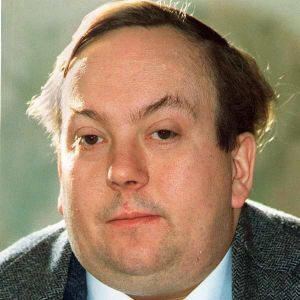

Stefan Kiszko

“I started to tell these lies and they seemed to please them and the pressure was off as far as I was concerned. I thought if I admitted what I did to the police they would check out what I had said, find it untrue and would then let me go” Stefan Kiszko

Thank God– only in the U.S. could we still have the drama of an execution of an innocent man — every other civilized country does not practice capital punishment. Still, for Kiszko, given his idiosyncrasies, it might as well have been a death sentence. Maybe it was worse.*)


“I would like all the officers responsible for the result to be specially commended and these observations conveyed to the Chief Constable” Judge Hugh Park, after Kiszko’s conviction.

Who are we? In prison, Kiszko was repeatedly, brutally attacked by other inmates because he was a sex offender. Perhaps they are simply more naked in their impulses, but it is striking that they didn’t see themselves all that differently from judges and juries, really.

More Details about the Stefan Kiszko Case.

I stopped tracking individual stories of wrongful convictions years ago. Why? There were too many to keep up with.  It’s too depressing, not because we, as a society, make mistakes: but because of the glee with which police and prosecutors openly flout the law and good practice in their desperate lust for successful prosecutions at the expense of judicial integrity.

The enthusiasm with which many citizens continue to advocate for capital punishment, longer sentences, harsher penalties, is testimony to our insatiable desire to seem righteous and our unbridled faith in the police to solve cases and arrest the right person.

We will be ferocious and hateful, if necessary, to defend our sense of righteousness. We will tolerate any amount of abuse and torture to provide ourselves the chimera of safety and security.

It should be the policy of the national parole board from now on to disregard the issue of innocence or guilt once a prisoner approaches the end of his sentence– so we don’t get caught in these catch-22’s anymore, in which a prisoner will not be paroled because he won’t admit he is guilty. What’s the big deal? He has almost served his sentence. Why do we insist he now validate the judgment and righteousness of the prosecution?

Well, it’s obvious why, and it’s wrong.

[2022-05: it appears that the judicial system is actually taking up my suggestion– that the National Parole Board disregard the issue of innocence and guilt when a prisoner becomes eligible for parole.]