
“Into Thin Air”: on Climbing Your Ego

For a while, Edmund Hillary and Tenzing Norgay were the only two persons to have set foot on the top of the world’s tallest peak. They did it on June 2, 1953, just before coronation of Queen Elizabeth II. The news electrified the world in a way we can hardly imagine today. The North Pole had been found, and the South Pole, and almost every other remote location in the world had been explored and conquered and claimed. British climbers had been trying to ascend Everest for at least 25 years before Hillary and Norgay, using bottled oxygen, finally succeeded.

Since then, there have been more than 615 successful ascents of Mount Everest– and 142 deaths. In 1996 alone, there were 30 expeditions, all up there during the same two-week period in May, the only safe– if you could call it that– time to climb Everest, between the winter snows and the spring typhoons.

So it’s not a very exclusive club any more. Nor is this club confined to extraordinary athletes: in 1985, climber David Breashears escorted a wealthy but fit 55-year-old Texan to the top, proving, so it seemed, that almost any reasonably healthy person could do it. Everest lost some of its lustre and soon serious mountain climbers were going after more exotic records, like “first person to climb the highest mountain on all seven continents” and “first person to climb a mountain on a bicycle” and “first person to actually camp on the summit”, and so on.

Every year now, dozens of climbers make the attempt, and a good number of them make it. It’s become big business, for the guides, for the Sherpas (12 or more required for each expedition), for the climbers (witness the glut of books and films), and for the governments of Nepal and Tibet, the two nations bordering on Everest. These governments charge up to $70,000 for permits for each expedition. Legitimate expenses? Right.  Because the government has to cover some costs involved in these expeditions.  Do they?  So how come volunteers from around the world have to clean up the cast-off oxygen bottles and torn tents? Cash grab? Probably.

Still, it would be a mistake to underestimate the resolve, discipline, courage, and determination required to plant your foot on the highest spot on the planet. One out of five never come back.

It’s not as if you can just take a bus to the base of the mountain and then give it your best shot. The journey to “Base Camp” itself (at 17,500 feet, the starting point for all expeditions to the top) requires a flight to Katmandu, a ride in a battered, aging Soviet helicopter to the town of Lukla, 9,200 feet up, and then a long trek, usually about 3 or 4 days, through mountainous passes and wobbly foot-bridges over winding rivers. There are no Holiday Inns on this journey: you stay overnight in rambling, leaky stone lodges. You may pick up a dangerous parasite if you are not careful about what you eat and drink. And if you do get the runs, you’ll have to relieve yourself in an outhouse– if they’re not overflowing.

All of the supplies necessary for a summit attempt– food, water, oxygen bottles, medical equipment, and radios, and so on, must be laboriously hauled up narrow, winding mountain paths by yaks.

There is only about 1/2 as much oxygen in the air at base camp as there is at sea level. Above 25,000 feet, there is only 1/3 as much. Climbers must slowly acclimatize themselves to the thin air, a process than can take up to eight weeks, of grueling excursions up and down the lower ranges of the mountain.

The ascent begins with a harrowing trip through the Khumbu Icefall, a unstable white maze of fractured glacier and towering seracs that has taken more lives than any other part of the mountain, including the summit. In some places, climbers must walk across three or more rickety aluminum ladders strapped together over a crevasse hundreds of feet deep. The glacier itself moves 3 to 4 feet every day, and is covered with a thin layer of snow and ice that can conceal treacherous gaps.

After a few trial runs, you camp above the glacier in temperatures that can descend to -20 C. Then climbers ascend the Lhotse Face, a sheer icy wall of 3000 feet, and camp about halfway to the top of it, at 24,000 feet.

When someone says “mountain climber” to us, we tend to picture a blonde yodeling alpinist ascending a steep rock face with ropes and pick axe. Most of Everest, however, including the Lhotse Face, is more like a very steep walk. Most climbers attach themselves to ropes strung along the face for safety, but they basically walk up a very steep, hard, icy incline of about 30 degrees. It is the incredible cold, the wind, the snow and ice, and that thin oxygen that makes it so fearsome.

The tents are nestled into little ledges carved out of the ice by the Sherpas. The Sherpas don’t carve out ledges for themselves, though: they prefer to go on up to the South Col at the top of the Lhotse Face and camp where it’s safer.

The film version of “Into Thin Air” (a dramatization– not a documentary) shows Chen Yu-Nan, a Taiwanese climber, coming out of his tent on the Lhotse face clad only in his boot liners. He slips and falls down a hundred feet or so and then drops into a crevasse. In the film, he died then and there, but in real life, he died a few days later, while trying to make his way back to base camp. The Taiwanese team proceeded without him.

Above 20,000 feet, the adventurers travel very slowly, resting every few steps. Many climbers develop a hacking cough, dizziness, and insomnia. If you ascend too fast, you can develop altitude sickness– your body fails to produce enough red blood cells to keep your brain fed. This can also lead to High Altitude Cerebral Edema (HACE) or High Altitude Pulmonary Edema (HAPE). Blood vessels in the brain, starved for oxygen, swell up, causing disorientation, loss of motor functions, and even coma. Climbers lose weight quickly, making them more vulnerable to the cold.

As if that isn’t enough to deal with, the sun and snow combine to create unbearable heat and light during the day, giving climbers splitting headaches and dehydration. Once the sun has gone down, the temperature can drop to 20 or 30 below zero or worse. If you were to spend the night near the summit itself, you might encounter a wind-chill of well below -50. Few of the climbers who have been stranded near the top overnight in a blizzard live to tell the tale or make the talk show circuit.

Keep in mind that, even in this day and age of phenomenal technological breakthroughs, Everest remains one of the most remote places on earth. Helicopters cannot ascend higher than 20,000 feet (the air is too thin to provide thrust to the rotors), so there is no rescue possible for climbers trapped near the summit in a raging blizzard, other than the assistance of your depleted and exhausted fellow climbers.

Much of the current fascination with Everest can be traced to the media coverage of the disaster in 1996, when 12 climbers died over a three-day period. Writer Jon Krakauer was on one of those expeditions and wrote a searing, compelling book on it called “Into Thin Air”. This unusually honest and self-examining account of the many lapses in judgment that led to the disaster unleashed a storm of controversy that continues to simmer today.

Krakauer claims that some of the guides behaved irresponsibly, rushing ahead of their clients to the summit and then descending before their clients were safe. One of the key Sherpas wore himself out carrying 80 pounds of useless communications gear for writer Sandy Pittman so she could send “live” dispatches from the summit. Lines were not strung over the difficult Hillary Step until climbers had been waiting in the freezing cold for 90 minutes– a delay that may have cost several lives. It is clear that all of these problems were aggravated by the fact that there were 39 people trying to summit on the same morning. Bottlenecks formed. Climbers in difficulty were lost in the crowd. Guides lost track of who was where.

When a storm struck late in the day, two of the expedition leaders, Rob Hall from New Zeeland, and Scott Fisher from the U.S., were trapped on the mountain, along with several exhausted clients. Doug Hansen, a client with the Hall group and a postal worker from Washington State, disappeared and was never found. Andy Harris, a guide with Rob Hall’s group, probably slipped over one of the sheer cliff’s that surround the peak while trying to assist Hall. A group of climbers barely made it back to the South Col, the location of their advanced base camp, but couldn’t locate the tents in the howling wind and snow. They huddled in the cold growing weaker and weaker until ace climber Anatoli Boukreev (who had descended early, ahead of his charges) found them. Beck Weathers and Yasuko Namba (the oldest woman to ever summit Everest) were left for dead. The others were almost carried back to the camp.

The next day, to the utter astonishment of Krakauer and the others, Beck Weathers walked into camp under his own power. He was put into a tent and made as comfortable as possible, but it was expected that he would not last the night. The next day, he was found lying in the open– his tent had collapsed and torn away in the night and his sleeping bag was half off. He had been shouting for help for hours but nobody had been able to hear him. He ultimately lost his hand and nose to frostbite.

Ed Viesturs and David Breashears, who were waiting at the base camp to make their own summit bid, helped rescue Weathers, an action that became a bit of a sub-plot of the IMAX film. Viesturs and Breashears did a good thing, but the film plays coy with the facts. You are left with the impression that Beck Weathers got into trouble and Viesturs and Breashears heroically rescued him, and that was that. The IMAX film glosses over the rest of the disaster, partly because real disasters don’t sell very well, are complicated to explain, and raise questions about the whole idea of celebrating a summit of Everest.

A few days after Weathers was helicoptered to Katmandu from base camp, Viesturs, Breashears, a Spanish woman named Aracelli Segarra, and Jamling Norgay, the son of Tenseng Norgay, the first Sherpa to summit Everest, made their own successful summit.

The Viesturs team made a film of the trip for IMAX. It’s a big disappointment. For one thing, Viesturs got ahead of the team and reached the summit without benefit of cameraman. So what was supposed to be the climax of the film ends up being a verbal footnote. And when Segarra and Norgay make the top with the camera-man, you are left with the absurd impression that they filmed themselves. They celebrate, embrace, look out over the world, while the narrator trills their accomplishment… and you wonder who the heck is filming this, and why haven’t they said anything about him? How did he get there? Wasn’t that remarkable? Why are you pretending he isn’t there?

* * *

Many people don’t think much of the idea of climbing Everest. Why risk your life for an achievement that is completely symbolic, and of no scientific or humanitarian value whatsoever? Why should we feel sorry for climbers who die on Everest, when it is plain that their goals are entirely ego-centric?

The Viesturs expedition tried to patch a gloss of scientific necessity to the risk they took, much the way Robert Ballard tried to make his efforts to find the Titanic look useful and valuable, and NASA tried to make manned space missions seem necessary. But it is clear that there are really only two reasons people climb Everest. Firstly, to gratify one’s ego: I climbed Everest. Wow. Secondly, (and less dubiously), for the sense of personal accomplishment.

I have some respect for those who climb for the sense of personal accomplishment. It is still a remarkable achievement, of endurance, determination, and mental stamina. As I read through Krakauer’s book, I found myself experiencing an odd sense of longing for that bleak, windswept, arctic landscape near the top of Everest.

But I found that sense diminished when I considered that there would probably be another two dozen climbers up there at the same time.

Krakauer’s book is a powerful antidote to any illusions you might have about mountain climbing. It is a very rare little gem: an honest, intelligent book about sports– for that is what mountain-climbing really is– competition. Who got there first? Who did it the fastest? Who did it the most? Krakauer’s book has soul.
Amazon

Everybody thinks Amazon.com, the on-line bookstore, is such hot stuff. In the past year alone, the value of Amazon stock soared from about 2 cents a share to $550.00, or something like that. Amazing.

The trouble is that Amazon has never actually made a profit. They lost about $45 million last year. Yet everybody thinks they are worth more than K-mart. Amazon was given a business load of $275 million dollars last year. Why? Does anybody seriously think an on-line bookstore operating out of a garage that hasn’t made any money yet is worth more than a well-known discount chain with hundreds of stores and offices and other assets? No. But everybody thinks everybody else does. So, you buy some Amazon stock and hype it up until everybody else starts buying it up. Then you sell it and get the heck out of there before it all crashes.

As a store, Amazon sucks.

I ordered a book, “Into the Wild”, by Jon Krakauer, in paper-back. How much is a paperback at a conventional book store? About $12-15 nowadays, I guess.

The Amazon.com price for this book was $10.36, U.S.. That seems like a pretty good deal. Let’s order some more:

Various Positions: A Life of Leonard Cohen, $18.20
Bill James Guide to Baseball Managers, $21.00
Wow! Three books for $49.56!

Actually, that’s pretty pricey. I think the government should subsidize books. Reading make you smart. The smarter we are, the more money we make. The more money we make, the more taxes we pay. The more taxes we pay, the more money the government has to build obsolete bombers and missile defense systems. Go for it.

Anyway, you hand over your VISA number and wait two weeks, and, voila: your book arrives by parcel post. Then you get your bill.

Whoa, Nellie!

The bill is for $59.00! How’d that happen? Oh yes— the ubiquitous “shipping and handling” charge.

Now, could someone explain something to me? You walk into K-mart. You see a book. The price of the book is $10.00. You go to the check-out. You hand over $10.00. You walk out with the book. Well, okay, first you pay $1.50 in taxes. Then you walk out with the book.

Didn’t they handle it? Didn’t they ship the book to the store? Didn’t they pay for electricity and water and heat? Didn’t they hire someone to clean the store? Of course they did. Those are all operating expenses. But they are included in the price of the book. They make sure that they sell enough books with a big enough profit margin so they can pay all their expenses.

Now, Amazon.com ships me my three books and then, surprise, hits me with a $9.85 “shipping and handling” charge. I can understand the shipping charge. That seems fair. But when I ship a package this size, I pay about $2.47, thanks to our volume deal with a well-known courier company. Amazon ships gazillions of books, so they must have an even better deal. So where does the rest of the $9.85 come from? Don’t tell me it cost $7.38 for someone to put the books into a box and slap a sticker on it? Of course it doesn’t.

It’s simply a way they have of picking your pocket on the way out of the store. Amazon has no more reason for charging for handling than K-mart does. The honest thing to do would be to include the “handling” charge in the list price, so you don’t get tricked into buying a book that actually cost more than they’re telling you. Then you can compare prices fairly, and disconnect yourself from their web page and head down to your local Chapters and buy the book in person and take it home with you right away.

Amazon.sucks.

Update 1999-06-25

Call me stupid: I went and ordered some more books from Amazon, “Digging up Sundance” by Anne Meadows, and “Etta Place: Her Life and Times with Butch Cassidy and the Sundance Kid”, by Gail Drago. Cost of the books: $15.96 + $10.36 = $26.32. Now get a load of the shipping and handling on THIS order: $18.90. That’s right– $9.45 per book. What the heck is going on here? This is double the amount I paid on my last order, even though both books were delivered in the same package. I shudder to think what the charges are going to be for a couple of CD’s I ordered but which haven’t been delivered yet. Boycott Amazon!!

Crumbs

Crumbs

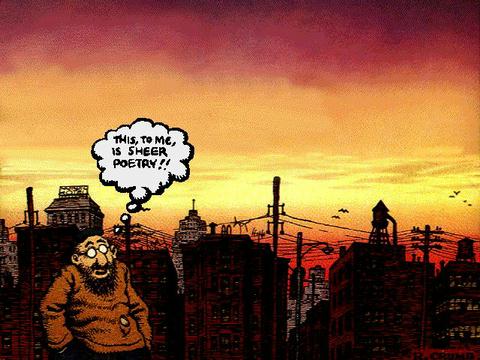
Robert Crumb is famous for a number of cartoons he created in the 1960’s and 70’s, the most celebrated of which was the Keep on Truckin’ schematic, which became a trademark of sorts to the Grateful Dead. He is also the originator of the Fritz the Cat character, which became the subject of a full-length x-rated movie by Ralph Bakshi. Crumb disapproved of the movie.

In 1994, Terry Zwigoff, a friend of Robert’s, made a disturbing, brilliant documentary called Crumb, about Robert, and his two brothers, Charles and Maxon. (Crumb’s sisters declined to take part in the film. You may wonder about that by the end of the film.)

rcrumb2.jpg (37467 bytes)

I say “disturbing”. Searing might be more like it. The Crumb brothers pull no punches. At times, you almost can’t believe they are saying the things they say on camera. Don’t they realize how shocking they are? Yet this is no television talk show. The brothers are never coy or evasive, and don’t really shift blame away from themselves, or try to cast themselves as unwitting victims. If there is one attractive quality about these brothers, it’s their honesty and their sense of personal responsibility.

Crumb’s father was brutally strict, and his mother over-compensated, and the three boys had some kind of weird chemistry going. From the time they were little, they became obsessively fascinated with comic books. They were extremely gifted at drawing and Robert even organized the three brothers into a production company and they created their own variations on Treasure Island.

All three were also severely socially dysfunctional. Charles, though in his forties, lives at home with his mother, almost never leaves the apartment, rarely bathes, and uses prescription drugs to keep from becoming “homicidally disturbed”. According to Robert and Maxon, he has never had a sexual relationship with anyone but himself. He had made several suicide attempts before the documentary was made, and, a year afterwards, finally succeeded, providing the film with a poignant postscript.

[Update 2022: read that paragraph now, it occurs to me that a big part of Charles’ troubles may have been the side-effect of the prescription drugs.  If he stopped taking them at any time, the effects of withdrawal would have produced “symptoms” that would like be attributed to his personality, instead of to the drugs themselves and the effects of withdrawal.]

Maxon lives alone in an apartment and has been arrested several times for sexual assault. He swallows a long length of cotton cloth every three weeks to cleanse his bowels, feeding it like string slowly into his mouth, and likes to sit on a bed of nails and meditate. Like Charles, he is, frankly, a slob. He describes, with helpless amusement, how he followed a girl wearing tight shorts into a drug store and could not resist the urge to pull them down while she was waiting in line at the checkout. Unlike Clinton, there is no evasion, no excuses, no hypocrisy. He confesses to a repugnant act, but you almost like him.

Robert, who at first appears to be seriously maladjusted, eventually emerges as the sanest of the three. He manages to make a living from his drawings, develops relationships with women, marries, divorces, marries again. He has two children, years apart, one by each wife. Yet you can see that he’s not too far removed from Maxon and Charles. The difference may be that Robert succeeded in transferring his anti-social impulses into his art.

Crumb is one of the most brutally honest documentaries you are likely to ever see. The three brothers talk openly about their father’s abusive discipline, their sexual preferences and fetishes, their own hopeless perspectives on themselves and each other. Robert’s comics have always been controversial, and the film includes interviews with editors and fellow cartoonists who express their own misgivings about some of his more controversial stories. In one, for example, two characters enjoy the sexual favours of a woman with no head. They consider her perfect, since they don’t have to make conversation with her afterwards. In another, an outwardly normal, All-American family, is actually rife with incest. An editor allows that she is not sure that Crumb actually disapproves of the incest. A third example is a parody of consumerism, describing a new canned meat product called “Niggerhearts”.

When challenged, Robert Crumb, like his brothers, is not very evasive, arrogant, or apologetic. Who knows, he seems to say. Maybe I should be locked up. I don’t know why I have to draw those things but I do. They’re in me. Implied, of course, is the idea that many of these ideas are in us as well. Considering the number of awards this documentary has garnered, you would have to admit that many critics and film-goers acknowledge this. How else could you stomach such a man, or a film about this man?

It is unclear, at times, whether Crumb is parodying himself or society in general or those who think they understand society. His stories are hardly simple parables.

Another example: a black woman is convinced by several businessmen that performing degrading acts will make her a superior human being. She doesn’t outsmart them, though she realizes she’s being put on. Some readers interpret this to mean that Crumb thinks she is as foolish as the white businessmen think she is. Or is this a parody of the businessmen, and the way they attempt to turn even social oppression into material advantage? Or is it an assertion that materialism is itself the most oppressive force in our society? (I favour the last one).

Is it a sin to be truthful? Only if your truth is different from everyone else’s. Is our society ready to admit that otherwise “decent” people can harbour obscene fantasies or racist beliefs? Is our society ready to admit that even victims can be stupid?

I don’t think we are. It’s too difficult. We are far more comfortable believing that blacks are inferior and that women suffocate men or that blacks are innocent victims of racism and that women are morally better than men. We don’t like being thrown a curve. But remember that the most powerful abolitionist tract of the 19th century was Harriet Beecher Stowe’s Uncle Tom’s Cabin. Today, even black activists are mostly contemptuous of its simple-minded moralism’s. Why? Because someone like James Baldwin had the nerve to attack one of the most sacred icons of progressive and religious humanism in existence. And you know what? He was right.

So is Crumb merely ahead of his time?

Well, what really is outrageous nowadays? I think it is obvious that some of our values are completely screwed up. We find the Clinton-Lewinsky affair outrageous, but not the deaths of tens of thousands of Moslem Serbs. We are outraged by a school boy killing his class-mates with a high-powered rifle, but not by an organization that spends $80 million a year to promote unrestricted access to every kind of weapon imaginable. We are outraged by a school teacher who has sex with a Grade 6 student, but not by a talk show host (Larry King) who has been married five times. We are outraged by someone who clubs a gas station attendant over the head to steal $15, but not by a securities seller who rips his clients off for a billion dollars. We are outraged at a seventeen-year-old kid who breaks into houses to steal money to feed his drug habit, but not a pharmaceutical industry that is doing its level best to make us all dependent on drugs. We are outraged at Mexicans crossing the border to seek a better life in the U.S., but not at the economic imperialism that turns self-sufficient Central American economies into impoverished coffee growers for Starbucks. We are outraged when the United Nations wants to include the U.S. among the nations accountable for war crimes to a new World Court, but not when Congress continues to subsidize an Israeli government that denies the most fundamental human rights to its own Palestinian population. We are outraged when a protester burns a U.S. flag, but not when U.S. negotiators refuse to believe that fish stocks on the west coast are in danger of extinction if over-fishing continues. We are outraged when an artist puts a crucifix into a jar full of urine, but not when the record companies routinely cheat artists out of the royalties they are due by jiggering their accounting records. We are outraged by a doctor who helps terminally ill patients die without pain and in dignity, but not by doctors that routinely recommend expensive and useless surgeries to elderly patients who are likely to die within months anyway. We are outraged by cloned sheep, but not by attempts by corporations to patent human DNA sequences. We are outraged by homosexuals seeking benefit coverage for their partners, but not by the fact that we are denying AIDS treatments to impoverished African nations to protect our own patent rights.

What exactly determines our outrage? What is it that most excites us about someone else’s sin? Isn’t it probable that when we proclaim our outrage, especially when we do it in the strongest possible words, we thereby hope to impress others with our own purity, and deflect suspicion away from ourselves? Since no one suspects us of murdering children in Rwanda or robbing old women of their lives’ savings, we don’t get too excited about those crimes. But if someone were to suspect us of sexually harassing an attractive secretary…. well, we’ve probably had a thought or two about it, haven’t we?

What is most telling about this analysis is not that we seem to be so defensive about certain human failings. It’s that the human race, in general, doesn’t really care all that much about starving children or ethnic cleansing or torture or exploitation. We really don’t. But we badly need to pretend that we are virtuous, so, by common consent, we identify certain transgressions as worthy of our hysteria. We draw lines in the sand, and then go ballistic when someone crosses one of them.

I don’t really like Robert Crumb. At best, he is a maladjusted misogynistic misanthrope. But he is articulate and honest, and his cartoons are the work of a genius. There is a soft underbelly to American public morality, and Crumb pokes a sharper stick at this underbelly than anyone else.

You’re Never Alone With a Schizophrenic*: The Myth of Sybil

More unconscious humour: at one point, the real Sybil (Shirley Mason) wrote a letter to Dr. Wilbur insisting that she did not have multiple personalities. Some critics have made much of the letter and Wilbur’s dismissal of it. But then again, which personality wrote the letter…. (To her credit, Dr. Wilbur published the letter in “Sybil”. )

Multiple Best Seller Disorder

About 25 years ago, I read a book by Flora Rheta Schreiber called “Sybil”. It was about a woman with multiple personality disorder. The good psychiatrist. Dr. Cornelia Wilbur, was able to identify 16 different personalities within the consciousness of one troubled young woman. Some of the personalities knew about the other personalities; some did not. The personalities came into being as Sybil’s way of coping with dreadful abuse at the hands of her own mother. It was an awesome book– I was fascinated.

The book created a sensation. It spawned a television movie starring Sally Field, and host of television talk show episodes. It was a big factor in the gradual popular acceptance of the idea of multiple personalities and repressed memories, both caused by child abuse, which, indirectly, led to a lot of the ideas about repressed memory syndrome and the Satanic Ritual Abuse scare in the 1980’s.

Some experts in the field have never accepted the idea of repressed memories, and, as more evidence emerges, many more people are beginning to have doubts. At the very least, most professionals have become cautious about it.

And now it looks like we should start to question the idea of multiple personalities as well: it seems that “Sybil” is a fraud.

First of all, a psychiatrist who worked with the real Sybil, wrote a book questioning the idea that she had multiple personalities. Now a psychologist, after listening to the tapes of the sessions Dr. Flora Schreiber had with Sybil, has concluded that the “multiple personalities” were actually constructions by the psychiatrist to help Sybil explain why her behaviours seemed so strange to herself. It seems that patient, doctor, and writer got carried away with the idea, and, hey, it made good television (and lots of bucks), so why not go with it?

It should be noted that Shirley Mason had read “The Three Faces of Eve”, one of the first books on multiple personality disorder (or Disassociative Identity Disorder, as the DSM called it for a while) before becoming multiple personalities herself.

Well, every time you get tempted to think we humans are pretty smart, it helps to think about something like this. A lot of people, educated and not so educated, were completely fooled by “Sybil”, and, to this day, there are a lot of psychologists out there eagerly diagnosing patients as having multiple personality syndrome or as having repressed memories, on the basis of bad science. And, remarkably, a lot of patients who insist they are MPD– remember– an acronym means it’s true– which of course makes ridiculous the claim that they are…. MPD.

*This title is borrowed from the album by Ian Hunter.

Update April 2008:

An impressive interview with Dr. Herbert Spiegel, a psychiatrist who treated Sybil for a short time, and refused to participate in the book. He observes that the idea of Multiple Personality Disorder only took hold in the U.S.

Links to More Information about the Sybil Myth

Other Hollywood Disorders
Recovered Memories

Update: May 2003

Someone reading this website recently asked me a few questions about this story. I confess that I didn’t provide enough details for anyone to check into the facts, or to do an intelligent search on the subject. Here they are:

Sybil’s real name was Shirley Ardell Mason. She was born January 25, 1923 and died of breast cancer February 26, 1998.

Her psychiatrist, Dr. Cornelia Wilbur, died in 1992, so she isn’t around to defend herself. But other analysts who have listened to tapes of her sessions with Mason say that Dr. Wilbur was suggestive in her therapy and that she used hypnosis.

Flora Rheta Schreiber, the author, also died in the early 1990’s.

The psychiatrist who also treated her and concluded that the multiple personality disorder label was a fraud was Dr. Herbert Spiegel. I read an interview with him in an interesting article in the April 1997 New York Review of Books, in which he stated that Sybil was merely a “suggestible hysteric”.

Another analyst, Dr. Robert Reiber, actually listened to tapes of the sessions between Sybil and Wilbur and concluded that
Wilbur planted the idea
of “multiple personality”
into Sybil’s head, possibly out
of some kind of misguided
therapeutic strategy, and possibly for dumber reasons.

Wilbur claimed that Sybil was “cured”– the book and movie both build up to that startling miracle moment when she “reintegrates” her personalities, but, as in so many similar stories that have been popularized on TV and books, that is not quite the truth. Shirley Mason followed Wilbur to Lexington, Kentucky, and continued to receive therapy for many years.

I would check the archives of the New York Review of Books.   [Wait a minute: has it been removed?  It would not surprise me.]

You could certainly argue that no popular book about mental illness has done more damage to more families than this one: Sybil. With the exception of the infamous medieval text Malleus Maleficarum.

Who profits? The royalties from “Sybil” were split three ways, between Sybil, Schreiber, and Wilbur.

According to the Associated Press, Sybil wrote a letter to Wilbur denying that she had multiple personalities.

“Wilbur had decided she was going to make the Sybil case into a book, because she couldn’t get it published in professional journals…” From an interview with Dr. Herbert Spiegel. My emphasis.

But then, Dr. Spiegel “believes” in hypnosis. But then, Dr. Spiegel describes hypnosis as something more like a some kind of self-induced “trance” state– not what you see in the movies.

Incidentally, in the same letter in which Sybil denies having multiple personalities, she also admits to making up the stories of horrendous abuse.

Where do you put that?

Stealing Ideas and Francis Ford Coppola

Francis Ford Coppola just received $20 million from a Superior Court Jury in Los Angeles because they jury believed that Warner Brothers stole his idea of a live action version of Pinocchio.

Do you ever get paid for your ideas? I’ll bet. I’ll bet you never got $20 million. But then, this is Hollywood, which will spend $120 million on a movie about Kevin Costner riding sea-doos around an old oil rig.

So a jury decided that this idea– to do Pinocchio with live actors– was so good, so brilliant, so original, that it was worth $20 million. Suppose that just by reading this you got an idea. Suppose you thought, hey, why not do a remake of Bambi with live actors? Or how about a remake of “The Ten Commandments” with a live actor instead of Charlton Heston? Or how about a remake of “The Love Bug” with a DeLorean instead of a Beetle? Or with one of those new sexy Beetles that just came out? With all of the remaining Spice Girls stuffed inside? There– that wasn’t hard.

Now all you have to do is find a lawyer and wait for Hollywood to steal your idea. Wait– you might have to prove that they stole the idea from YOU in particular, and not any other person they might have had lunch with. The trick is, you have to have lunch every day in those exclusive Hollywood restaurants frequented by producers and directors and script-writers. As you’re having lunch, just talk loudly about your great new idea. Someone is sure to turn up. Be sure to keep track of who might be stealing your ideas. And believe me, it is a lot less painful than spilling hot coffee in your lap.

Well, Warner Brothers, hold on to your pants. Here are some ideas that I think are way better than Coppola’s idea about Pinocchio, or even my idea about “The Ten Commandments”.. But don’t try to steal them, or I’ll be suing your asses for more than $20 million!

1. The Three Stooges, in an all-new adventure: Curly, Larry, and Moe star as Microsoft software engineers. Starring Jim Carrey, Reg Varney, and Rip Torn as “Moe”. Come to think of it…

2. A lobbyist from the tobacco industry courageously fights prejudice and injustice and succeeds in bribing 50 Senators to vote against a restrictive tax bill that would deprive us of our freedoms and liberties and prevent gas stations from selling cigarettes to pre-teens. Starring Tom Bosley as Newt Gingrich.

3. A courageous high school student brings a semi-automatic rifle to school and is able to prevent a tragedy by shooting 13 fellow students who were all planning to shoot their class-mates and teachers. Starring Sean Penn, and Charlton Heston as the compassionate, understanding, phys-ed coach, who encourages the student to keep lots of ammunition in his locker since you never know when you will be called upon to defend your freedoms and liberties against encroaching atheists, communists, homosexuals, and unarmed liberals. Ellen DeGeneres plays the depraved lesbian sex-education teacher.

4. Let’s see: we’ve had meteorites, volcanoes, tornados, earthquakes… what else is left? What else? I know. A gang of rugged, individualistic, violent, unshaven criminals (all of whom are the only men who could possibly save the world from some stupid massive improbable disaster or psychotic super-killer)- – form a gang and decide to take over the world and require all soldiers and policemen to carry three-hundred pounds of weapons and work alone when confronting enemies. This would be a short movie– about three minutes, or as long as it takes for them to make up a set of rules for the new world order and then break them because “rules only get in the way” and kill each other. Starring Bruce Willis, Sylvester Stallone, and Chuck Norris.

Stuffed Prig for Dessert

I recently went to see the Water Street Theatre’s production of “Shadowlands”, the play by William Nicholson, about the love affair between an aging C.S. Lewis, the Christian apologist, and an American poet, Joy Grescham.

I like the Water Street Theatre. We’ve been subscribers for about three years now. It is a dedicated little professional theatre company that operates in a small space (about 200 seats) and maintains a high level of polish in their productions. If they have one weakness, however, it is that almost all of their productions lack the fire, the spark, the intangible element that brings good theatre to life. First-rate theatre companies find this spark about half the time. Community theatre groups are lucky if it strikes once in two years. One of the luckiest plays is Shakespeare’s “Midsummer Night’s Dream”– it seems to weave it’s own magic. The Water Street Theatre, however, has never found it. I don’t know why it eludes them. There is something about the composition of the company, the combination of actors and directors and scripts that just doesn’t work.

For one thing, Theatre and Company takes bigger risks than most community theatre groups, but never a really big risk. For another thing, they occasionally do something really dumb. And one of the dumbest things they do, about once a year, is a British play, in accent.

I think most fourteen-year-olds with a minor interest in theatre know that you should never do an accent unless you can do it well. Alan Sapp, who played C.S. Lewis in “Shadowlands” can’t do it. Not even close. In fact, embarrassingly distant. I don’t think he uttered a single compound sentence all night without wavering back and forth, between British and Canadian. The result was like watching Tonya Harding skate: sure, she’s got the training and the outward skills, but she can’t hide the trailer park make-up or the bingo-hall manners.

The accent wasn’t the only problem. Sapp was surrounded by actors, good ones, who knew timing and intonation and rhythm, and proved over and over again that he didn’t. And in scenes with Linda Bush as the dying Joy Gresham, he displayed all the warmth and sensitivity of a buccaneer. He emoted towards the audience mostly.

One of the reviews tacked up in the theatre lobby claimed that the only good thing about the second act was Sapp’s brilliant performance. I think this reviewer confused style with substance here. Sapp raised his arms often and gestured towards the audience and hammered away at his lines like a good thespian should. But none of it belonged in the play. There was a dying woman on the bed, but Mr. Sapp might as well have been standing on a soapbox, or a pulpit.

I never liked C.S. Lewis, and I never understood why he was so popular with Christians. He was really a stuffed shirt, a prig, and he held archaic views on almost everything. The charm of his Narnia stories has always eluded me, and as an apologist for Christianity, none of his ideas were new or particularly convincing.