
Bloodletting

If you were really sick, do you think it would help if someone cut open one of your veins and drained about a quart of blood out of you?
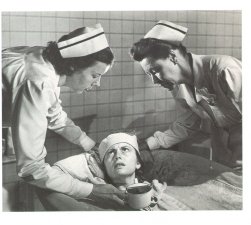
ingrid.jpg (14262 bytes)

This was the preferred remedy of the medical establishment for at least 300 years. According to my history books, even the ancient Greeks may have practised it. They thought that sickness was caused by some kind of poison that got into your blood. The solution was to drain some of the blood out, so that new poison-free blood could take its place and dilute the effects of the poisons.

Now, you may wonder, how could so many people have been so stupid for so long? This remedy persisted well into the 19th century, in spite of absolutely no scientific proof that worked.

Now, I didn’t say there was no “proof” of any kind, that it worked. They did have proof. And it makes for an interesting object lesson in the meaning of “proof”.

This was the proof. Let’s say fifty people got seriously sick, from some kind of virus. Doctor Bloodpan comes to visit his fifty patients, one by one. If it’s a serious virus, given the circumstances of life in the 18th century, it wasn’t unlikely that more than a few of these fifty were going to die. And people knew that. They were petrified of all diseases in a way that people nowadays are petrified of AIDS.

So Doctor Bloodpan goes around to all his patients and drains a quart of blood from each and tells the family that it’s very serious and they must all pray. The family knows that a miracle is about as likely as a cure, so they do, fervently.

Well, Doctor Bloodpan is an incompetent idiot, so half his patients die. Does he go around announcing to all his patients that he is an incompetent idiot? No, of course not. He goes around and announces that he is a brilliant success: he has saved 25 lives! God be praised! And so he is.

Now, some skeptic comes along and says, “hey, what kind of idiot is this Doctor Bloodpan? If he would have just left most of these people alone, at least forty would have lived instead of just twenty-five.” And the families of the survivors go, “What, are you nuts? Doctor Bloodpan is a genius! He saved my husband!” And the families of the dead go, “Well, life is tough.”

Do you think it would be hard, under the circumstances, to convince people that Dr. Bloodpan is a hero? I don’t think so. Human nature is funny. When someone dies, we instinctively think we might have been responsible. We don’t often want to even raise the question, let alone make a public issue out of it. Would George Twentykids have lived if Dr. Bloodpan hadn’t drained the life out of him? Mrs. Twentykids, who screamed at him and called him a worthless fool on the very day he became ill, says, “oh no. It was God’s will.”

We think we’re so much smarter today. Well, consider this:

Many people, even today, are reluctant to call a doctor, probably for good reason. So when a person gets a virus, he waits and waits before seeking help. Inside his body, the virus is strongest in the first few days. Soon, his body’s built-in defenses take over and anti-bodies form, attacking the virus. This is about the time the person feels worst, so he makes an appointment to see the doctor. The appointment is in a day or two. By the time he goes to the doctor, he is already getting better. Does the doctor say, “Hey, you’re already getting better. Go home and have a nice nap.”? Oh no. The doctor, thinking back fondly upon that excursion to the Bahamas paid for by some big pharmaceutical company, happily prescribes some drugs. The patient takes the drugs but his anti-bodies have already pretty well defeated the virus. A few days later, he feels great. He says, “boy, those drugs work fast!”.

I have a feeling that a few hundred years from now, we will look upon surgery and drugs the way we look upon blood-letting today. As some absurd relic of superstition and ignorance.

Health for Profit

Imagine your doctor telling you this:

Well, Bill, you have a very serious illness. In fact, if we don’t do something about it, you’re going to die. Fortunately, we have a cure. It costs $1 million. Do you have it? No? Oh, that’s too bad. Well, it’s been nice knowing you. Please give my best to your family.

Unimaginable, right? No doctor would ever say that. Never. What the doctor would say would be more like, “Well, Bill, we better make an appointment with our team of surgeons, anesthesiologists, oncologists, anthologists, and scientologists, and get you into surgery as quickly as possible so we can save your life.” Yeah, that’s more like it. The doctor cares about you. He is working hard to save your life. Nobody is going to let you die. Then all those doctors and hospitals would just send their bills to your insurance company.

In Canada, they would send their bills to the provincial agency in charge of health care (OHIP, where I live). There would be no need to check with them before hand: other than some cosmetic surgeries and exotic experimental treatments, pretty well everything is pre-approved. OHIP would then pay the bill. Done.

In the U.S., however, they would have to negotiate with your HMO or your insurance company and arrive at an agreed upon treatment plan. The doctor gets paid for doing surgery, not for keeping you healthy. He wants to do as much surgery as possible so he can retire early. But the insurance company or HMO wants to keep their money so they can pay it to shareholders and reward their top executives with mind-boggling salaries, private jets and country club memberships, and numerous vacations. They will do everything they can to keep from having to pay for your surgery. “Well, it’s not as if Bill is really all that well-liked anyway…”

Christian doctors, who hold an incredibly high regard for human life of course, charge only a modest amount, even if they know they could get a lot more. Ha ha.

The cost of medical treatment is a reflection of a number of factors, including scarcity and necessity. The U.S. has opted for a free enterprise model. Supposedly, all those doctors and hospitals will keep their costs real, real low, because they have to compete with each other for patients. So hospitals advertise the odd special: “New stem-cell leukemia treatment– was $350,000, but marked down, this weekend only, to $285,000. Folks, these are close-out prices!”

A kidney transplant can be a regular bargain at $120,000, if there are no complications. And that doesn’t include all the drugs you need afterwards.

Treating someone who’s been in a serious accident can cost $80,000! Just for a few hours in OR! That sounds a bit pricey for me. Couldn’t I try the emergency room at St. Mary’s? I hear they give coupons.

Well, where does the $350,000 come from? What exactly do you get for $80,000? Who gets most of the $120,000?

Well, look at a hospital. It’s got offices, computers, janitors, cooks, nurses, receptionists, presidents, vice-presidents, administrators, human resources staff, training staff, support personnel, vision statements, and so on. Some of the money goes to doctors, of course, and they’re probably over-paid (compared to teachers, at least), but they don’t get anywhere near the $350,000 total. I’ve seen some medical catalogues: hospitals pay big bucks for equipment that looks like it ought to be a lot cheaper. A little plastic tube costs $14.00. It looks like you could get it free at Wendy’s with a Kid’s Meal Cheeseburger.

Well, the reason these medical tools are so expensive is volume. They don’t make enough of them. I think everybody should own their own surgery kit. If they sold enough of them, the price would really come down.

Then we could just rent a surgery room somewhere, hire a doctor for, say, $250.00 an hour, and do the operation there. That would be true free enterprise. And why should only doctors have the right to do surgery? What if you knew somebody who was really good at it? I’ll bet the competition would really reduce the costs.

I’ll bet you could do the kidney transplant for less than $3,000. Instead of nurses, you could have your aunt or grandmother come in and tidy up, change the sheets, hand the instruments to the doctor, and count sponges. Instead of filling out ten zillion forms and arguing with your HMO, you could just give the doctor your car, or a year of yardwork, or your stereo.

A big, big problem is that about half of all the medical treatment in North America goes to terminally ill elderly patients. An 86-year-old guy with bad kidneys gets some heart pain, so we zap him into surgery and perform a triple by-pass. Because he’s old and weak, he’ll take about three months of constant care to recover. A week after he starts walking again, they’ll find cancer or something, and do some more surgery. There goes the family inheritance. So this guy worked hard for fifty years, got married, had kids, contributed to his employee pension plan, bought insurance, bought a house as an investment, scrimped and saved and invested and wasted not… only to get sucked dry by doctors in the last six months of his life. It’s like some kind of horrible, dirty trick they play on all of us. You think you’re getting ahead, but THEY, whoever they are, the holders of wealth in our society, get it all back from you in the end. Your children and your children’s children have to start all over from scratch. That sucks.