Is There a Single Honest Athlete in the House?

It has recently been reported that Lance Armstrong is attempting to prevent publication of a book that alleges he may have used steroids.

The book is “LA Confidential: Secrets of Lance Armstrong” by David Walsh and Pierre Ballester.

Now, it’s not unimaginable that the book is entirely scurrilous. But it is written by two serious European sports reporters and it’s information comes from named sources.

And it’s not as if Lance Armstrong is saying, “I am a clean athlete who wouldn’t go near an illegal supplement or steroid”.

In fact, he will go very near.

One of the experts Lance Armstrong regularly consults with is Dr. Michele Ferrari, an Italian who has been charged with involvement in producing erythropoietin (EPO) for illegal use by athletes.

Ferrari is a protégé of Francesco Conconi who is also suspected of involvement with doping. Armstrong does not, obviously, deny his association with Ferrari– he can’t; it’s on the record. Armstrong correctly describes Ferrari as an expert on training and fitness and claims that that is the only reason he consults with him and allows him to perform physiological testing.

If you were clean, would you admit a close personal association with an expert on doping, even as you claim it is for other reasons? Would you be willing to risk your reputation and all your endorsement contracts for… what? His friendship and encouragement? Is there really no other expert in the world who can perform the same services… without the suspicious background?

Recent reports suggest that a large number of top U.S. athletes may have been using illegal substances. Some of these substances were not detectable until an informant obtained a syringe containing traces of the supplement and supplied it to the authorities.

There was also that allegation in 2002 that the U.S. Postal Team had tried to dispose of several bags of Actovegin during a race.

In fairness, the U.S. Postal Team tested clear. In fairness, it is now known that certain masking agents can be used to disguise the use of steroids.

Is there a single honest athlete in the house? What is the point of these competitions? You won? You cheated. Case closed.

Not fair? Why aren’t athletes speaking out? Why are there no public demands that the athletic federations work harder to clean up their sports? Why isn’t there an outcry from honest athletes– you cheaters are destroying the credibility of our games?

If I was a world-class athlete and I was not cheating, I would be enraged. I would be enraged because I know that if I actually won an event, everybody would assume I was cheating anyway. If I improved my time dramatically: cheating. If I managed to set a world record: boy, you really cheated. Why would any honest athlete choose to remain in athletics?

Do you watch any of these cycling races?  Why?

I would tell the press that I want tougher testing and tougher regulations because unless the public can be convinced that they are witnessing honest, real performances, they will, sooner or later, stop watching.

Just how big of a scam is this?

I don’t think I personally will accept that any world records established after about 1968 are valid. I don’t accept Barry Bond’s record for home runs. I don’t accept that Roger Clemens can still pitch competitively at 40 just because he works out every day.  I don’t accept that David Ortiz, like a fine wine, is improving with age.

I don’t accept that the organizations that are responsible for ensuring the integrity of their sports really cares. Ask yourself if it hurts them, to have world records broken at almost every meet, every season.


Boing! Your Taxes at Play

Darleen A. Druyun was a top official in the Air Force who played a large role in negotiations with Boeing for big fat air force contracts. She was your representative. She was in charge of seeing that American tax-payers got honest value for their dollar.

She was so good at her job, that a lawyer for Boeing bought her house. Yes, indeed. And her daughter got a job with Boeing– no sense wasting that family of expertise.

Ms. Druyun was not heartless by any means. When Boeing was under severe pressure by a competitor, Airbus, for a major tanking contract, Ms. Druyun was kind enough to pass along some specs about the Airbus contract to Boeing.

By golly, she was so ruthless about getting maximum value for the taxpayer’s dollar that Boeing went out and hired her in 2002. Now, she works for Boeing.

Now?

It appears, she was always working for Boeing.

Yeah. Well, you might be wondering by now just how tough this lady was. But you would be reassured to know that the Air Force and the FBI are going to thoroughly investigate the matter. When they are done, I bet all those Boeing shareholders who have been collecting big fat dividends are all going to have to pay big fat fines!

Oink! Oink!

Don’t forget: when the government gives money to people who haven’t worked to earn it, that is called a “dependency” and it is bad, bad, bad.

When the government gives money to corporations who lie and cheat: that’s called capitalism, and that’s what makes our country great.


Locking up Mr. Bojangles

We spend millions of dollars and thousands of hours and all our strength and energy to tell ourselves that we are good, we are kind, we are decent human beings. That’s television. That’s “I am Sam” or “It Could Happen to You” or “The Terminal”.

But the men and women who run for public office know they are more likely to be elected if we think they are heartless. Can he be tough enough? Can he make tough decisions? Can he protect American interests?

When is the last time you heard a candidate talk about compassion? When is the last time an elected official said we need to do more to help the disadvantaged?

Oh yes, we are kind and compassionate and forgiving– on the latest episode of “Friends” and at the Jerry Lewis Telethon. In real life, we take people like Darius McCollum and lock them up.

Darius McCollum, without a doubt, is a problem. He likes trains– subway trains. He likes public transit. He has a strange “thing” for public transit.

He has occasionally disguised himself as an employee of Metropolitan Transportation Authority. He has taken city buses for joy rides. He has tripped the emergency brakes on subway trains, and then arrived on the scene in uniform to handle the “emergency”. He’s kind of a strange guy.

Where would our society be if we allowed men like Darius McCollum to wander around undeterred? Well, probably about where we are. But no, you can’t have strange people joy-riding around in public transit buses and trains. So he was caught. He was sentenced, recently, to three and a half years in jail. He was released. He was on parole. He violated the parole by impersonating an MTA official again.

A psychiatrist has diagnosed Mr. McCollum as having what is called Asperger’s disease, sometimes known as “little professor’s disease”. The New York Times says it’s like autism. But the judge didn’t think much of the psychiatrist and sentenced Mr. McCollum to the three and a half years in jail. This is an American jail. This is hell on earth, especially for a man with a disability.


Believe it or not, Mr. McCollum is married. He met his wife in a subway station. She married him while he was serving his prison sentence. [added 2011-02] I can only imagine.


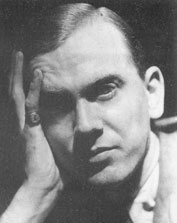
Where is Mr. Greene’s Nobel Prize for Literature?

I used to think the Nobel Prize was the greatest honor this corrupt little world had to bestow upon a person. That was a while ago. Some time before Henry Kissinger won the Nobel Peace Prize for threatening to bomb North Viet Nam into the stone ages if they wouldn’t hold their fire long enough for America to get the hell out and pretend they settled for peace with “honor” in Viet Nam.

greene01.jpg (8190 bytes)

  • End of the Affair
  • The Third Man
  • Heart of the Matter
  • Power and the Glory
  • The Quiet American

So I’m being fey. I don’t have illusions about the Nobel Prize for literature.

And you shouldn’t either. You should know that the writers listed below have received the Nobel Prize for Literature. Not a bad bunch, I suppose. Some of them, like Sartre and Solzhenitsyn seem rather dubious in light of historical developments. was Sartre really all that important? And Solzhenitsyn turned out to be Hester Prynne’s bad uncle and nobody wants to invite him to parties anymore. William Golding? For what? Saul Bellow?

Sure I’m being irreverent. In my opinion, Solzhenitsyn was a good writer who stood up to the authorities and thus became regarded as a great writer. Now that the Berlin Wall is down, we can go back to thinking of him as a good writer. A fine writer. A decent writer. He was also a Russian Nationalist and an anti-Semite.

But then, is the Nobel deserving of grandeur?

John Galsworthy? For “The Forsythe Saga”? You’ve got to be kidding.  “The Forsythe Saga” is grandfather of the modern soap opera.  Sure, he has his rustic charms, but it’s still soap.

Eugene O’Neill? Even Solzhenitsyn is never as boring as “Long Day’s Journey Into Night” (although “The Iceman Cometh” was entertaining, at least, when Lee Marvin played Hickey.).

Steinbeck is the American writer that most resembles Solzhenitsyn, though even he is more interesting. He was important, at least, as the dramatist of the depression. Hemingway is deserving, for his innovations in style as well as for the acutely modern sensibility he brought to his work, so clearly missing from Galsworthy and Steinbeck. T.S. Eliot? I never liked him much, but even I have to admit that the line “I have measured out my life in coffee spoons” deserves some kind of special recognition, if not Eliot’s fondness for fascism and idiotic obscurantism and anti-Semitism.

Toni Morrison is the weakest entry on the list. In ten years, everyone will finally get over the novelty of race and come to know just how uninteresting her work really is. I rarely give up on a book once I’ve started reading it, but I had to slog through “Tar Baby”, and I can’t remember anything about “Song of Solomon”. Is she really better than Richard Wright or James Baldwin, neither of whom made the list?

Isaac Singer is a brilliant choice– one of the most distinctive voices of the 20th century. V.S. Naipaul? I honestly don’t know. I’ve always liked his writing, especially his travel pieces, and he is unfailingly thoughtful and perceptive, and provocative.

William Golding? “Lord of the Flies” is undoubtedly a brilliant book, but I’ve never liked it. I always wondered where the girls were. I was never able to make sense of his other books. I always felt that if he hadn’t been famous for “Lord of the Flies”, nobody would have cared about “Pincher Martin”.

Besides, there are some historical examples of boys being trapped in an isolated environment: distressingly (to every high school teacher), they tend to end up cooperating and building little peaceful communities together.

You may have noticed an astonishing omission from the list. An omission so monumental that it is stunning in it’s audaciousness: Graham Greene.

I have read somewhere that Graham Greene would have won the Nobel Prize but for the objections of the Americans, who hated him for criticizing their actions in Central America, and elsewhere. I’m puzzled by the story. I don’t know where it comes from, or if it is true. I am flabbergasted by the idea that the Americans can block the selection of the Nobel Selection Committee. How do they do it? Who do they phone?

I have also heard that Arthur Lundquist, a member of the Academy, had it in for Greene. “Over my dead body” was the phrase someone used, to describe Lundquist’s feelings about Greene getting a Nobel prize.

But one thing is obvious: on merit alone, Greene should have been selected miles ahead of Morrison, Gordimer, Golding, O’Neill, Faulkner, Galsworthy, or half a dozen others.

It is probably appropriate that Greene never won. One of the most remarkable traits of his work is its utter lack of sentimentality, and prizes–even big ones– especially big ones– are all about sentimentality. There is a way of being correctly incorrect, and there is Greene’s way, which is to dissect why we need to believe that we are somehow appreciative of “incorrect” writers, like Naipaul and Solzhenitsyn. There is a subplot in “The Power and the Glory” about a book a pious mother reads to her children, about a great Catholic martyr, and his heroic life and death. It’s all phony, of course, and Greene contrasts this phony iconography with the “real” adventures of the whiskey priest, who believes himself worthy of damnation. He also contrasts the whiskey priest to “Padre Jose”, who obeys the edict of the revolutionary government and marries and sells out the faith in order to save his own life, and present the people with a living, breathing illustration of the corruptibility of the church.

Is there any other way to imagine a speech at the Nobel banquet, than as the imprimatur of acceptance, respectability, and public honor? Is there anything that would make a writer safer for all of us?

While Solzhenitsyn was a virtual prisoner within the Soviet Union, he was honored with a prize, because he stood up to the godless, inhuman communist government, with courage and conviction. After he moved to Connecticut, he stood up to the inhuman, godless materialism of the West… and promptly disappeared from view.


Novelists Who Have Won the Nobel Prize for Literature

V.S. Naipul
Gunter Grass
Seamus Heaney
Toni Morrison
Derek Walcott
Nadine Gordimer
Joseph Brodsky
William Golding
Isaac Singer
Saul Bellow
Heinrich Boll
Jean-Paul Sartre
John Steinbeck
Aleksandr Isaevich Solzhenitsyn
William Faulkner
T.S. Eliot
Andre Gide
Earnest Hemingway
Herman Hesse
Eugene O’Neill
John Galsworthy
George Bernard Shaw

Why Conspiracy Theories Persist

Is FBI Director Hoover now seen as incompetent for just chasing after Oswald in the JFK assassination?  (Question on Quora.)

No, because all evidence is quite clear that Oswald, acting alone, assassinated JFK.

FBI Director Hoover is now known to have been corrupt, for thousands of abuses, and misuse of his office, to use his FBI agents to spy on and compile files on every possible President, and on every possible Cabinet Member, and on every possible member of Congress, so he could later “control them.”

But, none of that has anything to do with the JFK assassination, which was investigated by the Warren Commission, exhaustively.

Now, you see why some people continue to suspect a conspiracy?  Because of idiots like this who make statements like “No, because all the evidence is quite clear that Oswald, acting alone, assassinated JFK.”

The question was, was Hoover wrong to limit his investigation to one suspect (thereby ignoring all other possible suspects).   The responder seems to believe that once you have a suspect, no other possible suspect should ever be considered, and no evidence that contradicts the guilt of your one suspect should be investigated.

The evidence for Oswald’s guilt was anything but clear, and the idea of Oswald being a patsy for a broader conspiracy is, without a doubt, within the spectrum of possibility.

So if someone like Bruce Spielbauer dismisses conspiracy theories like that, I immediately think, well, clearly he has no evidence for this argument: he’s just a believer.

The Assassination of Robert Kennedy: Why is There Always a Conspiracy?

Why can’t these things be clear?

You don’t want to be accused of paranoia. You want to be reasonable. Sirhan Bishara Sirhan shot Bobby Kennedy four times on June 5, 1968 in the kitchen of the Ambassador Hotel in Los Angeles.

He was grabbed by Bobby Kennedy’s body guards, and George Plimpton, and wrestled to the ground, and handed over to the police. The gun was right there. Everyone was in one small room, a kitchen. Seventy-seven people, seventy-six suspects. It should have been open and shut. Every bullet could be traced.

But if you do a search on the internet, or at any book store, you will see a cornucopia of websites and books claiming to prove that Bobby Kennedy was killed as the result of a conspiracy. Sirhan was hypnotized or brain-washed. There was a woman in a polka dot dress who fled the scene saying, “we got him”, like most assassins do. There were all the people in the world who hated Bobby Kennedy.

Right. Now, we know there is are substantive reasons why some smart people suspect there was a conspiracy to kill President John F. Kennedy, and Martin Luther King Jr.’s followers certainly had cause for suspicions about a government role in his killing, but isn’t it getting a little ridiculous to start seeing conspiracies everywhere?

But it’s not simple. The autopsy stated, with great clarity and forcefulness, that Bobby Kennedy was shot from behind, at a range of “inches”. There were black power burns on his skin and his jacket. The angle of the gun was upwards, at a very steep incline.

Sirhan, as everybody knows, was standing directly in front of Kennedy, facing him, a few feet away. Kennedy never turned. He was shot, he dropped to his back, he said, “is everyone all right”, and that was it.

There are additional questions about how many shots were fired. A door jam that was removed from the kitchen because it may have had bullet holes in it was senselessly destroyed by the Los Angeles police. They claimed it didn’t have real bullet holes in it. So some genius said, “let’s destroy it, so people will forever suspect we got rid of it because it proved there was more than one gun man.”

Why are police officers or detectives never fired for making stupid decisions, like that one? If it really was just innocent stupidity, surely it was stupid enough to justify firing the officer responsible for incompetence? No? And you wonder why people go off on conspiracy theories?

Not one of the 77 people in the room can explain how Sirhan got behind Kennedy and got his pistol inches away from his ear and killed him. There are no photographs showing anything useful– at least partly because the Los Angeles Police decided to destroy more than 1,000 of them before the trial.

There is no adequate explanation. Something sucks here. I don’t want to be a paranoid conspiracy theorist but I’d like to hear a good explanation of why the autopsy doesn’t correspond to the eye-witness testimony and the government’s explanation of what happened in the kitchen of the Ambassador Hotel, on June 8, 1968.


You know, it would do wonders for public confidence in the police and government if just once– just once!–a closely observed investigation by the police would show them to be diligent, authoritative, rational, and objective. But it seems that every time we get a close-up look at how the police operate, we find misplaced evidence, incorrect procedures, sloppiness, prejudice, and incompetence. In the Robert Kennedy assassination, for example, you have the mishandling of the gun. You have the fact that no search warrant was obtained for the search of Sirhan’s room. You have the destruction of evidence before the trial, and broken chains of possession.

By the way, some web pages state that Robert Kennedy “likely” would have been the Democratic nominee for president in 1968. In fact, Kennedy did not have enough delegates– Hubert Humphrey was in the lead. Thanks to the way most political conventions were “fixed” back then, barring some extraordinary back-room maneuvering, Kennedy was not going to be the nominee. (Most delegates were controlled by party figures who would broker a deal that would determine who the nominee would be.)


Did you know who told Bobby Kennedy that his brother, John, had been shot? Do you know who passed on this devastating news? The much despised J. Edgar Hoover! I’m not surprised, I suppose, but I do wonder why the Secret Service didn’t contact Bobby in person, or Kennedy aide Kenneth O’Donnell, or Lyndon Johnson.

Robert Kennedy was at a meeting at the time, sitting around his pool, apparently.

J. Edgar Hoover was emotionless. I wonder if he might have said, “I’m sorry, Bobby– we failed to do our job.” But a man like that doesn’t say that. He says, “there’s nothing you can do if he’s going to drive around in an open convertible.” The guy we caught will be guilty.

Oh Neil Simon! Oh Mary Tyler Moore!

Neil Simon is not exactly Chekov. In fact, he’s not even Neil Simon anymore, having long ago sold-out on his quirky if tired stereotypes and embraced “playwriting for people who think that writers think about things that matter while they don’t.”

In other words, his characters have dilemmas that you think you might have if you were in a play by a rich and pretentious play-write. You won’t be surprised by this dilemma. You won’t be disturbed by it. You will leave the theatre, amused at being amused.

So I find it ironic that he was upset when he discovered that Mary Tyler Moore, who was starring in his most recent play, had not memorized her lines. She was wearing an earpiece at rehearsals, so she could receive prompts. The article about this in the New York Times was not clear as to whether or not the play was actually into production at this time, but it is clear that Neil Simon believed that Mary Tyler Moore was going to wear the ear-piece during performances. He sent her a note saying, get rid of the ear piece or get out of my play.

Mary Tyler Moore got out of the play.

Well, isn’t that a sad story? Mary Tyler Moore is, like, about 80. Well, 60 or something anyway. It must be hard to memorize lines at that age. It must be hard for her to have a famous play-write tell her she wasn’t good enough for his play. Neil Simon is pretty old himself. He hasn’t had a hit in years. He has a feel for dialogue and character-based humour and a person’s idiosyncrasies, but he hasn’t written anything really important, ever. But he is good enough to fire Ms. Moore.

Neil Simon, bless his naïve little heart, admitted that he didn’t know that many other actors were now using ear-pieces during actual performances. Simon said that if he had only known that, he wouldn’t have been so harsh on Mary Tyler Moore.

It sounds a lot like Mr. Simon is reacting to the blowback of him rudely firing an esteemed elderly actress.  Mary Tyler Moore, after all, is a celebrity.  People want you to think they have a relationship with her and really care about her, when what they really care about is being perceived to not be heartless.

My sympathy for Ms. Moore is limited by the fact that she was in the play in the first place because her celebrity status would attract ticket-buyers despite the fact that many better actresses could have played that role more convincingly.  Doing live theatre confers status on celebrity actors who are primarily known for television roles.  She shouldn’t have “auditioned” for the play if she couldn’t memorize lines.

I doubt that Mr. Simon did not mean it: get out of my play.

[As I write this, I think: you see why I’m not popular?]

So next time you pay $65 for a seat at a theatre somewhere, don’t think for one moment that it is mightily impressive that the actors learned their parts.

They might have.

They might not have.

Barry Bonds might have hit all those home runs without the assistance of chemicals. He might not. Madonna might be singing— it might just be dubbed. Those might be Demi Moore’s natural breasts, or they might not be. (Check out a movie called “About Last Night” if you’re seriously wondering).  Beyonce might have great pitch: it is very likely her vocals are autotuned (in fact, judging from radio play, the vast majority of vocalists today are autotuned.)

I know some people think that being concerned about honesty and authenticity nowadays is really rather quaint and precious. Aren’t we all little frauds in our own way? Do any of us admit to our friends and family that we’re really not as smart or good or wise as they think we are?

Sure we are.

But we don’t charge people $65 a seat to come and listen to us.

Quagmire

The eerie thing about the Bush press conference on April 13 is how much he sounded like Lyndon Johnson. All the same arguments he made about staying in Viet Nam— no matter how grim it looked– are now presented by George W. Bush– in that same drawl– to justify staying in Iraq. He even has the beginnings of what some people used to call Johnson’s “shame-faced” expression.

You felt bad for Johnson (I did– a little) because it wasn’t through malice or greed that he got into Viet Nam. It was just plain stupidity.

That doesn’t mean Iraq is inevitably going to be like Viet Nam. I think it is fairly likely, but I’m not willing to give up entirely just yet.

But it does bring to mind a few interesting issues related to game theory.   What is game theory?  Suppose that you entered an auction in which you are required to pay even if you lose the bidding? At a certain point, you will realize that you are bidding more than the item is worth. But if you stop bidding, you get nothing. So you can’t stop.

In other words, suppose your soldiers are killed even if you don’t win the war? That’s what happened in Viet Nam. As the war progressed, the cost to the U.S. (in soldier’s lives) became higher and higher compared to the value of winning the war and stopping the spread of communism dead in it’s tracks. Therefore, the cost of losing the war also became higher and higher. Whereas the U.S. could have withdrawn relatively painlessly in 1963 (as John Kennedy seems to have intended), by 1965 the cost of withdrawing had become immense, and was growing larger by the moment. So Johnson felt he had no choice but to continue “bidding” it up. It took another eight years before Richard Nixon finally ended the bidding, and the U.S. lost the item (Viet Nam) and 55,000 lives.

So, if, in 1963, the U.S. public knew that it would cost 55,000 lives, they would probably have never tried to “purchase” the victory.

It would be hard to believe that the Bush White House is too stupid to realize that they are in precisely this kind of auction in Iraq. The more expensive the overthrow of Saddam becomes, the more unacceptable it will appear to be to withdraw. The more unacceptable it is to withdraw, the higher the U.S. must “bid”.

That doesn’t mean the U.S. should withdraw. Not necessarily. Not yet.

The U.S. could win this war. It could turn over political power to an Iraqi government at the end of June and establish a democracy in the heart of the middle east. All that oil will keep flowing for America’s SUV’s. Iraqi’s will start establishing new businesses and industries and enjoy the fruits of capitalism: new cars, wide-screen tv’s, personal computers, iPods… The country won’t be wracked by continuous civil war between the Shiites and the Sunnis and the Kurds. There won’t be terrorists who perceive the democratic government to be a sell-out to the decadent west. Iran will mind it’s own business. Syria will block the border. Israel will be safe.

Or does that all seem rather unlikely to you now?

It is up to the American public, with an election coming up in November, to assess George Bush’s grip on events. Does the U.S. have a realistic chance of obtaining it’s objectives in Iraq? Or will it devolve into an endless cycle of violence, repression, retribution, and chaos?

I don’t think John Kerry has a viable alternative plan. That’s the nature of a quagmire. But Kerry will be hamstrung by circumstance. If he withdraws American troops, he leaves Iraq in the hands of violent, intolerant extremists, or, perhaps, civil war. If he stays, he may have to deal with increasing numbers of casualties and the inevitable comparisons with Viet Nam. I don’t see how Kerry can be a white knight on this issue. All the voters can do right now is punish the man who got them into this mess with an electoral defeat.

Nixon took over for Johnson in 1968. It took him 5 years before he could withdraw from Viet Nam, in 1973, with “peace with honor”. Shortly afterwards, South Viet Nam collapsed. Thirty years later, it’s easy to look back and see what should have been readily apparent at the time: all of the death and destruction of the Viet Nam War was for nothing.

The problem is that real U.S. objectives in Iraq are not the same as the objectives that appear to be at stake in public statements about the U.S. position. The U.S. claims that democracy and the freedom of the Iraqi people are at stake. I think that George Bush really believes it, but even George Bush’s friends admit he doesn’t think deeply about anything.

The problem is that the U.S. doesn’t really care about democracy or freedom in any other Arab dictatorship. The U.S. seems to smile fondly on the governments of Egypt and Kuwait and Saudi Arabia and obviously has no interest in the victims of oppression in Sudan. So why does it care about it in Iraq? It doesn’t. The real objective, all along, was to depose Saddam, to punish him for having fought George Bush Sr. and for his arrogant refusal to allow the U.S. unfettered access to it’s alleged weapons laboratories, and, of course, to ensure a ready supply of cheap oil for the massive engine of the U.S. economy.

If these are the real stakes, the real thing that the U.S. is “bidding” on, it becomes clear that Iraq will not be free to choose, even in a supposedly free election, a government that is inimical to the interests of the United States. Any political party that declares itself to be opposed to U.S. interests in Iraq, will be declared to be an enemy of democracy, and will not be permitted to contest an election, even if a majority of Iraqi citizens appear to support it.

What the U.S. is doing right now, with it’s interim ruling council, is trying to ensure that the outcome of any future election will be to it’s liking, while appearing to represent the will of the majority of Iraqi citizens.

That may all be beside the point. The real question is, can the U.S. impose a democracy upon a nation that is unwilling to stand up for itself against the violent tactics of a minority of Islamic extremists? The general population of Iraq might prefer a democracy to an Islamic republic, but they don’t appear to be willing to fight for it. There are no demonstrations or rallies in support of the U.S., or the interim ruling council. The Iraqi policemen and soldiers the U.S. is training flee at the first sign of a mujahidin. There is no political party or leader with popular support to speak in favor of continued U.S. occupation. The members of the interim council that are friendly to the U.S. will be perceived to be stooges of the West, almost by definition.

It is fundamentally irrational for the U.S. to attempt to impose a democracy upon a nation that doesn’t want it badly enough to pay even a portion of it’s cost. If people are unwilling to fight for it now, why would they be willing to fight for it after the U.S. leaves and the Islamic fundamentalists have even more room to maneuver?

If the U.S. couldn’t plant democracy in Kuwait after liberating it from the first Iraqi invasion, why does it think it can plant democracy in Iraq? If our “friends”, the Saudis, have no inclination to hold democratic elections, why should Iraq?

If Libya now meets our standard of good world citizen….

It’s not going to happen. The U.S. can never leave. It’s going to get uglier and uglier as the U.S. is forced to aggressively defend itself against determined fanatical enemies.

My guess is that the U.S. will eventually begin to devise some kind of window-dressing, a strategy that would allow it to pull most of it’s soldiers out of Iraq without appearing to be surrendering the country to the forces of darkness and chaos. It may take five more years before they begin this process, and then another five years before it really gets under way. Some kind of Iraqi strong-man congenial to the U.S. will have to emerge, with the backing of the new Iraqi army. Radical Islamic movements will have to be violently repressed. Iran will grow interested.

Quagmire.

The Lonely Sinner

There is a church in my denomination which has decided to try to be welcoming to gay members of the body of Christ. The rest of the denomination goes, “Amen, brother– what an opportunity to bring the ministry of the Lord Jesus to those depraved souls! May they all, the lord willing, repent and be welcomed into the body of Christ as former sinners.”

That isn’t exactly what they had in mind. What this church had in mind was to welcome practicing gay Christians to their fellowship, to accept them as fellow sinners, and to share communion with them.

So, in other words, these particular sinners are still sinning. Unlike the rest of us sinners who sin no more. But we wouldn’t say that, would we? Would you say that you don’t sin anymore, now that you are a Christian? I wouldn’t.

We don’t commonly tell people that we don’t sin. If we did, and if people believed us, then we would be comfortable reaching for the stones if we met someone who said, “I still sin.” No, no– we smile indulgently. We are all sinners.

If we all take a deep breath and count to three and speak the holy words, “I am a sinner”, we can all smile knowingly to each other…

…and then, when we spot a homosexual, shriek, “now there is a sinner.”

And then welcome him or her into full communion.

Of course, we do not.

So what on earth do we mean when we acknowledge that we are all “sinners”? I’ve been a member of a church for almost 50 years and I couldn’t tell you. I don’t think it means anything. I don’t think we honestly believe that we are sinners. We believe that we are righteous and virtuous and morally pure. We’re reaching for stones. We do it all the time. Nothing makes us feel more righteous and pure and holy than reaching for a stone.

If it doesn’t mean anything, what do we think it means when we say it? Do we think about that time we looked at someone we were not married to and wished for a forceful embrace? That time we were rude or mean to a colleague? Maybe our fantasies about owning a Hummer and crushing a few Corollas underneath those massive wheels? Or the fact that we didn’t give very much, last year, to help people less fortunate than ourselves?

The key difference between the sinner we acknowledge within our selves and the sinner we see in the homosexual is that we really seem to believe that our sins are over. Whatever it is we acknowledge having done wrongly, we seem to believe that we don’t do it anymore.

That’s also the peculiarity of sexual sins. When the preacher stands in front of a congregation and rails about the evil fornicators and homosexuals and adulterers out there– we can safely assume that he doesn’t mean me. We might be doing it, but it’s something we keep secret anyway and can safely assume no one else knows about it.

That’s why preachers would rather preach about those sins than about indifference or materialism or hard-heartedness or hypocrisy.

High School Uniform Benediction

St. Benedict’s is a new Catholic High School in Cambridge, Ontario. Here’s their website. Nice looking building, isn’t it?  [Ah… the website is gone.]

The students are nice-looking too. They all wear uniforms. The school promotes peace and healthy relationships. I applaud.

But I’ve never liked the idea of school uniforms. What’s the big deal? Why do some people have this compulsive need to tell people what they should be wearing?

I’ve heard the arguments in favor of school uniforms. Most of them essentially sound like this:

  • if we don’t tell students what to wear, girls will be sexually attractive and boys will want to have sex with them.
  • if we can’t tell students what to wear, how can we expect them to obey us when we’re telling them to do other things?
  • nobody will be fat any more, so everyone will be accepted by their peer group.

The other thing that annoys me about St. Benedict’s dress code is that they prescribe only clothes made by a certain manufacturer and sold by a certain vendor. The manufacturer is Denver Hayes and the vendor is Mark’s Work Warehouse.

What gives? It is understandable, if still somewhat bizarre, that a Catholic High School would tell its students what they may or may not wear to school, but why on earth should they require clothing made by a particular vendor?

Anybody with any common sense can see that the perfectly rational thing to do would be to specify the type of clothing– beige khaki pants, for example– and let students (or their parents) shop around for the best price.

Ah– but then little differences would be apparent. Five pockets instead of four. A slightly different shade of beige. No no no. Everyone must be EXACTLY alike.

Why do I have a suspicion that this deal was concocted by Mark’s Work Warehouse? Probably they claimed to be offering special pricing to the school if the school would guarantee that all students have to shop there. Probably there really isn’t any discount at all. Probably the items are now over-priced. Do you know of a single vendor that reduces his prices when he knows that he has no competition?

Hmmm. I also noticed that kilts are now banned. So much for the upside of school uniforms. There is a Catholic high school in Waterloo that requires kilts. I always found it somewhat ironic that the girls at this Catholic school were required to wear what looked to me like something we used to call “mini-skirts” when I was in high school.

What’s the point? I’ve heard uniforms defended, cleverly, as a way of reducing the peer pressure on kids. This is a “liberal” defense, to counter-act the impression that only militaristic conservatives want uniforms. (There is a link on St. Benedict’s web-site to a Catholic group that opposes the war in Iraq, so you can’t really accuse them of being “conservative”.)

Nobody has more expensive clothes than anybody else. Nobody has better brand names in their wardrobe. Our children will be judged by character instead of appearance. Is it true? Does it really happen? Are you telling me that there are no unpopular kids in schools with uniforms? That there is less bullying or cliquishness or self-righteousness? That people are more inclusive and fair and kind?

I don’t believe it. If anybody has a reliable study that shows that this really happens, I’d like to see it. And even if there was some reduction of bullying and harassment within the school, what about between schools? If uniforms are successful, won’t that mean, by definition, that kids from other schools, in different uniforms, become identified as outsiders?

In the meantime, I’ll continue to believe that good school spirit is the product of good schools, and good schools are the result of skilled, wise teachers, and wise leadership, but mostly the result of good kids.


St. Benedict students and staff are shy– I can’t find a single picture of anyone on the entire web-site.

How many rules do you need? Well, you start with the top and the bottom, shirt and skirt, and pants. Then boys start wearing jewelry. So you ban jewelry on boys. So someone says, “that’s sexist” because girls can wear earrings. So you allow earrings for boys. But some girls start wearing 2 or 3 earrings. So you ban all earrings on boys and girls. Then someone wears a nose-ring. You ban all jewelry. But what about our WWJD bracelets? Then the shoes– high heels, backless sandals, whatever. Then someone discovers that the rules don’t specify hair colour. For some reason, anal, militaristic apparatchiks get really upset with blue hair, so you have to add more rules. Then the length of the hair. Sooner or later, someone will shave their eyebrows or something, and you’ll have to ban that. And so it goes…

Yes, this sequence really does happen out there.


St. Benedict’s Dress Code:
Students are required to wear the charcoal gray uniform pants, the beige khaki pants, or blue or beige uniform shorts purchased through the school supplier. Only pants and shorts purchased from the school supplier will be acceptable;

At the bottom of the webpage is the motto:

St. Benedict CSS – A Celebration of People

… who all look alike.

Christian Home and School Magazine (March/April 2004) has a generally fawning article on school uniforms. A teacher claims that, “boys used to gather to comment on girls in the hallways, but now boys and girls are treating each other as equals…. that sexual edge is pretty much gone.”

Hmmm. I think I’ll remain skeptical. In a previous life, I used to be a boy and I can assure any teacher that nothing short of a Freightliner Express up the noggin is capable of preventing boys from thinking about the way girls look no matter what they are wearing.

To it’s credit, Christian Home and School gives some space to a Christian School in Calgary that decided against uniforms because they are associated with “elitist” schools in the city.