Olympic Fakes

From steroids to music to politics, the Olympics are all about phoniness and this recent story merely confirms the truth. Nobody at any level of organization really cares about sport or competition or human achievements or international goodwill or anything like that. What they care about is selling the advertiser’s products and getting great seats for themselves and their relatives and their friends in high office for the gold medal hockey game.

What were they thinking? They were thinking, wouldn’t it be great if we could run the sound of the orchestra through a digital link to the PA system instead of through those darn microphones and mixers that just don’t seem to ever make it sound…. you know… just kind of nice. And what if an orchestra member makes a mistake? And hell, Obama did it. And — better yet– we can use a more photo-genic orchestra, which could simply mime the performance. Fabulous!

It’s despicable. But what’s really despicable is the way they act after they are caught: well, what’s wrong with it?

Well, if there isn’t anything wrong with it, why not tell everyone that you are broadcasting a recording instead of a performance? That the performers you see on the screen didn’t even perform on the recording. Why don’t you just can the orchestra all together?

Why ban steroids? If audiences get a bigger thrill from seeing records broken than from seeing a mere race, why not cheat?

Don’t forget — you and I are paying for these people to conduct these obscene rituals of mass manipulation and self aggrandizement. We are paying for it.

And hurray for Bramwell Tovey, the conductor of Vancouver Symphony Orchestra, for refusing to give in on the issue.

Ian and Sylvia

I was reading about the folk scene in New York City in the early 1960’s once and came across what I thought was an extraordinary comment. This was time of incredible intellectual and cultural ferment, and Greenwich Village was rich with young talents like Bob Dylan, Simon & Garfunkel, Phil Ochs, Tim Hardin, Peter, Paul, & Mary, Tom Rush, Tom Paxton, the Roches, and so on.

The comment was something like this: many aspiring folk singers envied the talents of any number of song-writers and performers, but if you asked anyone who they would most like to be– if they could be someone else– the answer was usually Ian Tyson or Sylvia Fricker.

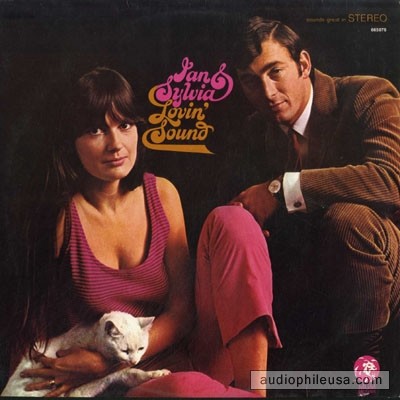
Ian & Sylvia were not among the most successful of those performers– though, for a time, they were quite successful– nor among the most prolific or talented. But they were very talented, moderately successful, and, perhaps more than anything else, beautiful. They were beautiful in that magical, transcendent mode that radiates class and intelligence and sophistication. Even this album cover conveyed this: they are not posing. They exist in a sort of conscious state of distinguished self-contemplation, with neither ego nor false humility. They have momentarily paused for the image, not caring if we are impressed or not, because they know what they look like and they know what they are.

One of my brothers owned the album “Lovin’ Sound”, pictured above, which was released in 1967. As an adolescent, the cover picture of Sylvia with the low-cut top– that elegant cleavage– stirred me for obvious reasons. I wasn’t yet a huge fan of their music — now I realize it was probably too authentic and complex for my tastes at the time. When I listen to the song “Lovin’ Sound” today, I am far more impressed with it. Restraint and taste are the last things an adolescent learns to appreciate. But the album cover stayed in my mind for decades. A few years ago, I started searching the internet for it and, surprisingly, had great difficulty locating a copy. Just recently, I finally succeeded.

Listen to “The Lovin’ Sound”. It’s trendy– songs about universal love and peace were hot for a while there in the late 1960’s — but a little richer than something like, say, “Come on people now/smile on your brother/ everybody get together/ start to love one another right now”.

Your world is crying now my friend
But give it Love
And it will mend
And, teach you All
The music to the Lovin Sound
Oh, the Lovin Sound

Well, okay. So maybe it isn’t that much more sophisticated. But it’s a fine song, a bit marred by a somewhat jarring attempt to meld folk and rock styles that reminds me of “The Sound of Silence”.

They had a tv show. They struggled through a few more albums that never seemed to go anywhere.

Then they split. Ian went out west to become a cowboy and sing cowboy songs and run his ranch in Alberta, and Sylvia worked for the CBC. Maybe he cheated on her. Maybe she cheated on him. We don’t know– that’s part of what gave them class: no public drama. Peter Gzowski of the CBC, in narration over some documentary on ’60’s folk groups, says they had “artistic and personal differences”.

But they remain iconic to me, the definition of grace and class, the essence of intelligent, cultured expression, and I can’t think of a single other ensemble that comes close to them in their prime in that regard.

At Seventeen

Janis Ian wrote “At Seventeen” in 1973, at the age of 22. She was already somewhat well-known for an earlier protest song, “Society’s Child”. “At Seventeen” — it seems astonishing to me now– became a huge hit, on the pops singles charts, eventually reaching #1.

Here’s a bit of interesting trivia: Janis Ian appeared on the very first episode of “Saturday Night Live” and performed this song.

I don’t know of any other song like it. How many singer-songwriters would write and perform these lines:

And murmur vague obscenities
To ugly girls like me, at seventeen.

About the same number as those who would write a song like “Donald and Lydia”.

The song, if you’re not familiar with it, is about the judgments teenagers make about each other, about “those of us with ravaged faces/lacking in the social graces”, about excluding those who fall short– those who are too short or clumsy for basketball, who never receive valentines, and never get to hear those “vague obscenities”– the most rich and allusive line in the song. It is suggested that the beauty queens will get their comeuppance:

So remember those who win the game
Lose the love they sought to gain
In debentures of quality
and dubious integrity

The small town eyes will gape at you
In dull surprise when pain in due
Exceeds accounts received
At seventeen.

I’m not sure what that means. That the love you get for being beautiful is of “dubious integrity”? Temporary? Transient? I thought the song would have worked better if the “small town eyes” were “gaping” at the wrecks of the lives of those who were excluded because of their “ravaged faces” and who found solace in other places, like drugs, self-abasement, whatever. And I’m not sure that just because you’re beautiful you can’t have true love.

Either way– “exceeds accounts received”– is a clever line. Either way, your punishment, your suffering will never be the amount you deserve. Oh how badly we want to cling to the idea that you do deserve what you get. In almost all the movies about people with disabilities who overcome monumental obstacles to “succeed”, the person with the disability is glamorized. They are disabled, but beautiful, or charming, or peaceful and quietly stoic, like Michael Oher in “Blind Side”. They make you feel good because you tell yourself that you would have behaved decently to this poor, unfortunate soul.

Would we behave as decently to unfortunate souls who don’t have anything lovable about them? Who don’t agree to be the “canvas” upon which we paint our own virtue?


John Prine, an indispensable artist, wrote the song “Donald and Lydia” in 1971, and it appeared on his brilliant first album “John Prine” (which also included “Sam Stone”, “Flag Decal”, and “Hello in There”–three other great songs).

Here’s a taste:

Lydia hid her thoughts like a cat
Behind her small eyes sunk deep in her fat
She read romance magazines up in her room
And felt just like Sunday on Saturday afternoon.

Lydia and Donald are both ill-equipped to have any kind of success in society. They are unattractive, socially inept, and they know it. They’re like Janis Ian’s seventeen-year-old girl– desperate for a shot at love.

They are as real as your right hand, but they are very, very rarely the subject of music or song or film, in our society. We’re too busy selling phony stories that worship women like Leigh-Ann Touhy (Blind Side) while short-changing the very people she wants to help by reducing them, as they say, to “canvases upon which we paint the image of our own virtue”.

Lydia is just plain fat. Donald is just one of “too many”, a private first class in the army.

There were spaces between Donald
And whatever he said
Strangers had taught him to live in his head
He envisioned the details of romantic scenes
After midnight in the stillness of the barracks latrine

Donald and Lydia find each other– in their dreams. In a flight of fancy, Prine imagines them reaching out from their homely little enclaves of self-doubt, across the ether and flotsam of human insensitivity, to find each other and connect in some mystical, orgasmic union of lost souls.

They made love in the mountains
they made love in the streams
they made love in the valleys
they made love in their dreams
and when it was over
there was nothing to say
’cause mostly they made love from 10 miles away.


There are very, very few movies that deal honestly with the harsh facts of life for people like Donald and Lydia and girls with “ravaged faces”. Since most of North America believes that the function of entertainment is to allow you to escape from your dreary little life into fantasies…

Perhaps the best, still, is Paddy Chayefsky’s “Marty” (1955), about a likeable Italian American butcher with no illusions about himself or his prospects.

Great Dialogue (from “Roger Dodger” 2002)

Roger: You can’t sell a product without first making people feel bad.
Nick: Why not?
Roger: Because it’s a substitution game. You have to remind them that they’re missing something from their lives. Everyone’s missing something, right?
Nick: I guess.
Roger: Trust me. And when they’re feeling sufficiently incomplete, you convince them your product is the only thing that can fill the void. So instead of taking steps to deal with their lives, instead of working to root out the real reason for their misery, they go out and buy a stupid looking pair of cargo pants.

Take a Trip to New York

Hi Marg,

We had a great trip to New York. “Hair” was fantastic, and the Museum of Modern Art (MOMA) was also fabulous. We hung around Times Square for a while– it looks like a very interesting place– lots of glitter and lots of people around– but not much to actually do except grab a coffee at Starbucks and hang out. However, if you don’t have tickets in advance, you can buy heavily discounted tickets for Broadway shows there by lining up in front of a TKTS booth and seeing what is available. These tickets are typically 40% off, available for shows that night, most of which are in easy walking distance of the stand. You can’t miss the booth– it’s right in Times Square. We didn’t use it because we already had our tickets, and you wouldn’t have been able to get tickets for “Hair” there anyway.

We loved MOMA. It’s on 53rd St. near 7th Avenue– it’s closed on Tuesdays! Especially the 5th and 4th floors, which had a lot of Picasso and other modern artists. Beautiful building, and we really enjoyed lunch in the café on the 2nd floor. You can take pictures (no flash) and most paintings are unprotected (no glass barriers). Right now they are also showing this “installation” that consists of the possessions of a Chinese woman who “kept everything”. It’s actually quite intriguing.

If you want a great view, there is Empire State Building of course, but you will probably have a better experience at the Rockefeller Centre on 50th St. also around 7th Avenue (near MOMA!).

Everything, by the way, is expensive. I find you just have to kind of ignore prices and do what you want to do– you came all this way and went though all the trouble of getting there, so why not?

The Museum of Natural History is pretty good– a bit like our ROM but bigger. It’s on the West side of Central Park (I assume you’ll have a touristy map). Oh– there is a “Titanic” display on 44th Street, near Times Square. I thought it would be kind of cheesy, but it is actually very interesting. It features a lot of exhibits of items retrieved from the wreck, beautifully presented, with lots of basic information. There is even a recreation of a couple of state rooms and the grand stairway. Expensive again ($25) but we thought it was worthwhile. Took about two hours to go through.

We weren’t high on Ellis Island– they haven’t done very much with the building– just placards, text, and pictures, really, though it was interesting to see the island. You won’t get into the Statue of Liberty– it’s all reservations now, and they are convinced that Al Qaeda is determined to attack it (!) so you’ll have to wait in line so they can scan your lunch bag. You do wonder if they shouldn’t be investing the huge cost of it into protecting something that really matters. It would probably be cheaper to buy a spare Statue of Liberty and keep it in a warehouse in Brooklyn in case it’s needed.

Bill


To use the toll roads on the way to New York City, you take a slip of paper from a man in a booth and then, when you exit the toll road, hand it to another man in a booth who calculates your fee and collects the money.

This is pretty whacky, especially if you have used the 407 in Canada, which has an automated system. You don’t even pay when you exit– you get a bill in the mail.

But then, we paid 5 or 6 dollars for each stretch of the toll road in the U.S. Ontario’s 407 seems to charge a lot more. Your bill is not going to be less than $15 for even a short stretch, from the middle of Toronto to Brampton.


Audio Books: We listened to the entire audio recording of “Angela’s Ashes” by Frank McCourt on the way down and back– about 14 hours, altogether, with time out to hear “Hair”, which we saw in New York at the John Hirschbeck Theatre.

“Angela’s Ashes” is a remarkable memoir, of Frank McCourt’s upbringing in dire poverty in Limerick, Ireland, in the 1930’s and 40’s.

The saddest song I’ve ever heard is “Kilkelly Ireland” by Peter Jones, based on letters found in his grandparent’s attic. It might well be the perfect soundtrack for “Angela’s Ashes”. “Kilkelly Ireland” is simply a series of letters, one to a verse, each verse a decade, to a son who has moved away to America, updating him on family events, expressing how wonderful it would be to see him again.

The JK Wedding Video

Can’t someone post a fun video of a church wedding without generating a storm of controversy?

For those of you who haven’t seen it yet, here it is:

I like it. But I was surprised to find that some people apparently believe the moves were spontaneous, and that the wedding party just decided out of nowhere that they would all dance down the aisle. The entire wedding party worked with a choreographer for quite some time, of course, to develop the sequences, the moves, and positions. The somersault by the bridegroom, for example, required a fair bit of precise timing and practiced coordination.

That, to me, does not diminish the pleasure of watching it one whit. It looks to me as if there was an effort to find out what each person could do and then work with him or her to develop the entire “dance” from start to finish. There are tricks and flourishes that could only have come from training and experience. The moves are too clever and sophisticated to have come from the members of a randomly assembled group like a wedding party– unless that group included a choreographer.

Nobody is trying to fool anybody.

I’ve seen a few comments about the dance moves being clumsy or lacking in gracefulness. Did these viewers forget that this was a real wedding party, not a dance troupe? Or did they just confuse some modern Bob Fosse type moves (especially the slow-motion effect near the end) with obtuseness? Considering the fact that the people in the wedding party were probably chosen because they were friends or relatives of the couple getting married, I thought they did very well. You could tell some were more comfortable with basic movements, and others– like the short guy with the beard– had some real skills. There are also moments that seem linked to the lyrics in a subtle, suggestive way– as when Chris Brown promises he’ll never let her fall and the dancers go into that slow motion tableau, or when the two girls pull each other like slingshots down the aisle.

Yet others have found fault with the idea of doing a celebratory dance during what– they allege– should be a “solemn” occasion. For heaven’s sake, they are celebrating a wedding in a church. They are happy: two individuals found lifetime partners. Their friends are joyfully celebrating with them. Someone else smartly quoted Mencken (I paraphrase): puritans are people who suspect that someone somewhere is having fun. If Jesus had attended this wedding, I think he would have gladly boogied down the aisle along with the wedding party. The Pharisees would have stared solemnly from the side, frowning.


By the late 1970’s, the tradition of the father walking his daughter down the aisle to “give her away” almost seemed to be going extinct. Well, it’s back with a vengeance. Why? Why on earth is a young woman not offended by the very idea? I don’t buy the idea that it’s a meaningless vestige of age-old traditions. I does mean something.

Tarnished “Shine”

Did you see the movie “Shine”? I know– you loved it. What an inspirational story, about how a promising young piano prodigy, destroyed by a psychotic, over-bearing father, eventually recovers to become one of the most brilliant classical pianists in the world.

He even masters that fantastically difficult piece by Rach… Rachminoff? Something… Anyway, it’s so hard, that hardly anyone in the world ever attempts. When he attempted it, he had a nervous breakdown– right on stage! Because it brought up the passions he felt about his over-bearing father, who was that way because he lost his family in the holocaust. Yeah, you heard that it was not 100% accurate– but who cares!

Just to start us out, let’s first cover the inaccuracies of the film, before we get to the salient issues.

First of all, Helfgott’s parents did not “survive” the Holocaust– they never lived the Holocaust. They moved to Australia before Hitler came to power. So that explanation of Helfgott’s father’s brutality is out the window. But that doesn’t matter because, secondly, Helfgott’s father, Peter, according to Helfgott’s sister Margaret, was never the domineering brute depicted in the movie anyway. Who’s right? Well, it’s no contest: director Scott Hicks never bothered to interview Helfgott’s family or friends about his real upbringing. He took all his information from Gillian Murray, the older woman who married Helfgott later in life, and who is portrayed as utterly angelic in the movie, and who happened to be the one to “authorize” this biography in the first place (through her control of David).

Thirdly, most critics agree that regardless of the thrill of the narrative, David Helfgott is a mediocre performer at best, and they are deeply saddened by the fact that after the movie was released, he was able to command up to $250 a ticket when many very, very good musicians could barely make a cent at their trade.

I am interested, at this moment, in the fact that many people seem to feel that these untruths don’t affect the “inspirational” character of the story. Of course they do. How can it be inspirational to believe that it is possible for a person to overcome huge psychological barriers to pursue a successful career as a brilliant classical musician when it didn’t happen? What’s inspiring about a film-maker using a pack of lies presented as “truth” to make a lot of money? What’s inspiring about the fact that Peter Helfgott has been utterly slandered? What is inspiring about the fact that David Helfgott himself may have been exploited and manipulated by Gillian Murray?

“Shine” is a bit of a throwback to those old films from the 1950’s and early 60’s in which an attractive patient like Elizabeth Taylor was suffering from severe emotional problems and an attractive psychiatrist like Montgomery Cliff would patiently uncover more and more “truth” until a single traumatic event would be uncovered. Simply uncovering the event usually went a long way towards curing the patient. The glibness of those films, by today’s standards, is astonishing, but then, maybe they were more like parables presenting a truth that has been held to religiously ever since by large segments of the population. The more acute professionals now recognize that it’s simply not that simple.

It’s most pernicious current expression is the idea that any woman with emotional problems must have been abused at some point because only a traumatic event can cause mental disorders.

David Helfgott simply had problems. Another school of thought would have held that he had a chemical imbalance in the brain that could have been treated with drugs. But it’s a more exciting film if you can pin the cause on something, some event, or some evil person.

Do people honestly sigh with approval when the movie shows Helfgott proposing to Murray, and Murray beneficently smiling and indulging him, and guiding him to new heights of confidence and artistic achievement, without giving the slightest thought to the fact this part of the movie consists of Gillian Murray enlightening us as to just how wonderful a person she is? I found it nauseating and disturbing. We are given to understand that Helfgott has serious mental illnesses, yet we see Murray accept his marriage proposal and marry him and begin to manage his career.

You just hope– …. well, maybe not. Maybe you don’t even bother to hope anymore than anyone cares about the truth, that the director would research his subject, that the writer would talk to all the involved parties, like Helfgott’s sister and mother and first doctor, and — shocker!– his first wife!– who has completely vanished from this account. What’s the matter, Gillian? Didn’t have time to include that chapter in the screen play?

Why does no one care? Why do otherwise sensible people seem to prefer fantasy, even when it’s as insidious as this one?


On Bad Acting: Mr. Waltz had nothing but praise for Mr. Tarantino’s way with actors. “I’ve tried to analyze why actors are often better in Quentin’s films than in other films, and I think it’s because he doesn’t expose them to the necessity of bad acting,” he said. Austrian Actor Christoph Walz, NY Times, August 15, 2009


Why on earth would any sane artist or record company demand that Youtube REMOVE their copyrighted music from a video?  Read this.

At the same time as Chris Brown is reaping fabulous rewards for allowing his music to stay on the wedding video that has helped make it a hit, the music industry is prosecuting a student for sharing music on his computer.

Biopics and Other Lies


West Side Imposters

Although the singing voices are, for the most part, dubbed by unspecified vocal performers, the device is not noticeable and detracts not one whit from the beauty and eloquence of the songs.

Bosley Crowther, New York Times, Review of “West Side Story”, October 1961

Has the man lost his mind? Natalie Wood leans into Richard Beymer with all the earnest, perky, passion she can muster… and Marni Nixon’s voice comes out, operatic, soaring, obviously dubbed. Richard Beymer sings back to her, in the voice of Jimmy Bryant– less absurdly unconnected, but still silly– and all the passion drains away like runny soup. Am I the only crazy person out there who tries to imagine how that scene was actually shot– the actors actually bellowing out something– their lips are moving in sync to the voices– and sounding hilariously horrible? Do they make no sound at all or do they just sing badly?

I don’t know. It’s too stupid to contemplate, and I don’t care how many movies did it, or if any of them won Oscars (as “West Side Story” did.) It’s the steroids of the popular arts: fake everything. It’s dishonest, tacky, and stupid.

It’s like those scenes in a car with the fake background through the rear window, and the two people struggling over control of the wheel: you’re supposed to feel tension? Over what? The possibility that the projector might fall over exposing the studio wall behind it? Or those scenes in a boat, where you can almost picture the crew with buckets tossing water at them from the wings.

Why on earth would they not just learn to film these scenes in real cars on real roads? European directors, who couldn’t afford huge studio sets, did it all the time. Independent film-makers do it. Martin Scorcese usually does it.

It’s not as if I’m against technique– what they do now is a vast improvement. They either put the entire car on a trailer and tow it down the street while filming, or mount a camera on the door, or both. They even have a rear-engined “car” with a built in camera mount on the front where the engine would normally be. It’s actually driven by a stuntman in the back– the steering wheel is fake.

You know why they did the awful back-projection method back then? Because the producers of these movies are completely convinced that you and I don’t give a damn about authenticity. We are easily led. We don’t want look at the relatively imperfect face of a real singer, or hear the imperfect voice of the real actor. We want to be deceived.

I know I’m wrong. I know that the movie studios make a lot of money doing it their way and nobody seems to care how fake or phony the whole thing is.

I note a irony: audiences apparently were thrilled that some scenes from “West Side Story” were filmed on the real streets of Manhattan. They’re right– those scenes almost look fabulous (except that the vacant lots and streets were tidied up and lit perfectly for the shoot).

So why on earth would they care about that, if they don’t care about the voices?


There is a movie called “The New Land” about Swedish immigrants struggling to establish themselves in the 19th century west. It seems silly to even contemplate, but I feel a load of gratitude to the director for filming the outdoor scenes outdoors, the snowy scenes in real snow, and the indoor scenes inside a real cabin. It’s beautiful. It’s marvelous. It’s wondrous. It’s how films should be made.

The Saddest Pop Song Ever

“San Francisco” by Scott Mckenzie.

Why? Precisely because it is one of the most hauntingly beautiful of those idealistic songs of the late 60’s (see sidebar) that evoked a blissful world of peace and love and expanded minds and harmony and spiritual connectedness… just waiting for a new generation to reach out and embrace it.

San Francisco became a magnet for those idealists, young girls and boys running away from home, hitch-hiking West. They gravitated to Haight-Ashbury. And for a short time, it did seem magical, at least from the inside. I expect most people today would readily expect the crash, the invasion of drug dealers and pimps, the poverty, the waste, and the sadness. Be sure to wear some flowers in your hair…

There should be a “Fair and Tender Ladies” for San Francisco, for Haight- Ashbury. “They’re like a star on a cloudy morning / first they’ll appear, and then they’re gone”.

Or, more poignantly: “You made me believe… that the sun rose in the west.” Wear your flowers in your hair.


I wish they hadn’t faded the song out quickly at the end of the recording. This lush, enveloping vibe just suddenly pulls away, leaving you chilled and disappointed. Yes, just as the hopes of a utopian world of peace, joy, and understanding was abruptly shattered by Kent State, Nixon, and Viet Nam.

Can you take the ’60’s? I lived through it– a child, really– and, in retrospect, I ask myself how we were able to absorb such a wild swing of expectations, from the civil rights movement, Martin Luther King Jr., Robert Kennedy, Chicago and the Democratic Convention, Nixon….


The Highest Hopes:

All You Need is Love (Beatles)
Good Vibrations (Beach Boys)
San Francisco (Scott MacKenzie)
Woodstock (Joni Mitchell)
What the World Needs Now (
Get Together (

Okay, the real saddest song ever written:  Kilkelly Ireland.

“Heaven is a Place Where Nothing Ever Happens”

When I was a child I thought that heaven would be a land of free ice cream and pop and salt & vinegar chips and I would be able to fly and no one would ever, ever have sex.

When I was in high school, I was taught that there would be no wars or conflict in heaven and that, in fact, heaven would be a lot like earth, except perfect. But still no sex.

In college, some of my professors admitted they had no reasonable idea of what heaven would be like. Others sustained my denomination’s embrace of the idea that heaven was really something like a new earth, wherein the lion would lie down with the lamb. Lions do not kill animals and eat them in heaven. Do birds still kill worms?

It’s about 30 years later… I still have no idea of what heaven will be like. I’m pretty sure it won’t be a separate place. It’s going to be here. It might even be a lot like life here and now, except that we would have God with us. We’d know he was here, with us. Maybe we would just think everything’s fine.

Maybe the Talking Heads are right.


Almost Lucy

I’ve been listening to Al Stewart’s “Almost Lucy” for about 30 years now. I just looked it up on Google and gave out a short, desperate gasp: I had no idea it was 30 years since Stewart’s album “Time Passages” was released. I’m a little stunned.

[I can’t find a good live version of it: too much talking and bad audio.]

“Almost Lucy” has a wonderful lead acoustic part in the bridge– exquisitely symmetrical and tidy– I like it in spite of it’s prettiness. I like the whole song but that’s the part I listen for.

Lucy is an aspiring singer whose “heart was never in it”. She stays around “just long enough to get paid”. She doesn’t dream of becoming famous, and doesn’t believe she is going to become famous– she almost seems to just be putting in her time, her dues. That’s a bit odd– it’s sober. This is not a fiery song about illusions crashing down– they were never up– t’s about a sober reassessment of one’s position in life.

The chorus:

Hey, hey, hey, I think you almost
feel the pain coming on inside
Hey, hey, hey, I think you almost
feel it now and you don’t know why.
You don’t know why

Lucy never bought entirely into the false hopes, so she buries her grief inside, gives up, moves to California. She even, ruefully, insists that her aborted musical career was not a “waste”. That’s an insightful little comment– that’s something real people do all the time: rationalize away what they now see as a foolhardy investment of time and passion.

I like the fact that Stewart presents us with a portrait of a relatively sensible, down-to-earth woman with a fairly realistic grasp of things. In general, the public prefers the melodrama, the flaming ambition followed by success, the drugs, the revelation of the childhood trauma, the catastrophic failure, despair, and then the cosmetic surgery, the comeback, and Brad Pitt.

A star is born. Not Lucy, though.

Why?

Because then it doesn’t go to our hearts. It doesn’t affect us, really. It creates rivers of phony tears to show everyone that we have feeling, but not a single real emotion. “Almost Lucy” is heart-breaking because it reveals a larger truth… one that most of us would rather not believe.


Almost Susan

The popular illusion that we audiences judge performers and entertainers on talent rather than looks is getting a glorious go round because of the Susan Boyle story. Don’t we all feel better about ourselves?

“Almost Lucy” is a corrective– even Lucy doesn’t quite expect audiences to really respect her. “They kick you ’round so much when you’re not a star”.

She just hopes, for that night, the contract won’t be broken.


“Leroy got a better job so we moved”… is Michelle Shocked’s “Anchorage” a sly prescient portrait of Sarah Palin?