The MP3

How complex are the moral and ethical issues surrounding copyright nowadays, with all the advances in computer technology? Consider MP3.

MP3 (Media Player 3) is a new format for digital music recording. The MP3 system allows you to make very good digital copies from any CD or “wav” file and copy the file onto your computer, a personal MP3 “player” (similar to a walkman), or… the Internet. A typical three minute pop song, which would take up to 20 megabytes of disk space as a “wav” file, can be condensed into a 3 megabyte MP3 file. There are already thousands of sites on the Internet offering MP3 files for downloading, most of them illegal copies of copyrighted material. There are also a growing number of sites offering original MP3 files, with the consent of the artist.

Many of the users of MP3 offer a thin rationalization for their activities: they would have more respect for copyright if CDs were priced more fairly. They are aware of the fact that CDs are cheaper to produce than vinyl records, yet they cost twice as much. Very little of the difference in cost, if any, actually goes to the artist.

The music industry is absolutely frantic about MP3 and has tried their best to stamp it out. Having failed to convince the courts that it should be banned, they are now attempting to hi-jack it by presenting their own variation of the technology, but with built-in protocols to prevent successive or second generation copies from being made. If history is an indicator, their efforts are not likely to succeed. IBM, Microsoft, Compuserve, and AOL have all fought these battles before and lost.

One is tempted to sympathize with the music industry. After all, don’t they have a right to protect their music? What about the poor musicians, struggling to make a living in his noble profession? Music industry representatives are careful to present themselves as defenders of the poor artists and composers who will be denied their just royalties because of this new form of piracy. Aren’t these workers entitled to a just wage?

To be absolutely blunt about it, I don’t believe that the music industry cares very much about their “poor” artists and composers at all. The truth is that music industry exploits artists and consumers alike. What the music industry is really frightened of is the possibility that artists and composers will no longer need them at all.

Consider the rap group Public Enemy (you’ve probably heard their biggest hit, “Fight the Power”, somewhere). Public Enemy recently attempted to post their own songs in MP3 format on their website. However, lawyers for their record company, DefJam, obtained injunctions and shut them down immediately. So much for the rights of the “poor” composer.

Why did Public Enemy defy their own record company?

The dispute centres on the bookkeeping procedures commonly used by large record companies in their management of artists and repertoire. When an artist is signed, he (or they) is given a large advance, and access to a recording studio. The artist is thrilled. He probably doesn’t understand much of the language in the contracts he signs. He probably doesn’t even have a lawyer, or an agent. He thinks that if he has a hit record, he is going to be rich.

The record company, on behalf of the artist, hires public relations consultants, photographers, legal representatives, arrangers, session musicians, and so on. All of these people may in fact work for the record company, but their services are billed separately to the artist, as if they were independent consultants. Many of these charges can quickly become grossly inflated. A manicurist earning $8.95 an hour suddenly becomes an “image consultant” for a shadow company at rates of $125.00 an hour. The manicurist doesn’t see that money, of course. On paper, it looks like the record company has incurred horrendous expenses, and may even be taking a loss on the artist. In reality, if the artist is successful, everybody except the artist—and the real manicurist—will make piles of money.

This system is so pervasive that, according to Billboard Magazine, the average artist who sells 500,000 CDs will realize a net profit of about $20,000, after all the “expenses” have been deducted from his royalties!

Back to Public Enemy, this rap group woke up one day and found out that, after selling $72 million in merchandise, they were completely broke. Like any reasonable person, they wondered how that was possible. Well, their record company, Defjam, explained that, according to their accounting methods, it cost them well over $71 million to sell that $72 million worth of merchandise.

It is not surprising, then, to discover that many successful musicians follow a strategy first employed by Tom Petty and declare bankruptcy after a few short years of “success”. The reason they do so is because it is the only legal way they can extricate themselves from the preposterous contracts they naively signed. And it will be no surprise to learn that the music industry is lobbying hard for Congress to pass a new law making it even more difficult for musicians to escape their contracts by declaring bankruptcy. [update: they succeeded, the law was passed]

So, what the music industry really fears is that more and more artists will do what Ani DiFranco did and bypass the music industry entirely. DiFranco records, prints, and markets all of her own CDs, and is doing quite well, artistically and financially, thank you. Once she achieved notable success on her own, including a major story in Time Magazine, the record companies came calling, but she was not foolish enough to succumb to their offers of glittering promotional pieces in Vanity Fair and guest slots on David Letterman.

With MP3, and the explosion of inexpensive recording equipment, it has become quite practical for a new artist to create his own music in the comfort of his own home, put samples out on the Internet, and sell CDs for less than half what the music chains charge, and still make a reasonable profit. You can understand why the music industry is deeply concerned about this new technology, and why the film industry has also taken notice. Without a chokehold on the distribution of music, the major labels would quickly be forced to compete with more and more independent artists and labels.

Where does this leave the ethical listener? Certainly, the basic principle of copyright should be respected. But I believe we should oppose the attempts by the music industry to outlaw or restrict new technologies that threaten their control of music recording and distribution. We should also support balancing legislation that begins to reassert the rights of the consumer, to make copies of music for personal use, to freely copy and distribute non-copyrighted material, and to make “fair use” of copyrighted material in the classroom, library, and for research and study. Above all, artists need far greater protection from the sometimes devious and dishonest practices of the recording industry.

The Vinyl Record

Do you have any vinyl records? Threw them all out after you’d amassed a serious collection of CD’s, did you? Vinyl records are analog. CDs are digital. Bad, bad vinyl. Throw it away.

Too bad. Big, big mistake. Let me tell you why.

Everybody knows about MP3 by now. Just in case, I’ll refresh your memory about the salient details.

Since computers started becoming bigger, faster, and more powerful, the average user has had the capability of recording music or any other sound into a computer file that could be played back through an amplifier. The format most computers used for this was called “wav”. It wasn’t a very efficient format. To record a three-minute song at good fidelity required about 25 – 40 megabytes of space. Even with today’s 10 GIG hard drives, that’s a big file. Too big to circulate on the internet, for example.

MP3 is nothing more than a file compression format. It takes that humungous 25 MB wav file and converts it into a sleek little 3 MB MP3 file. Best of all, when you copy an MP3 file, you don’t lose one megahertz of audio quality. Think of it: the 50th copy is just as good as the 1st.

This, of course, has tremendous implications. It could mean the death of the popular music industry. And some of the smarter people at Sony and Warner Brothers know that. And they are having fits. If music can be downloaded off the internet and copied endlessly, who will buy CDs?

Well, they aren’t taking this lying down of course. Various music companies have combined– isn’t that illegal (yes it is)– to work out a new standard for digital media that will allow them to prevent people from making copies of their music. They want to this by putting a secret code in the computerized music file. This code will tell a recording device not to make copies of the music.

What nobody seems to realize is that this, at long last, will mark the definitive end of the vinyl record. Vinyl records cannot be encoded to prevent copying. Why would they issue music on CD’s designed to prevent copies, and then issue vinyl LPs which would allow anyone with a decent turntable to copy the music onto a computer and generate the numerous illicit copies they so dread?

Of course, why issue music on vinyl at all? The most amazing thing about the success of the CD format is that it was accomplished by persuading people to buy a new copy of music they already own. And that is why the “industry” is very, very excited about DVD or whatever else is going to succeed the CD as the standard format of musical recordings. Once again, everyone who dearly loves music will have to go out and buy new copies of their favorite CDs. And you can take your old, obsolete CD’s and stack them right next to your obsolete vinyl LPs.

Sony just announced the release of their own proprietary digital format. They say that you will be able to download Sony’s copyrighted music off the internet. After you pay, of course. Sony thinks you should just rush out and buy the new portable player for Sony’s new copyrighted format, which cost over $400, because, after all, don’t you want to be able to play Celine Dionne on your computer?

Think about this friends: you have a choice. MP3 allows you to make as many copies of a piece of music as you want. You can download music in MP3 format from all over the world, for free. So you probably want to rush right out and buy the new Sony player instead, for $400, so we can all put an end to this free music and start paying again!

If Sony was really smart—and I don’t think they are, on this issue—they would be giving their player away. I’m not kidding. Sony—if you’re listening—I want $1 million for this copyrighted idea (Copyright 1999, all rights reserved, Bill Van Dyk). Here it is again: give your portable player away, for free, and give away as many as possible as quickly as possible. Give it away at concerts, with free cuts by the artist. Give it away at record shops, with free samples by your leading stars. Give it away at trade shows and press conferences. Give it away in breakfast cereals.

Think, Sony. If you give your player away, people will want music to play on it. Where will they get that music? They will get it from your web site. How much will they pay? Well, don’t be stupid and try to charge them $1 a track. That would mean that a CD-length work would cost $20. That’s what we currently pay for a physical product that is pressed, labeled, packaged, and distributed. You just have to upload these files to your web site and set up people’s accounts. How about 25 cents each? You’ll win the digital music war!

My guess is that Sony is not as stupid as you might think and that the $400 is a ploy. My guess is that Sony wants you to think that the player is worth somewhere in the neighborhood of $500 so that when they start giving it away for about $99 near Christmas time, you’ll think you’re getting something really valuable, even though each device will only cost Sony about $5 to manufacture (no moving parts, no belts, no drives, just cheap silicone chips, an LCD, and a “play” button). My guess is that Sony is going to try to charge people $2.50 a cut for music for their machine. My guess is that their market research will show that people are pretty stupid and will pay two and a half times as much for a recording that cost Sony 1/5th as much, to produce and distribute, as a CD copy. People will pay this because they will want to be “cutting edge” and show off to their friends.

Will this fool a lot of people?

Yes.

Bob Dylan’s Voice

Bob Dylan performed a concert in Montreal on July 8th, 1988. He was so bad the audience booed him off the stage. Humiliated and disgraced, he retired from all public performances, though he continued to write brilliant, searing songs like “The Man in the Long Black Coat” for other artists who knew how to sing, like Joan Osborne.

Yeah. Right. Never happened.

It almost happened, once. In 1965, in New York, an audience expecting an acoustic, folkie Dylan, rebelled when he brought the Hawks, an eclectic electric band, on stage with him, and drilled into “Like a Rolling Stone”. He survived the heckling and came back for an encore, with his acoustic guitar, and played “It’s All Over Now, Baby Blue”. On a subsequent tour of England, he encountered more booing and heckling. Still, the majority of the audiences sat back and listened and applauded at the end of each number. More importantly, they paid for their tickets. Dylan sold out every venue.

There is something bizarre about the 1988 concert in Montreal. He is not as bad as you sometimes think he is—his version of Leonard Cohen’s “Hallelujah” is fascinating and passionate—but he certainly is not “singing”. He shouts and honks and garbles and inhales and mumbles and wails and barks. Is he really good at shouting and honking and garbling and inhaling and mumbling and wailing and barking? It wouldn’t be hard to find someone who is way better at it than he is.

If Dylan is so bad, why does he continue, in 1999, to sell out every venue? Maybe I’m stupid. Maybe I’m completely wrong about singing. Maybe this shrieking from the bowels of hell really is quite beautiful and interesting.

It is interesting that he is currently touring with Paul Simon, who wrote this cute little tribute in 1966:

I knew a man whose brain’s so small
Couldn’t think of nothing at all
Not the same as you and me
Doesn’t dig poetry
He’s so un-hip that when you say “Dylan”
He thinks you’re talking about Dylan Thomas,
Whoever he was. Why the man aint got no culture!
But it’s all right ma, everybody must get stoned….
… I lost my harmonica, Albert….

“Albert” is probably a reference to Dylan’s manager, Albert Grossman (who also managed Peter, Paul, and Mary). The song, “A Simple Desultory Philippic”, was one of those petty, vindictive little pieces that result when an artist is jealous of the recognition given to a rival. Simon also once commented that he wanted to earn more respect from critics but couldn’t train his voice to scream with the proper intensity. Artful sarcasm from a man accustomed to accompanying Art Garfunkel, one of the truly gorgeous voices of pop music.

Dylan responded a few years later with a hilarious parody of “The Boxer”, doing both Simon and Garfunkel’s voices, equally preposterously. For the record, I should inform you that some critics believe the Dylan version, released on the disastrous double-album Self Portrait, was a “tribute” to his “good friend” Simon. Hmmm. It might well have been both.

It was the Beatles who first noticed that the audience no longer cared about the musical quality of the live performance. It came to them at the height of their career, when they were selling out Shea Stadium and other acoustic hellholes. They discovered that the audience screamed and howled during their entire sets. If you are screaming and howling you aren’t listening. You certainly aren’t trying to notice pitch or rhythm or harmony. You aren’t thinking: “hmmm, seems to me Ringo’s lost a fraction of a second on his timing there…” In other words, they discovered that audiences did not actually come to the concert to hear the music. They were there to see their idols live, on stage, and scream, and get hysterical, and experience the phenomenon of super-stardom up close and personal. Well, as up close and personal as you get when the nearest seat that is available to the general public is about 100 feet away from the stage.

Thank you pop fans. It is because of your mindless devotion that many musicians feel quite comfortable ambling out on stage an hour or two late. You can tell when the concert is about to begin: the rich and privileged take their seats, at last, directly in front of the stage. The seats that you can’t get even if you camp in front of the primary ticket outlet for three days and buy the very first tickets (and pay an exorbitant “handling” fee). You will find that the very first tickets are for seats x and y in row 66. Where did all the other tickets go? The parasites and vampires who run the ticket agencies have them. You think they’re actually going to sell them to you? No way! Not even after charging you preposterous “service” fees to take your money and make you wait. (Kudos to Pearl Jam who has been fighting this system, without much success, for years).

Dylan discovered that he could be rude and snarly and arrogant, and people would still be wild for him and the critics would still worship him. He discovered that he could treat his friends like dirt and still be admired and respected. He discovered that he could be selfish and annoying and hypocritical, and it didn’t matter: his fans would line up on schedule and fork over their $25 or $35 or $45 or $65 to see him live. He discovered that he could paint! No kidding. He did a cover for “The Band”, and for his own “Self-Portrait”. It’s this kind of cubist pastiche that you are supposed to think is the product of genius because it breaks so many rules of conventional art. Actually, his paintings are crummy. He must have realized that eventually– you don’t see many Bob Dylan art shows lately.

And he discovered that he could sing like a howling weasel and it still didn’t matter.

Of course the critics were not fooled….

Well, of course they were.

You see, at one time, Dylan could sing. Quite well, in fact.

But in the 1960’s, people who admired Frank Sinatra and Tony Bennett thought that Dylan couldn’t sing. But these people didn’t know a thing about the blues or folk, so they could be readily dismissed as narrow-minded and ignorant. But more sophisticated jazz and folk critics like Robert Shelton, Nat Hentoff, and Greil Marcus lauded Dylan for his originality and brilliance. And they were right, about the Dylan of the 1960’s. Listen to him on his early albums, on “The Lonesome Death of Hattie Carroll” or “Don’t Think Twice, It’s All right”, or “Motopsycho Nightmare” or “Visions of Johanna”. He is not merely good. He is often brilliant, astonishing, breath-taking. He was the most original talent of his time. He could even be tender and melodious—listen to all of Nashville Skyline and “Tangled up in Blue”.

So let’s not get confused here—I’m not one of those people who believe that Dylan never could sing.

In the 1980’s, critics who admired Nat Hentoff and Greil Marcus and didn’t understand the difference between audaciousness and audacity, took up the torch and praised Dylan’s art. The more obscure and obtuse and incoherent, the better—the less likely the common man was going to mistake their admiration for mere pretentiousness.

Now, I’m going to tell you a very shocking and amazing fact: Bob Dylan, today, sounds like garbage. No, it’s not your ears fooling you–he really does sound like garbage. He sings with the melodic artfulness of a blast furnace. He sings with the rhythmic inventiveness of a stuffed fish. He sings with banality and monotony. He’s not even clever with his phrasing anymore.

What happened? Dylan has always lived an insular life and has never had the self-respect to associate with people as smart or smarter than himself. Think of the enormous stress the adulation he received in the early 1960’s put on his personal relationships. He cast aside Joan Baez. He ridiculed Phil Ochs. He dumped loyal friends and associates who dared to imply anything less than full-hearted worship and admiration. He surrounded himself with people of unquestioning loyalty and mindless devotion. So when he finished a concert or a new album or some particularly weird movie performance and asked these people, “how’d I do?” I doubt very much he heard anything but comments like the following:

“Great, Bob.”

“Brilliant again, Bob!”

“Had ‘em eating out of your hand, Bob.”

And Dylan sits there thinking, “Man, I thought I stunk, but I guess I was really great. Must have been great—sold out again, in 40 cities.”

Dylan now plays Vegas. Dylan now belongs in Vegas.

Bankers and Other Vampires

The next time you go to a bank or a lawyer for anything, I’d consider wearing an armored turtle-neck sweater if I were you.

It is no coincidence that most of the lawmakers in our civilization are lawyers and that many of laws unduly favor the lawyers with opportunities to sink their fangs into you.

Case in point: have you ever bought a house? Buying a house is a big, complex action that requires inordinate legal expertise and wisdom and mountains of documentation. Does it have to? No. Then why does it? Well, the mountains of incoherent legalese and mumbo-jumbo is like a stun gun: it’s designed to immobilize you until various interested parties can sink their fangs into your neck.

First of all, there is the Real Estate Agent. The Real Estate Agent receives a percentage of the value of your house as his pay. This system is not without its advantages. If the agent doesn’t sell your house, he doesn’t get a penny. But if he does sell your house, he gets 5% of the value. This doesn’t entirely make sense. If your house is worth $50,000, the agent gets a reasonable $2,500. How much time does he invest in selling your house? A week of full-time hours? So he gets about $62.50 an hour. Excessive, but not absurd.

But if your house is worth $150,000, the agent gets three times as much, or $7,500. Does it take three times as much work to sell a $150,000 house? No. It takes about the same amount of time, if not less, because there are buyers for every segment of the market place. Even if it took the agent the equivalent of two weeks full-time work to sell this house, he would earn $93.75 an hour. Not bad. No wonder the lawyers want to get in on the action.

Unlike lawyers, however, Real Estate Agents only get paid if they are successful in helping you sell your house. That’s admirable. But why don’t people sell their own houses and keep that money for themselves? Oddly enough, it might because some people confuse the function of the Real Estate Agent with the function of the lawyer. They trust the Real Estate Agent. They feel the Real Estate Agent will keep them from making a foolish mistake, like accidentally buying a trailer in a swamp, instead of a nice bungalow on a crescent. Or selling your house to one of those crazy people who go around looking at houses and making offers on them but don’t actually have any money with which to buy one. But, actually, it’s the lawyer who makes sure that you don’t make a big mistake. Like sign a professional major league baseball contract instead of a mortgage.

It is pretty outrageous that the Real Estate Agent holds on to the $1,000 deposit on the purchase of your house. What’s he doing with it? It’s your house, not his. Why didn’t he turn it over to you immediately, like he should have? Why not? Because the check was given to another Real Estate Agent by the purchaser. So the two Real Estate Agents get together: “I know—let’s keep the money.”

Just imagine how your boss would react if you went out to deliver one of your company’s products to a customer and decided to keep the payment in your pocket for a few months. You’d be arrested. You’d be fired.

The lawyer handles the legal mumbo jumbo of buying a home. What exactly does he do? Well, a lawyer’s time is very valuable. You don’t want to call up a lawyer and burp on the phone or anything—you’ll get a bill. Lawyers are very good at keeping track of their valuable time. And the first thing a good lawyer does is make sure that he doesn’t have to waste a lot of his valuable time by actually doing any work. He hires a law clerk to do that. And you will probably discover that almost all of the work done on your purchase or sale is actually done by the law clerk, who probably makes about $8.75 an hour. The law clerk is happy to work for $8.75 an hour. You see, one day, a law clerk is going to be a lawyer. But the only way the other lawyers will let him become a lawyer is if he first agrees to work for $8.75 an hour for a lawyer for a few years, gaining valuable “experience”. His function is similar to that of a hospital intern: we can ruthlessly exploit you, so we will. But you will have your turn…

When we sold our house, the lawyer’s fee was $450. Add to that about $45 in “disbursements”, including $12 for photocopying and $9.33 for postage. Then there is $50.00 for the registration of discharge. I think he calls the bank and says, “Is the mortgage discharged?” The bank says “yes”. Done. Kaa-chink. $50.00. The fee for buying the house we moved to was $500. But wait! Would a lawyer be satisfied with a paltry $500, when he’s got his hands on your $173,000? There is the “Title Searcher’s Fee”– $75.00. What’s that? I thought that’s what the law clerk did for the lawyer’s fee? There’s no business like show business: charge people for a particular service and then surcharge them for everything that actually costs you money to provide. See “Shipping and Handling” (Amazon.com).

There is an “executions certificate – $77.00”. What’s that? I have no idea. Do I want to make a fool of myself by asking the lawyer what it is and why I should pay for it? He’s already got my money.

There is “subsearch of title – $5.00”. Why, that seems very reasonable. You charge the client $500 for a service that doesn’t include “subsearch of title”. What am I paying $500 for, then?

There is “paid for letter searches: tax certificate – $20.00, Planning/Zone Certificate: $75.00”. Looks like every city department wants their fangs in you too.

There is “conveyance costs”. Oh please…. What is a “conveyance”? $8.50.

There is Courier, Postage, Fax, Photocopies: about $60.00. Here again we have a smart businessman surcharging a customer for services that should be included in the given price for a specific service. It’s like your mechanic charging you $5 for “rag wipe”.

Then the mysterious “levy surcharge”—another $50.00. We go from a $500 lawyers fee to a total of $931.05. Altogether, selling the old house and buying the new, the lawyer gets about $1600.

And finally, after all those exotic little quaint and mysterious charges: “Paid Registration Costs: $100”. After all the subsearches and conveyances and courier and levy surcharges and executions— what! Still not “registered”? What’s the point of registering it when we’ve already paid a fortune for conveyances and subsearches and levies? After all that, registration still matters?

Then the government, of course, bares its fangs: Land Transfer Tax: $1464.00.

Then there is something called the “Levy Surcharge” for $50. There is no explanation of what a “Levy Surcharge” is. If you look up the words in the dictionary, you have, essentially, a phrase that means “charge extra bill”. Maybe the lawyer just wanted another $50, so he added a bill for the bill.

What is even more infuriating is that if I sold this house tomorrow to somebody else, his lawyer would charge him just as much for all the same services my lawyer just provided, and the city would charge him just as much as well, even though the facts of which these various certificates testify have not changed one whit.

As I check over the other documents associated with selling and buying a home, I notice this one: “Inspection and Appraisal: $187.25”. This little gem is something that the bank does to make sure that you’re not taking a mortgage out on an outhouse instead of a four-room bungalow. Well, why should I pay for them to do that? They are the ones that are in the business of lending money for profit. Why don’t they send one of their clerks out to the house to have a look at it, on the bank’s time? How long does it take to ascertain that a house exists and that it is selling at, roughly, current market values?

About a month after the purchase, I received my bank statement. It showed that $498.78 had been charged to my account as a “check posted by branch”. This was not a check posted by branch. This was piece of paper initialed by several people at Scotia Express that said: “give us some money out of this person’s account”. Did my bank say, “Wait—you can’t take money without permission, or without a signed authorization by the owner of the account.”? Are you kidding? Like the Real Estate Agents and the Lawyers, the bankers know how to scratch each others’ backs. They just said: “you’re a bank? Here. Take it. Take as much as you want.”

This amount is supposedly an “interest adjustment”. They probably thought I’d be so totally confused by now that I would just kind of nod and smile and let this one slip pass me. Well, they’re right. However, I do happen to have a document that says that the “interest adjustment” is $216.46. Do I want to spend all day on the phone trying to get through to people at the bank who can talk coherently about my mortgage? You bet.

This kind of wheeling and dealing is what really bugs me. It was our house that we sold, not the lawyer’s. Why does he take his fee right out of the transaction, instead of sending us a bill and waiting to get paid like everyone else does? Maybe he’s worried that if he screwed up, (as a lawyer on one of our previous home purchases did), he wouldn’t get his money.

What a strange world it would be, in which lawyers don’t get paid if they screw up.

Chirocrackpot

Chirocrackpot

The acupuncturists better get their acts together. Sure, they occupy a distinctive and respected niche in the panoply of alternative remedies, but, if they don’t watch their backs, they are going to get blown right out of the market.

The trouble with acupuncture is that it claims to actually cure you. You go for a treatment, or two, or five, and then the acupuncturist says, “are you better?”. If you are better, you’re done. You pay your bill and go back to your life. If you’re not better, they’ll suggest you try something else.

chiro.jpg (41520 bytes)

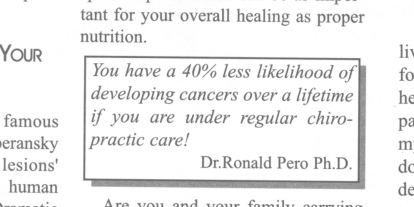
Miraculous? From a chiropractic brochure.

If I were an acupuncturist, I would make a few changes immediately. First of all, I would help form a strong organization of acupuncturists to sponsor “research” (he he he) to show that almost everyone suffers regular blockages of “qi” along those crowded meridians that run up and down your body. Then I would set up a “study” (ha ha ha) to show that people who receive regular acupuncture are healthier, happier, and sexier than people who don’t. It’s not hard to do. Read the polls. Ask the right question of the right people and you get the results you want every time! Heck, I would even claim that people who receive regular acupuncture get cancer 40% less often than people who only see a chiropractor. You think it might be hard to fudge that kind of data? Come on! Use your imagination!

Next, I would have special little free seminars on health, with treats, entertainment, and a clever speaker, to promote the virtues of weekly acupuncture. The real objective, of course, is not to provide information, but to acquire a large number of new patients. It is not necessary to tell even a single person at these seminars that he or she might not need acupuncture. Why, everyone does!

To successfully promote a remedy, you must first, of course, promote the disease. For chiropractors, it’s “subluxation”, (even though Microsoft’s dictionary doesn’t recognize it as a word). For acupuncturists, I suggest “neuritis”. It sounds sufficiently familiar and medical to be convincing while possessing the all-important quality of nebulousness. All acupuncturists must use this phrase constantly, in reference to every pathological condition, in order to convince the public that everybody has always known that “neuritis” has always existed and needs to be treated constantly. Why, children get “neuritis” right at birth! They need to be treated within the first week or so, to head off cancer, and asthma, chronic fatigue syndrome.

One chiropractor on the web offers a free initial consult to anyone. That’s a great idea. He says that he will provide a careful assessment, and then let you know if you need treatment!

Ha ha.

Ever go to Speedy muffler for a “free” brake inspection? Did they ever tell you, “Well, everything’s shipshape. Can’t find a thing to fix.”? Never. They get your car up on a hoist and then tell you that they just “can’t” let you go without fixing those dangerously worn out or defective brakes or struts or shocks or whatever. That’s the idea. If you really want to generate some serious income, get your prospective client naked on the table under a sheet, and then tell him or her that you just can’t, in good professional conscience, let him walk out that door without a treatment for that terrible case of neuritis.

Do you think it will be hard to convince people that they have neuritis? Not at all. Simply ask the following questions slowly while staring sympathetically into the patient’s eyes:

Do you ever feel tired or irritable?
Any trouble sleeping?
Aches and pains that never seem to go away?
Headaches?
Ever feel sad or depressed? Or tired?
Do you sometimes feel a vague sense of unease or displeasure?
Do you get tired sometimes?
Ever sit down in a chair and not want to get up and jog two miles?

There you go. Just try answering “no” to all those questions? I’ll bet you can’t.

Finally, if you really have trouble convincing your patients to come in more often, follow this procedure: adopt a very serious, compassionate expression, look the patient in the eye, and tell him or her that you cannot, in good conscience, continue to compromise your professional principles. If the patient is not willing to come in at least once every two weeks, you will have to refer him or her to another quack…. Er… therapist.

Interesting stuff on chiropractors:

http://www.chirobase.org/01General/chirosub.html

In 1973, the U.S. Congress authorized Medicare payments for chiropractic treatments if subluxation could be demonstrated from x-rays. This threw chiropractic into a tizzy, because even though chiropractors take x-rays all the time and point out the “subluxation” to their prospective clients… well, the truth is that nobody can really see subluxations. When 20/20 took a set of x-rays to three different chiropractors and asked them to point out the sub-luxated vertebrae, they each picked a different one.

Yet, they have to show one in order to get paid.

Two years ago, in an attempt to “unify” chiropractic terminology, the Association of Chiropractic Colleges issued the following definition: “A subluxation is a complex of functional and/or structural and or pathological articular changes that compromise neural integrity and may influence organ system and general health.”

acup01.jpg (2334 bytes)

So how about this: “neuritis is a complex of functional and/or structural and pathological changes that compromise neural integrity and may influence organ system and general health”.

Yeah. That about covers everything.

Shania Twain

What I want to know about Shania Twain is, can she cook?

She is very pretty. She has a very nice voice. But there are lots of models out there and lots of girls can sing. Why is she so successful? Is it because she exposes her belly button every time she is in a video? What’s so great about belly buttons?

So all these men are out there watching Shania Twain sing and wiggle her hips and they are thinking, “boy, she’s pretty. I’d like to buy her records.” No. What they’re really thinking is, “I’ll bet that if Shania would just get to know me, she would fall in love with me and want to marry me and live in my house and clean and cook and sew, and look just great in a frilly apron.” Do these same men look at Courtney Love and say, “I’ll bet she can cook.”?

Shania’s married. She married her manager or something. Don’t they always? I think Celine Dion married her manager too. And didn’t Sarah McLachlan marry her drummer? What probably happens is that six zillion men send her deeply personal, anguished, explicit letters, and they all sound a bit scary to a young artistic woman. So she retreats to the safety of someone she thinks she can trust. This is never another famous musician: they always fool around, don’t they? So it’s a drummer or road manager or agent or someone like that.

Shania’s husband probably looks like Rodney Dangerfield. Bad career move. Still, most men probably think, “I’ll bet he’d leave him in a moment if she ever gave me a chance.” Then they buy her CD’s and look at her pretty face and dream.

She does have an appealing face. In this one video, she’s dancing around with all these other people, and they keep trying to take the microphone away from her. She’s laughing and having a good time. It’s a remarkable video. Whoever thought of it was a genius. It makes her appear accessible and good-natured and kind and funny. You start thinking that if you walked right up to her out of the blue, she’d smile and give you a hug.

I’ve never understood popular culture. On my 13th birthday, my mother bought me a copy of the Archies, featuring their classic “Sugar Sugar”. I went “vomit vomit”. I was into Bob Dylan, Neil Young, Leonard Cohen, and the Beatles. Marie Osmond? Olivia Newton-John? I thought they were juvenile.

Today, it’s Shania Twain. Well, she’s better looking than Marie Osmond, but just as boring, as far as her music goes. She’s never going to do a really interesting song, like Sheryl Crowe or Ani DiFranco or Joan Osborne. She’s going to be the Danish Curling Team of women’s music: cheerful and sporting and far more successful than she ever expected to be.


Whistling Dixie

Does anyone care that the Chief Justice of the United States Supreme Court likes to lead singalongs of “Dixie” (“I wish I was in the land of cotton…”) at public conferences?

I suppose we shouldn’t be too, too shocked. This is the same guy who sometimes quotes Gilbert & Sullivan in memos to other Supreme Court justices, and who designed a robe for himself that looks like it belongs in Brigadoon.

The guy is a lunatic. And he is in charge of seeing that the Constitution of the United States of America is properly enforced. This is a man who regularly makes final decisions about matters of race and religion and civil rights in America.

You have to think hard to imagine that you are black lawyer, fighting a case that involves racial prejudice, the results of which may determine whether your client lives or dies. And the Chief Justice sits up there behind his ridiculous robes and smiles at you and you can almost hear him whistling Dixie.

It could be worse.

It could be Robert Bork up there instead.

The Senate: 100 Old White Men

They look oh-so-respectable.

Did you know that it is practically impossible to dethrone an incumbent Senator in the United States? That’s because the Senate is so good, so honest, and so hard-working, that nobody ever wants to change any of its members.

Well, yes, maybe. The truth is that once you have become a Senator, you can call yourself Senator Bigbottom and go around making speeches and public appearances and everybody pretty well assumes that anybody known as Senator anything is entitled to the position by virtue of the cool sounding title. Senator.

“Congressman”, on the other hand, sounds a bit ridiculous, even when applied to a woman. Anybody can be a Congressman. And President? Every two-bit Elvis Presley fan club has a president. What’s the big deal about the President. But Senator? Not many people ever get to be called Senator.

Now, take a wild guess as to how many black Senators there are? Come on. Go ahead. Give it your best shot. Don’t forget that about 18% of the U.S. population is black. So how many Senators, out of one hundred, are black? Ten? Five? Two?

The answer is 0.

That’s right. ZERO. And how many Senators are female? More than half the U.S. population is female, so how many representatives of this gender get to call themselves “Senator”? Fifty? Hoo haw! Twenty? You’re joking. Ten? Maybe.

Maybe two.

That’s all. That’s all you need to know about the Senate.

Sports Psychopathology

Let me make a few things clear before going into this particular rant.

1. I like the U.S. women’s soccer team. They play hard, they have fun, and they play like a team.

2. They deserved to win the gold medal. They took on the world’s best and beat them fair and square.

3. The nauseating hype provided by the U.S. media, which worships everything rich, or sexy, or successful, is not their fault. They cooperated, but they aren’t responsible for flogging it all to death.

There. That’s out of the way. Rah rah for women’s soccer. I hope they start a professional league and I hope they draw lots of fans, and I hope the tax-payers take all the money they currently siphon into professional baseball and football and basketball and hockey and give it to welfare mothers instead.

Why did the U.S. win? Why do they always seem to win? Is the “American way of life”? Is it clean living and virtue? (Judging from some of the more colorful activities of this same women’s soccer team– posing semi-nude for a picture for David Letterman– I guess not.) Is it capitalism? Or is it just that the Americans have a terrific level of determination?

Well, think about some of the training “techniques” the U.S. team used. The entire team went out to a building on the Georgia Tech campus and took turns racing up the concrete steps while their team-mates hollered out the theme from “Rocky”. They also climbed to the top of a cliff in Portland, Oregon. Half of them put on blindfolds while the other team members led them around a narrow ledge.

These activities were devised by a sports psychologist Colleen Hacker. In fact, Hacker is the “team psychologist”. Some of the players credit her strategies with their success.

Sounds logical, right? I think most people read that and think, yes, those strategies probably helped them win.

Why?

Just because they did these exercises and then they won does not prove that there is a causal relationship between the two. In fact, most teams at high levels of competition have team psychologists… and most of them lose.

The U.S. women’s soccer team won because they were more skilled and more determined than the opposition. The truth is that “sports psychology” plays a very role in any competition anywhere.

I’m not a very good competitor myself, I guess. These exercises sound pretty stupid to me. What’s the point? What’s the big deal? These exercises can only make sense to a person who believes that winning is everything. And if you believe that winning is everything, you must believe that life is all about hierarchies, and whoever gets on top is best or happiest or richest or sexiest or whatever. I can’t picture one of these sports psychologists spending a lot of time helping poor people or spending time at an old age home, or teaching kindergarten, or doing any of the millions of things that make life good for people.

But this is the age of Nike, and the media openly proclaim their contempt for the idea that winning might not be the most important thing in life. Implicitly, of course, the exact thing they proclaim is that consuming is the most important thing in life. Your hero may be a lean and mean and physically beautiful 20-year-old athlete, but you are 30 pounds overweight and sitting on your couch drinking beer and eating chips and then rushing down to the mall to buy some Nike sneakers because Michael Jordan says losers like you suck, big time.

The real purpose of sports psychology is the same as the real purpose of management consulting: to convince you that you can be just as successful as anyone else if you follow certain prescribed practices and strategies. The truth is that successful people are successful because they were born with certain skills or blessings or blind luck, and you will never be as successful as they are no matter how hard you try…. but you can sure spend a lot of money trying.

Run. Run to the mall. Buy, buy, buy. When you get to the top of those steps leading into the Dunkin’ Donuts, raise your hands in the air and scream, “gonna fly now…..”.

2022-04-11 Addendum

[I neglected to point out one important germane fact: the officiating to this point always favored the Americans.  I’m not saying they actually gave them the games– no, no– that would be too obvious.  But it was also obvious that close-calls in close games always went the Americans’ way.  It’s not hard to believe : the institutions that controlled international soccer matches understood perfectly where the money was: big American corporations who were not about to put out if the Americans were not in the finals.]

Ikea

I used to look through Sears and Eaton’s catalogues mainly because there were pictures of women in their underwear. Once in a while, I would accidentally look at some of the home furnishings. What I saw nearly sickened me.

Where did they get those homes from? Nobody I knew lived in one. They were immaculate, in a perverse sort of way. The furniture was new, polished, slick, plastic. There were no signs of life, no clothes, no magazines tossed aside, no half-eaten bagels or half-empty cups of coffee. There was never any chili or soup in any of the pots. There were never any towels hanging half-folded over the sink or bathroom counter.

What was the message here? You were supposed to look at this catalogue and think, “Wow! That’s so beautiful! That’s what our house should look like! That’s what will make our friends think we’re smart and rich!” And you would buy this furniture and put it into your house and for a few days your home would look like a Sear’s catalogue but soon everything would be ugly and messy again and you’d realize that you just don’t measure up to the ideal.

Have you ever seen an Ikea catalogue? Here it is. Here is a picture of a place setting. The glass is half empty—someone’s been sipping. The silverware is scattered around as if someone just got home from work and didn’t have time to lay it out perfectly before the chili boiled over on the stove.

And here’s a picture of a pull-out pantry. By golly—there’s food in there, with the labels showing! And here’s a picture of a shoe cabinet. It’s full of papers and magazines that look as if someone just dumped them there. There’s a backpack beside it on the ground. What’s that doing there? And—can I bear the sight—here’s a bed…. and it’s unmade! Someone has actually slept in it!

Just gazing at the Sear’s ideal, you can sense the overwhelming sterility closing in on you. You get a sense that the customers of this store have no idea of what money is for, so they buy ostentatious, phony, bland, useless ornaments for their homes, and then sit around like manikins all day, admiring their silver-wear and doilies.

Ikea gives you a sense that people actually live in these furnishings. They enjoy them. They sleep on the bed, drink from the glasses, work under the beautiful halogen lights. They store things in the cabinets and eat off the tables. They have busy lives.

Ikea must be the only major furniture catalogue I have seen that shows a man with long hair tending a baby while preparing supper.

The Americans have some things right and some things wrong. They have furniture wrong.